The Emma Gaze Interview
Hailing from Brighton in East Sussex, England, the female-driven quartet Electrelane first came onto the scene, bringing several influences to the tonal table, such as Stereolab, Neu!, and Sonic Youth, in particular, Kim Gordon. Since their formation in 1998, the group has released four incredible albums and a staggering number of singles throughout their relatively short but intensely influential career. Having met Verity Susman (lead vocalist, multi-instrumentalist) in secondary school at an early age, Emma Gaze (drummer), and the two effortlessly established a bond that quickly led to a liberating language spoken in melody. Gaze takes us through the trials and tribulations of being in an all-female group, the ups and downs of navigating the electrifying ecosystem of the music industry, and their humble legacy that continues to inspire to this day.
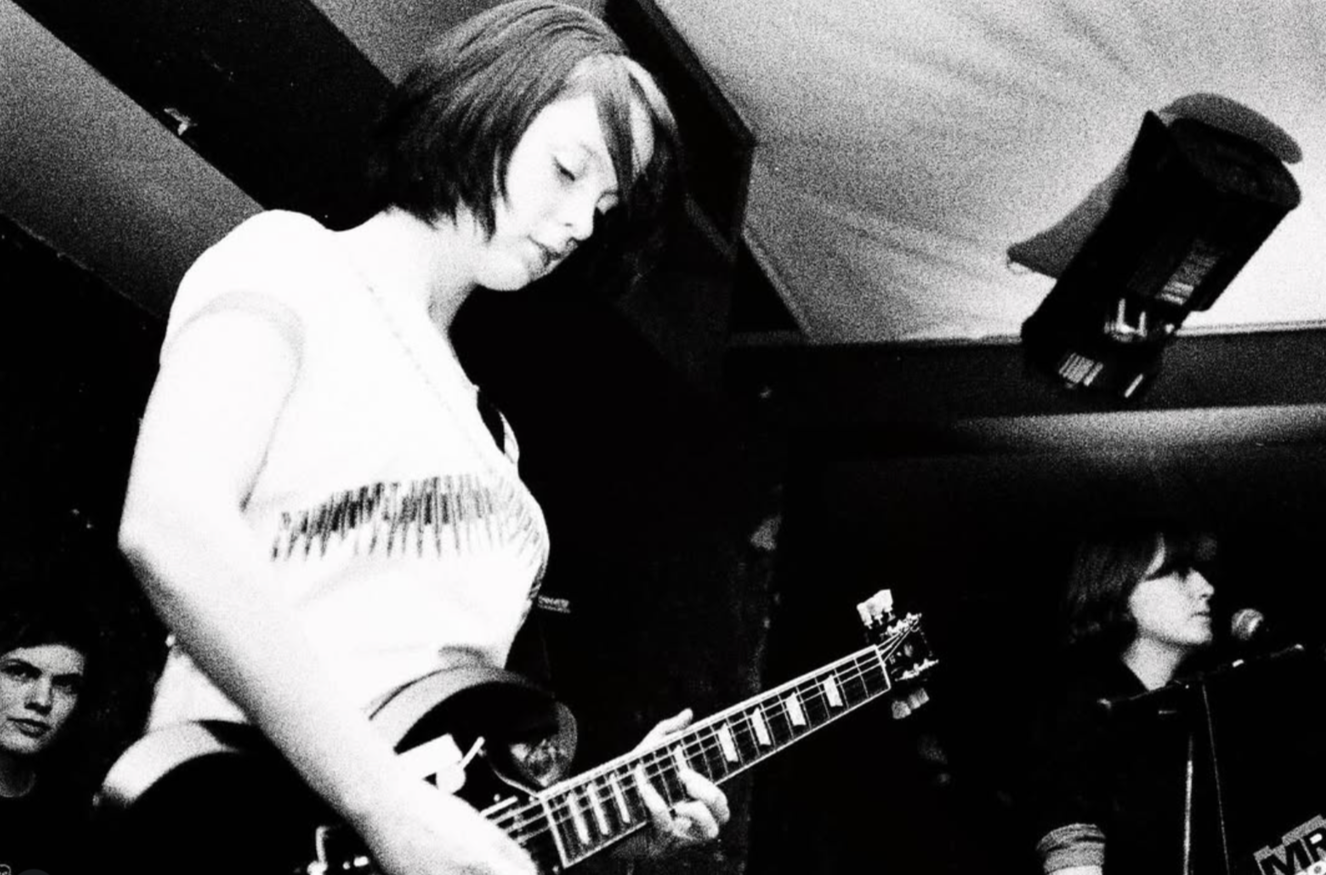
Photo: Greg Neate
How did you initially meet Verity Susman, and what eventually led to the two of you putting the band together back in 1998? Eventually, building it out with other members, Tracey Houdek, Debbie Ball, and Rachel Dalley, during its conception, tell me about those early days, and how that creative chemistry began to bond everyone. One of the many things I admire about Electrelane’s legacy is how powerful the band and its members are both on and off stage. Without being overly political with its audience, the music truly raised awareness and explored those elements in such a meaningful way. Comparing the past to the present, how do you feel about expressing politics and feminism in art/music as you’ve gotten older, and the world, though not so much, as it’s changed over the last 30 years?
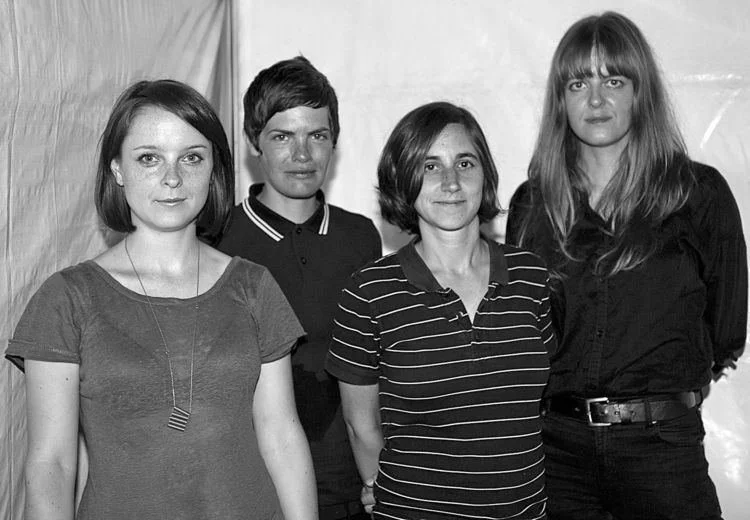
Verity and I went to the same secondary school. I was in the year above, so we weren’t friends until the 6th form, when we both went on a school trip to the United Nations HQ in New York. We sat next to each other on the plane; she had the cassette of the first Supergrass album, and I had the cassette of Pulp's “Intro”. Neither of us had met anyone else who was into indie music yet, so it was quite the revelation! We became fast friends, going out to The Basement in Brighton, where there was a ton of underage drinking and dancing to David Bowie. It was a really fun time. We are both from Brighton, and I feel very fortunate about that. It was a great time to be a teenager there in the mid to late nineties. We were really into the Mod revival and the band scene. It seemed like everyone was in a band! It felt exciting, and that anything was possible. Debbie Ball, our first guitarist, was in the same year at school with Verity, and I can’t quite remember how we met Tracey, but she quit after our first gig because she got pregnant. We had a man fill in for her (Rupert Noble) while we looked for a female bass player. We placed an ad in the local guitar shop, and she turned up at our rehearsal room in a full-length leather trench coat with a love for Led Zeppelin… She was in! Gosh, “the last 30 years”, that’s scary! I’m very pleased to see that it has changed a bit. I see more women playing without comment, which is the way it should be. But still, not enough. I wish we had had more confidence, but we were very young, in a very male-dominated scene, and we were absolutely a novelty. That has its positives and negatives, and we got attention, but we were also told we had to change our image and dress up more. Of course, we didn’t, and were following in the vein of Kim Deal, jeans, and band t-shirts. I wish we had “worked it” more, but that was never, ever interesting to us. We just wanted to make the music, and not be models…
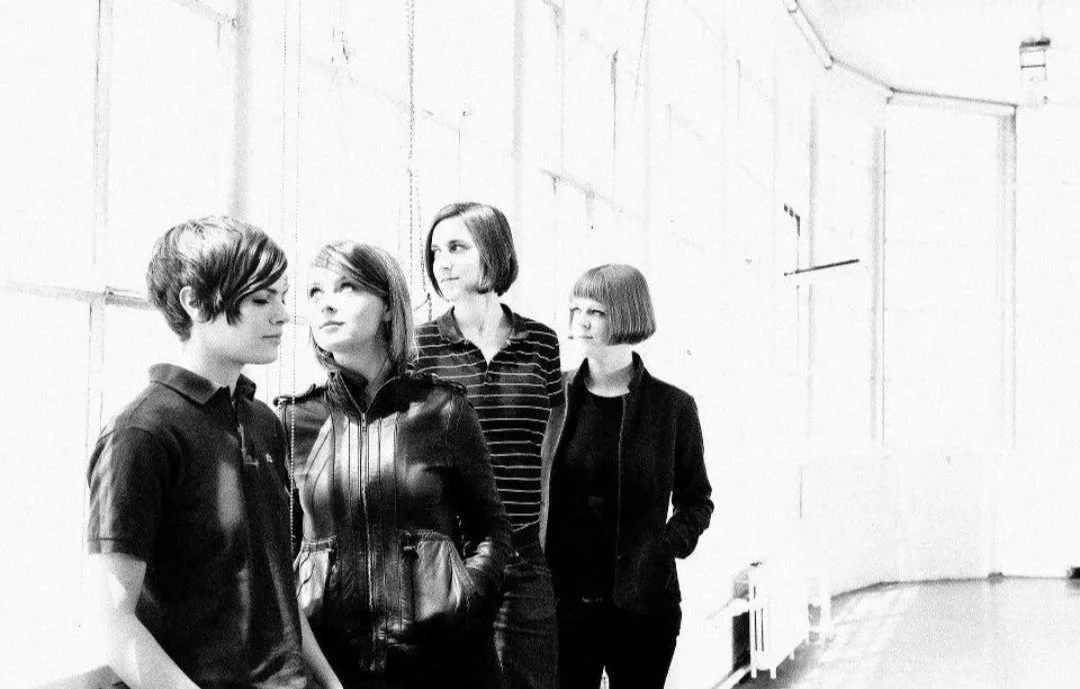
Photo: Alex Wright
I’m curious to know about the local scene and how the group eventually found their bearings playing alongside the likes of V-Twin, Sand, and Vibracathedral Orchestra, which featured the great John Godbert. After recording a handful of singles, the band released its 2001 debut, “Rock it to the Moon”. How did recruiting some of the other musicians, such as Marianne Vaughan, Roland Susman, Katie Spafford, and Sarah Feltham Chesshire, come about?
Those people were Verity’s little brother, Roland’s friends. They were in the school orchestra, and we recruited them to play on the first album because we didn’t have the money for professionals. Katie Spafford is the only one I still know, and they have a band called Tears OBV. The first album was written and recorded in Brighton. Very homegrown! We were really excited about everything — I think that album is exuberant, and plays to the edge of our abilities (and sometimes beyond). I think it’s a great first album. Especially considering some of us were in our teens or very early twenties. Mia joined not too long before we wrote the album. We were so lucky to have met, and that’s when it all really began to come together.
“I’m very pleased to see that it has changed a bit. I see more women playing without comment, which is the way it should be. But still, not enough. I wish we had had more confidence, but we were very young, in a very male-dominated scene, and we were absolutely a novelty. That has its positives and negatives, and we got attention, but we were also told we had to change our image and dress up more.”
The first album I ever heard from the band was 2004’s “The Power Out.” Maybe there’s a little favoritism going on, but this record is simply sublime. Tell me about the overall process and approach to bringing this record to life. What was your experience working with the late and great Steve Albini and the Chicago a cappella? I feel like that was a Steve thing!
No, it wasn’t an Albini thing at all! Verity composed the vocal part of “The Valleys” while using a Siegfried Sassoon poem. Steve Albini was wonderful to work with. He actually approached us about working together, which was a total shock, as you might imagine. We made “Axes” with him, also. I wish we had done the last record with him, too, because he was really good at preventing us from getting bogged down in overproduction. I think there was an immediacy in those two albums that is lacking in our last. For me, music is more interesting in a rawer state. I love listening to bands’ alternative takes. Usually, the first run-throughs are a rush of adrenaline; if you do take after take after take, it beats the life out of it. I’d much rather have the thrill of that feeling over a perfect/competent take, but we didn’t all feel that way!
The group would go on to release a few more albums, “Axes” and “No Shout, No Calls” in the mid 2000s, before starting up that melodic machine one last time in 2011-2012. Is there any chance of reuniting in the foreseeable future? Aside from needing more music from the band, we, as a society, could definitely benefit from the group’s revolutionary reach on politics, social justice, and the sadistic shit show we’re all doing our best to put a stop to! Is there anything else you would like to share further with the readers?
No, we won’t ever make new music together. That time has gone. We were planning on doing something a couple of years ago, but it all fell apart due to character clashes. Which is fine — after all, you can never go home again, you know? We were also considering playing some shows, because that would be super super fun, but again, we clashed, so we couldn’t make it happen. It’s such a shame because I want to do more shows while I still can. I was diagnosed with MS in 2014, and I don’t think I could manage a big tour anymore. With that being said, if there were some offers, who’s to say?! Any plans for the new year and 2026 in general? Nothing specifically planned, but if you want to make a band, do it, and don’t let anyone make you feel as though you can’t. I salute anyone with the guts to get up on stage!