The Elanor Moss Interview
Born and raised in the UK to a devoted Catholic family, singer-songwriter Elanor Moss found enlightenment in nearby York, where she was studying English literature and embracing open mic nights around town. Quickly developing her cathartic craft while simultaneously cutting her tonal teeth on the local circuit, the young musician eventually found the works of Bob Dylan, Leonard Cohen, and Joni Mitchell, to name a few, and never looked back. After the release of her debut EP “Citrus” and the immediate follow-up “Cosmic”, it was time to work on her first LP. “The Knife, The Needle”, which is set for release on Merge Records on August 21st, is an intimate introduction to a captivating career that eagerly echoes the elemental energies of Judee Sill, Sibylle Baier, Bridget St John, and several other fundamental female voices in the fibers of folk music magic.
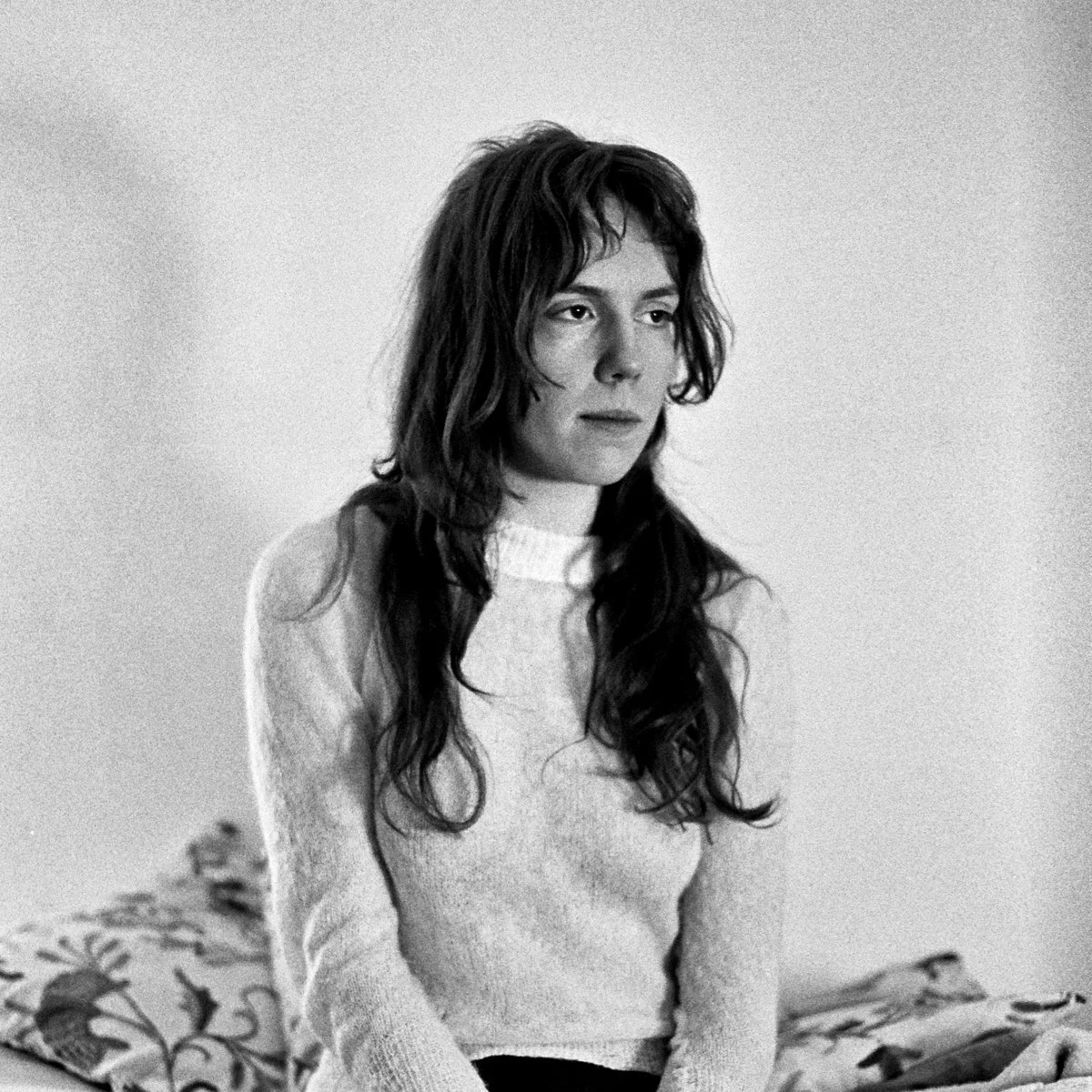
Photo: H. Hawkline
Hailing from the UK, tell me about growing up in a devoted catholic household and how you began connecting with music and art. As someone who also grew up around strong New York Catholicism in their own family, I’m very curious about the particular balance of creative culture and faith practice you and your household had in your formative years. I feel like that line is pretty strict, to say the least. Would you agree?
Photo: Mon levčenkovaitė
The line was pretty strict in some ways. In my experience of the Catholic faith, especially when practiced very devoutly, there is a real emphasis on the kind of things you consume and the spiritual impact those things might have on you. We didn’t have television, for example. We watched a selection of VHS tapes on repeat, and in retrospect, a lot of this became my earliest exposure to music and songs. The Prince of Egypt was a big fixture in my house, with some incredible compositions by Hans Zimmer. Spirit: Stallion of the Cimarron was another that introduced me as a horse-crazy four-year-old to country music via Bryan Adams. The Hunchback of Notre Dame was another, with one of the best establishing numbers and one of the best villain songs of all time. These films introduced me at a really young age to the power of song as a storytelling tool. The culture we interacted with in the house that wasn’t directly Catholic was still oriented around deepening our Catholic faith and values. Early on, this was brilliant because it meant we were engulfed in a ton of fairy tales with moral metaphor and symbolism, which helped develop a comfort with symbolic language, which, as a songwriter, is a really useful tool. My father was an academic working on a PHD in children’s literature and the impact on the development of the moral imagination. He was an English teacher, writer, painter, and finger-style guitarist. My mom played the guitar and quilted, and was also a teacher. We were homeschooled through our youngest years, so we were really immersed in our parents’ world, and they were both really creative with us. Catholicism is really into beauty as an institution, too, so there was no shortage of exposure to beautiful work; it’s just that, because of the context we were in, it didn’t reach us without an agenda attached. There was a way I was meant to think about it all, and no room to think about it my own way. When I was younger, this didn’t impact me at all badly - I wrote stories as soon as I could string a sentence together, and my dad, who was a writer, edited them for me(!) We sang together a lot. I drew and painted and desperately wanted to keep up with my older siblings (4 of them, plus 1 younger one), whom I looked up to. It was a really creative upbringing. As I got older, this became a little trickier as I started asking questions and wanting to explore things outside of the Catholic paradigm. I remember reading The Handmaid’s Tale and getting a real earful about it. But I had a real hunger for other perspectives and went looking for them, and in the end, I did a Literature degree, which really helped me access a way to see things differently. It was at that point that I left the church, but I still had this wealth of creativity that was brought to me by my parents and how they raised me.
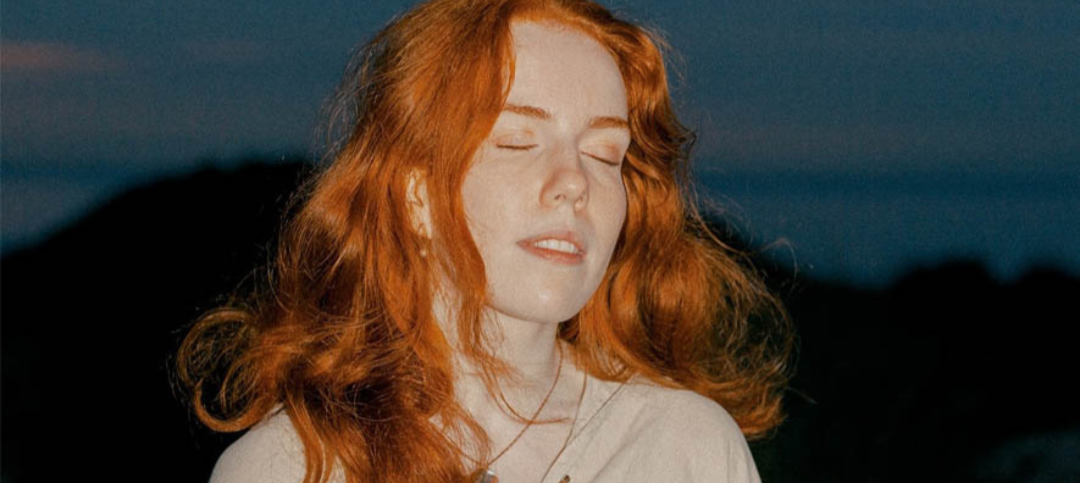
Photo: Mon levčenkovaitė
Eventually relocating to York, in North Yorkshire, to study English Lit, tell me about those early days playing local mic nights, writing songs, focusing on education, while simultaneously finding your poetic place in the world. Before recording your first official solo debut, “The Knife, The Needle”, you released a few EPs. With previous works like “Citrus” and “Cosmic,” you can hear that harmonious horizon expanding further and further with each breath and chord strike.
It was an interesting time. I was leaving the faith and discovering a whole new world while still very much internally entrenched in the one I was coming from. It was confusing! All these forbidden things are suddenly allowed, but still feel very much forbidden. I felt younger than my peers in some ways, but I was like a big, thirsty sponge. I remember going to an open mic night at the Fossgate Social with a new friend from my dorm who was in my course. People my age were performing songs they’d written themselves. I couldn’t believe it - before then, I thought songwriting was something reserved for the chosen few who then went on to be rich and famous, like Bryan Adams or Bruce Springsteen. I went back to my dorm and wrote my first song, which I worked up the courage to perform a few months later. Then I was hooked! It was a period of rapid intake of experience, culture, and music I’d never heard of, but everybody else seemed to know. My friends joked that they’d have to make me Zeitgeist Tapes to help me catch up. I discovered Leonard Cohen the day he died, and my friends were singing tributes to him at the open mic. Joni Mitchell shortly after. Big Thief played in my University town in a small venue called The Crescent on their first-ever UK tour. My boyfriend at the time was in a local band that opened for them, and I discovered them and Judee Sill on the same night, as Adrianne Lenker covered Judee’s song The Kiss on the guitar. My mind was blown. I decided all I wanted to do was write songs. After my first EP was released, I discovered Vashti Bunyan and Sibylle Baier when write-ups very generously made comparisons to them. There is just such a wealth of incredible music, and I felt so behind. A similar thing was happening in my literature course, with all these ideas and books I’d never encountered. It was an overload, but I loved it.
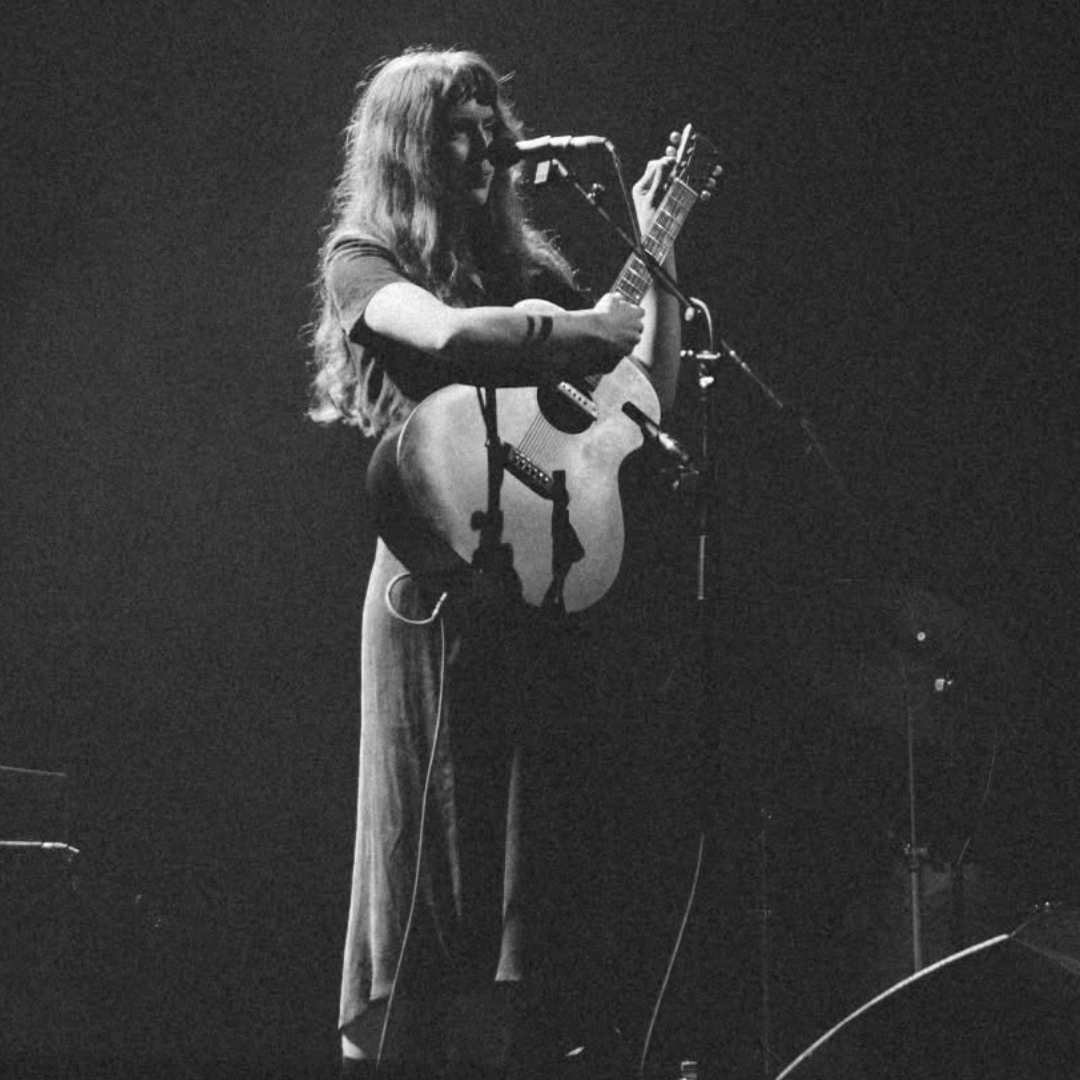
Photo: Mon levčenkovaitė
Would you say this material has always been within you, and it was finally time to conjure it into existence, or is this more of a reflection of our current times, and how one navigates the valleys and plateaus of this existential ecosystem, if that makes sense? You mentioned the “music that made you really feel something; the music you wanted to be writing” when describing the album.
I can’t remember who first said this, but it stuck with me, and the question brings it to mind: somebody said that writers have a core place from which their truest work springs. This might be an ache, a desire to connect, a desire to be known, a desire to soothe or be soothed. Every songwriter has one song they are trying to write, and their albums are a career’s worth of reaching towards it and never quite getting there. Maybe it was Louise Glück writing about poems; I’m not sure now. But I think this is what I meant when I said that the album was my process of orienting towards the music that made me really feel something. I wanted to try to locate that place inside of me and try to write from there. You tend to write what you are thinking about, and I was thinking about these things - how to navigate the valleys and plateaus of my own existential ecosystem. I also find that the closer you write to your experience, the more universal it can become, if you really try and get a scalpel with it. We’re probably all more similar than different when you break it down into the essential pieces.
“It was an interesting time. I was leaving the faith and discovering a whole new world while still very much internally entrenched in the one I was coming from. It was confusing! All these forbidden things are suddenly allowed, but still feel very much forbidden. I felt younger than my peers in some ways, but I was like a big, thirsty sponge.”
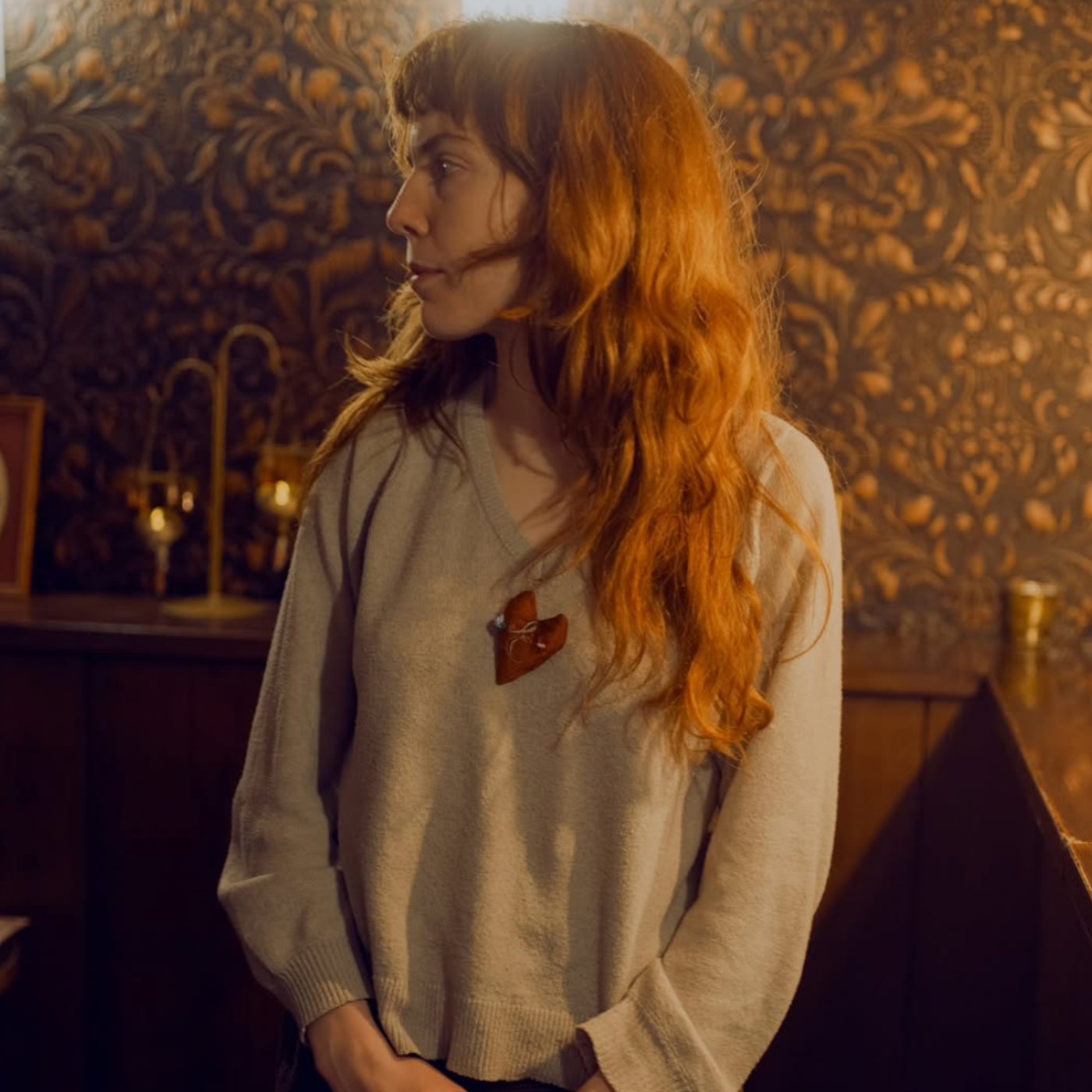
Photo: Mon levčenkovaitė
What ultimately motivated you to finally sit down and pour these songs into that creative cup? I’m curious about the overall process and atmospheric approach to this material, and what was most important to express and explore with these songs. The guitar and vocals are so beautifully captured that even a house mouse would stop dead in its tracks, or pursue counter cheese to hear you exhale songs like “You Are Coming Home Tonight”, “Again, My Love”, and the album’s ethereal ender “The Way That It Feels”. What does this album ultimately mean to you, and how do you wish listeners would feel or gain from these songs as it grows nearer to its release?
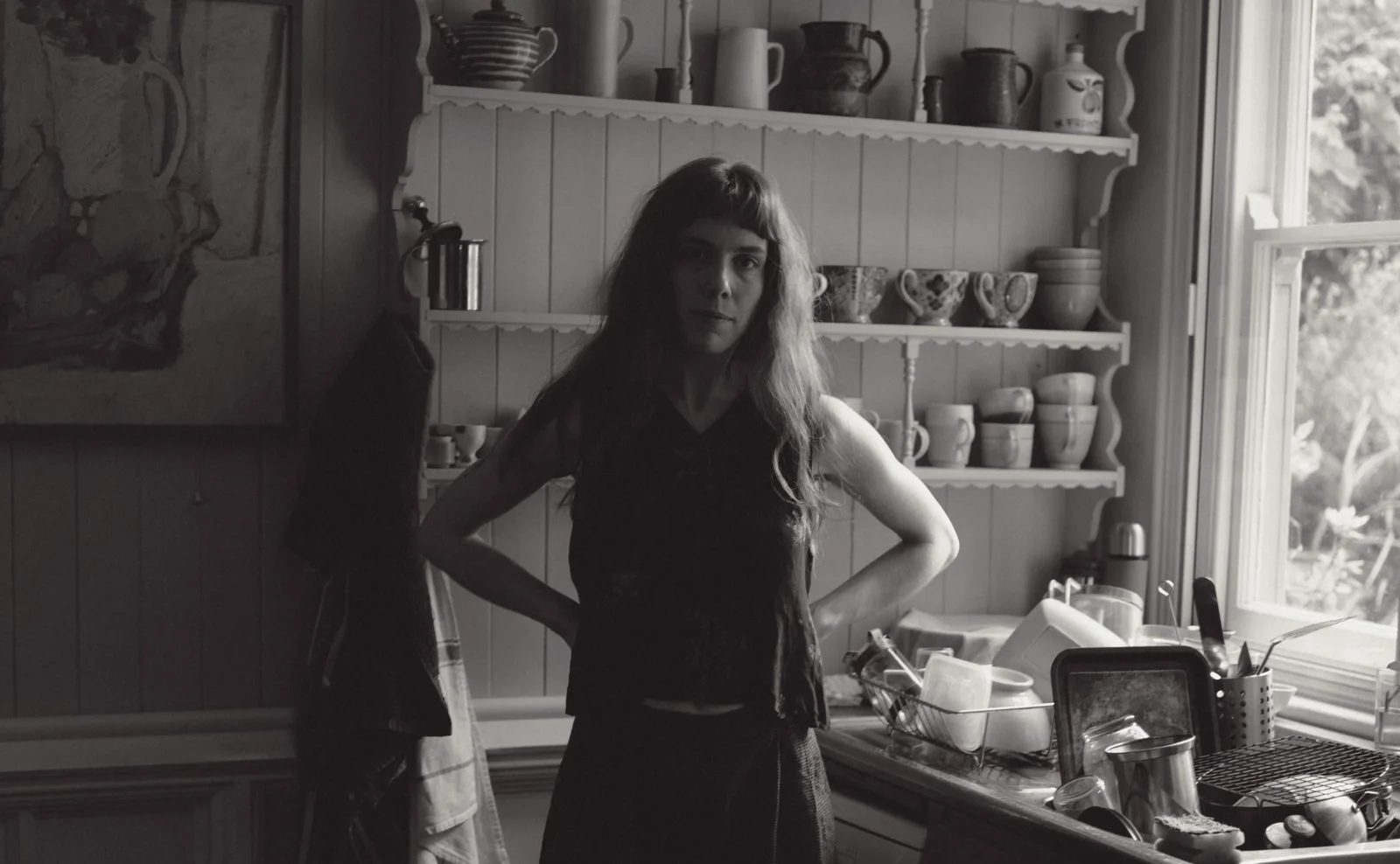
Photo: Mon levčenkovaitė
I wanted to address a collapse that happened in my creative practice as a songwriter. I was burned out and didn’t feel like I had the headspace to write or any of the tools I needed. Writing-wise, I was pouring from an empty cup and getting nothing. So instead of output, I focused on input, trusting (or hoping) that if I prioritized building up a life that was rich with experience and art, eventually songs would start coming again. During that time, I started seeing my now-partner, who is an actor, and I experienced theatre really for the first time. I remember having a really profound experience at a one-person piece of physical theatre called Blind at the Coronet Theatre in London. It was a piece about healing, integrating, and facing all of the different parts of yourself, the beautiful and the ugly, all colliding. It was quite violent and confronting, and totally and deeply beautiful in a way that just shot right through me. I remember thinking, this is why I want to make art. This record was written entirely in moments of stolen quiet and solitude, often during the night of dreaming hours when the demands of the day are behind me, and there is no pull in another direction. They were also all written from home, in cosy, domestic places. We actually had mice in our little London flat, so I probably wrote while they nested in the back of our cupboard. But I like the things you can suddenly hear when the world is quieter; the house’s own quiet rhythm and your thoughts can rise to the surface. The house has its own ecosystem of quiet sounds, like the humming fridge, the tapping pipes, the gutter dripping, or the neighbours turning on the shower before bed. In the distance, the overground was rumbling quietly along. It was in this cocoon of quietude that a lot of these songs rose, tuning down the surface noise to find the things underneath. I was working various jobs at the time, the most memorable of which was at the Tate Modern coffee shop, which I’d Lime bike to each day, through Camden and over the Thames to the South Bank. It was a beautiful bike ride, and my favourite part of the job. Lots of time to think and listen to music. I wanted to make something that found a way to ask the questions that scare me, without necessarily providing the answers. Something that bottles some of what happens under the surface of things. I didn’t really know what the album was about until it was finished. Going back through album notebooks after finishing the recording, I found these notes from a Rachel Cusk book I'd written down during a trip to New York. It was from her memoir on motherhood and art-making, A Life's Work. This is the quote that stands out to me the most now: "Love is more respectable, more practical, more hardworking than I had ever expected, but it lies close to the power to destroy." (p. 91) So I think, in the end, it is an album about love and the alchemical power it has to change people. About the contradictions in life, and how to hold it all. How precious it all is, the painful and ugly bits, too.
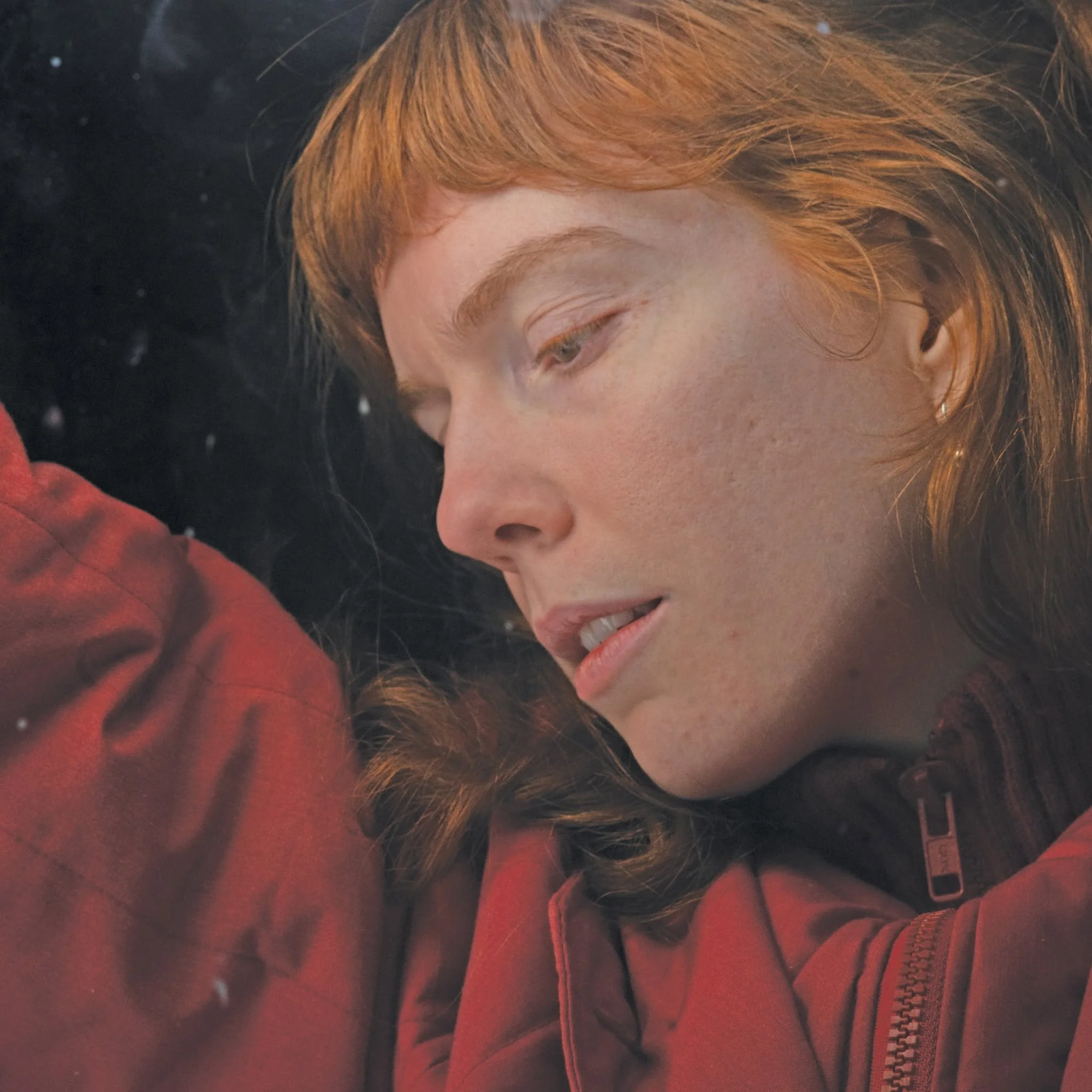
Photo: H. Hawkline
Is there anything else you would like to share with the readers?
I’m going on tour in the US and UK this autumn! I’d love to see you there. It will be my first time in a lot of these places. You can find dates on my website here.