The Alex Dupree Interview
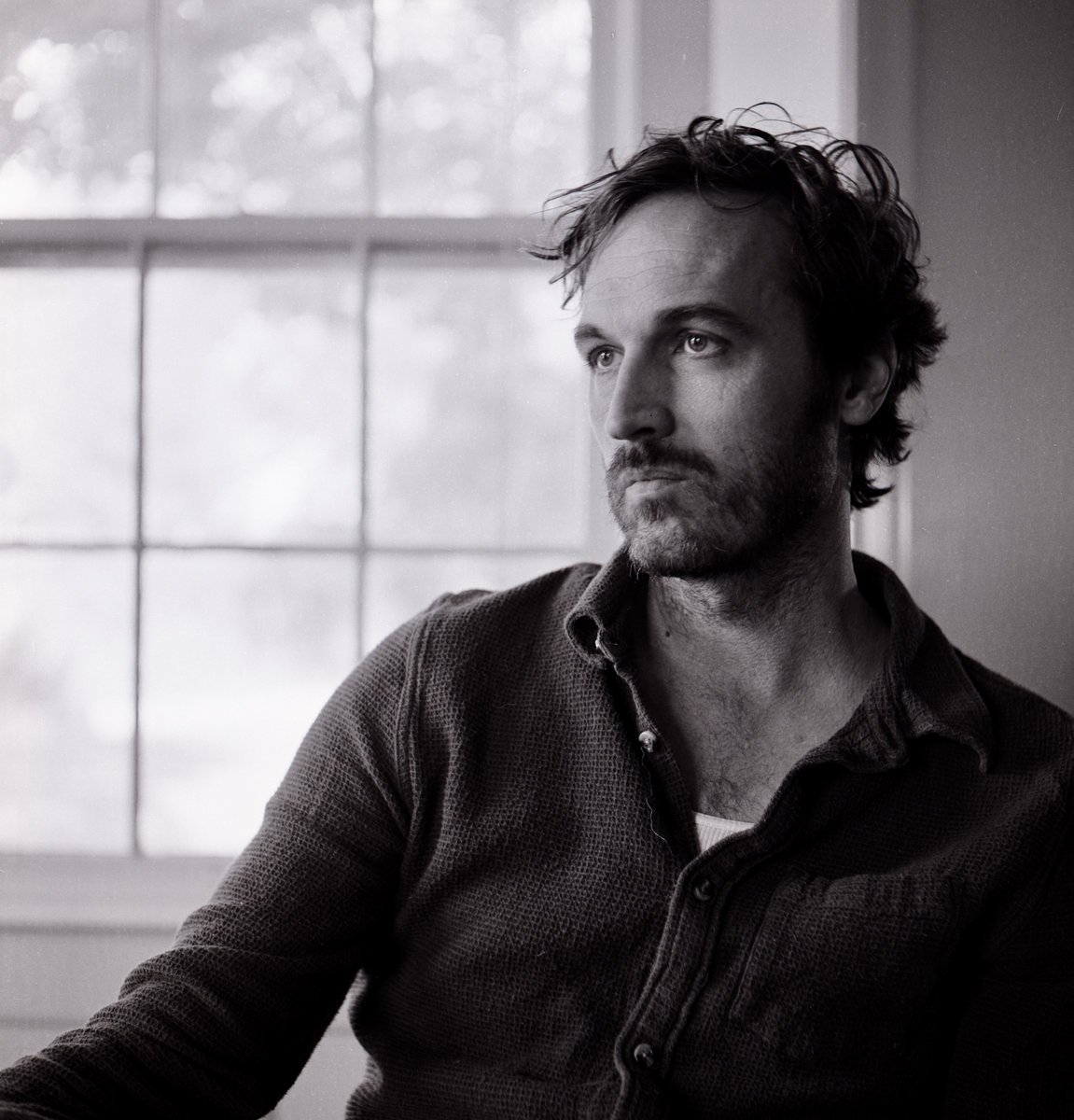
Austin, Texas-based singer-songwriter Alex Dupree has been releasing music for well over two decades, dating back to his early days in projects like Meryll and The Trapdoor Band. But it was his 2022 album “Thieves” that seemed to have made a melodic mark, and a sonic shift into a wonderful world of lyrical landscapes and metaphorical mountainsides. While maintaining this transcendental trajectory, Dupree has circled the sun twice over in an effort to establish himself in a world that is otherwise occupied by shallow systems that, at the end of the day, leave more questions than answers. Dupree may have unlocked that “eureka” moment with his latest effort, “Talking To The Dog”, which is set for release on the Oklahoma-based label Scissor Tail Records in mid-August.
Take us all the way back to the beginning, when you first started making music with Meryll and The Trapdoor band back in the early to mid 2000s in Texas. Seems like a lifetime ago, as I’m sure you feel, but how does time particularly feel to you when reflecting on earlier works and times? Having lived in several locations in the Midwest before eventually settling in LA, how have these various locations and past lives shaped you into the person and artist you are today? Tell me about those early days, and how you began to find your voice as a solo songwriter. Especially in a time that couldn’t be any different from our current creative climate, what have you learned over the years as an artist who manages to keep that poetic practice at the front of your field of vision album after album, project after project?
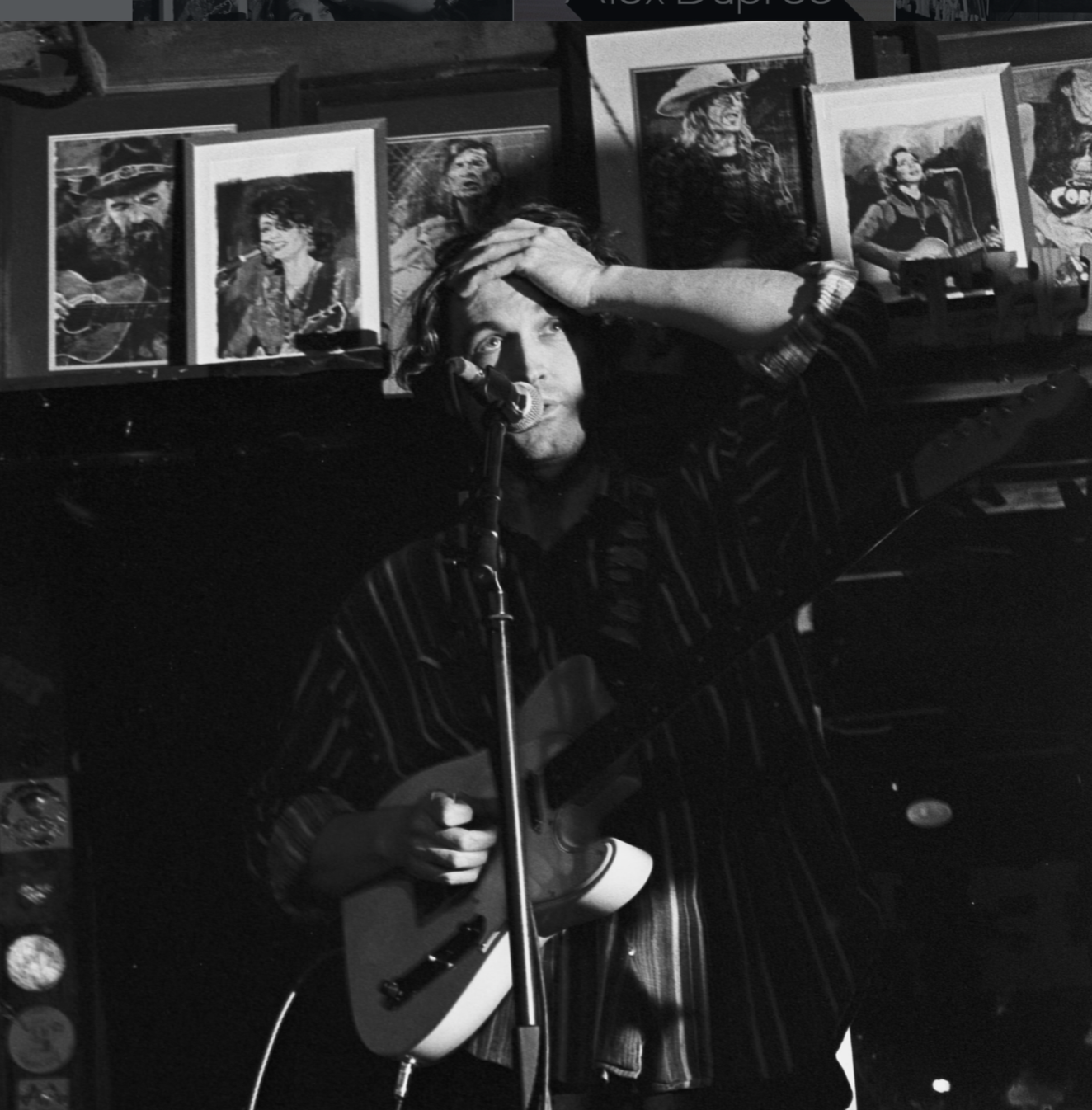
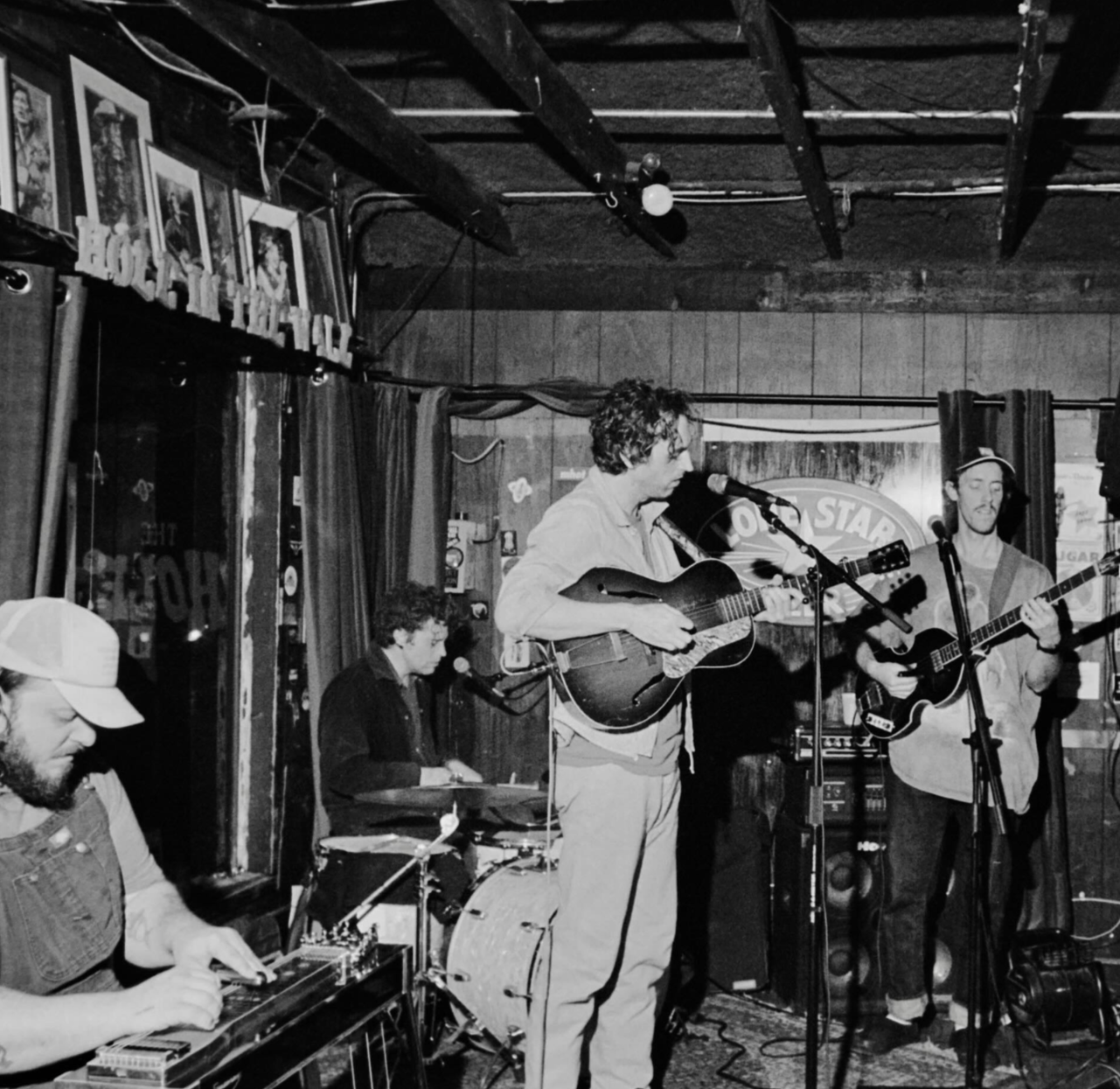
Photo: TJ Masters
Wow, I can’t believe how long ago it was and how little I knew about music and songwriting! I’m honestly just proud I made anything at all. I’m glad I was too earnest for my own good. Too naive, you know. Better that than being too cynical and tentative, I think. I try to feel tender toward that young person who had the drive to create something, even though he didn’t know at all what he was doing. Reflecting on those early days, in the 2000s, what comes to mind first are the profound friendships that grew out of that music. I still occasionally see Andrew from Meryll, and Chris from Zookeeper, and I still get to cross paths with a lot of Trapdoor Band friends. Those friendships were beautiful and taught me so much. I’ve said it before, but that’s the best part about making music. As a musician, you get so little back from the work you create, compared to everything you put into it. All the money and time I’ve spent, it’s absolutely ridiculous. And there’s really no reward other than the people you meet. And whoever it is you meet while doing this crazy thing... that’s probably someone who has also committed themselves to some irrational, crazy thing. Those are the coolest people in the world. I’ve learned to really be grateful for that. The hang is everything. I’ve lived in Dallas, Austin, Albuquerque, Houston, Los Angeles, a short time in West Texas, then back to Austin. Plus a few seasons of touring, traveling, and being in the wind. But I’ve always lived in the Southwest. I love it. How has it shaped me? I guess the West gives you a lot of time to think. Big spaces to cross and long drives. It gives you mythology too, and I love a place with its own distinct mythology. Texas certainly has that. Los Angeles, too, Northern New Mexico, and Marfa too. Early on, my music was very much about the struggle for individuation. It was me trying to carve an identity for myself among all the myths that crowd these places: myths of America, of the West, of a very stoic masculinity. That was latent in the country and the traditional forms that I was working with. Who knows how I would have explored those ideas if I hadn’t been born here. The music may have come out quite different. So I always felt I was pretty disconnected from whatever the mainstream creative climate was. Then one day I looked over and realized that there was no mainstream anymore, and really no alternative either. It all just evaporated into streaming and whatever AI is going to be. So I don’t know. Everyone used to tell you had to get on Facebook. Can you imagine? You had to have so many followers on Facebook before you were interesting. Then it was a Pitchfork rating, Instagram followers, and Spotify plays. People are just always looking for new metrics. They don’t trust their own taste. More likely, they don’t trust other people’s taste, and no one has enough money to take a risk. That’s how it’s been for as long as I’ve been writing songs. I’m sure there will be some new bad thing that we’re all supposed to do. “You gotta make your music free on the neurolink!” I don’t know, I guess the advantage for my own practice is having heard so many different versions of that same desperate pitch. And they all fail, so you don’t have to take them too seriously. Just keep working. Because all the gatekeepers have failed, been fired, or just became irrelevant. But all the lifers are still out there making music. Of course, I guess this is where I should say that I have a full-time, non-music day job! That is the only way I could afford to make music.
The last solo record we heard from you was 2022’s “Thieves” on Keeled Scales. I’m curious to know about the overall process and approach to the melancholic material on your latest effort, “Talking To The Dog”, and what was most important for you to achieve, as well as explore with these songs in comparison to previous titles. What does this work ultimately mean to you with this creative configuration of players helping spread the harmonies that your lyrics surf across like an atmospheric albatross? I’d love to know some of the backstory to tracks like “I Can See Her In Your Eyes”, “On Your Own Again”, “Zodiac” and one of the album’s first singles, “You’re A Dog, Don’t Talk To Me.”
On “Thieves”, I’m very deliberately writing in the tradition of folk ballads. Long narrative songs where the story and the character are meant to be primary. It’s about the pleasure of being told a story, and how that can be transformational for a listener. For “Talking to the Dog”, I wouldn’t say it’s particularly melancholic; there’s a lot of energy in the songs. But I suppose I did want it to be more personal, and rooted in my own idiosyncratic self. As opposed to something more broad like “the narrator”. And I myself do tend towards melancholy. So yeah, I guess these songs are more intimate and a little more abstract. “Thieves” was written during COVID, so it was just me and an acoustic guitar. For “Talking to the Dog”, I wanted to write something fast that would find its shape in the studio with the band. And maybe that speed would make it a little more revealing with less time to censor, you know. That’s the main difference I hear: the solitary, writerly feel of “Thieves” versus a more off-the-cuff approach on “Talking to the Dog”. I can’t help but be a lyrics-first listener, so it’s taken me a long time to learn that the lyrics are only half of a good song. Probably less than half. But I like to think that the right lyrics can create the conditions for the harmony or the accompaniment that will then make them feel essential. Maybe that’s a convoluted way to say it. You write something that has an inner music to it, but that music (of the line) has been brought out and somehow made external (in the music). And then the music only works if it makes the lyric somehow feel like the only possible thing that could’ve been said. So it’s a mysterious, snake-eating-its-tail thing, how the harmonies and the chords come out of the words and reflect into them. But then whatever you come up with, you bring those little song forms into the studio, and they bloom into something completely new in the hands of amazing musicians. It’s so intoxicating when that happens. It’s like seeing yourself through the eyes of a friend. It’s equally humbling and heartbreaking and the cause for profound joy and gratitude. Eventually you get to (hopefully!) forget all the work that went into the writing and sculpting of these ideas and experience them as someone hearing them for the first time. This is often the case for the band, who are hearing the songs for the first time in the studio. It’s certainly the case for the listener. The songs that you mentioned are some of the more downtempo, reflective ones. I’m really glad that those are resonating. Each has a different story, of course, but briefly:
“Then one day I looked over and realized that there was no mainstream anymore, and really no alternative either. It all just evaporated into streaming and now... whatever it is they think AI is going to be. So I don’t know. Everyone used to tell you you have to get on Facebook. Can you imagine? You gotta have so many followers on Facebook before you’re interesting. Then it was a Pitchfork rating. Then Instagram followers. Then Spotify plays. People are just always looking for new metrics...like they don’t trust their own taste. More likely, they don’t trust other people’s taste, and no one has enough money to take a risk.”
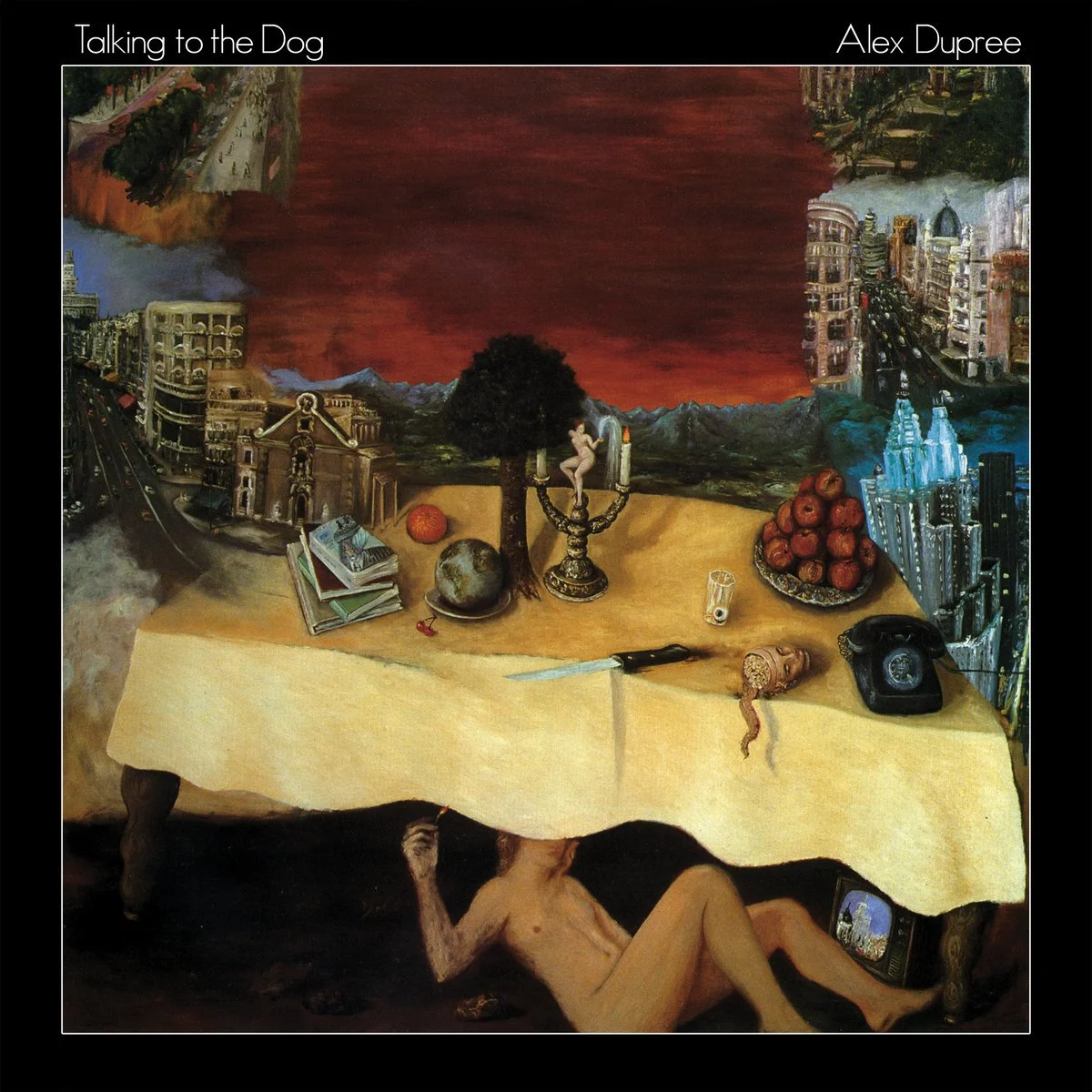
Cover Art: Suzanne Treister
You’re A Dog, Don’t Talk To Me: I started playing this song live in about 2016. It’s from a Michael Hurley record of demos called “Parsnip Snips”. I always thought it was a sneakily gorgeous song about someone at the verge of a psychotic break trying to talk themselves down. The tender mania of it struck me immediately. At shows, I used to play up the comedy of the lyric. But while prepping for this record, I tried putting it in a different harmonic place, a drone with enough left-field movement to crack things open. It allowed the story to breathe differently. Suddenly the conversation felt more hypnotic, mystical.
I Can See Her in Your Eyes: I love country duets; they have so much narrative possibility. When you have two voices, it just exponentially expands what a song can do. The initial spark for this song came while writing for a duet project with Whitney Mower (They/Live) called “Dawn & Dupree”. It’s two perspectives on the same relational dead-end — he’s still hung up on an old love, and she can tell. The fun comes from how the language works on both sides.
Zodiac: This is kind of a mysterious song to me. I love how it moves, and I don’t want to say too much about it except that it’s an autobiography across time. I guess I was exploring the idea of stretching/projecting something intimate and small across a massive timescale. The word zodiac is an appropriate image for that, I think.
On Your Own Again: This one is a Scott Walker song that I always thought was just so gorgeous. I wanted to do it in this kind of Willie Nelson register, which I think gives it a very different emotion. It brings it a little closer to your face, you know? As opposed to the ethereal register of Scott Walker. Mine is still mournful, but a bit more stuck in the dirt, I think.
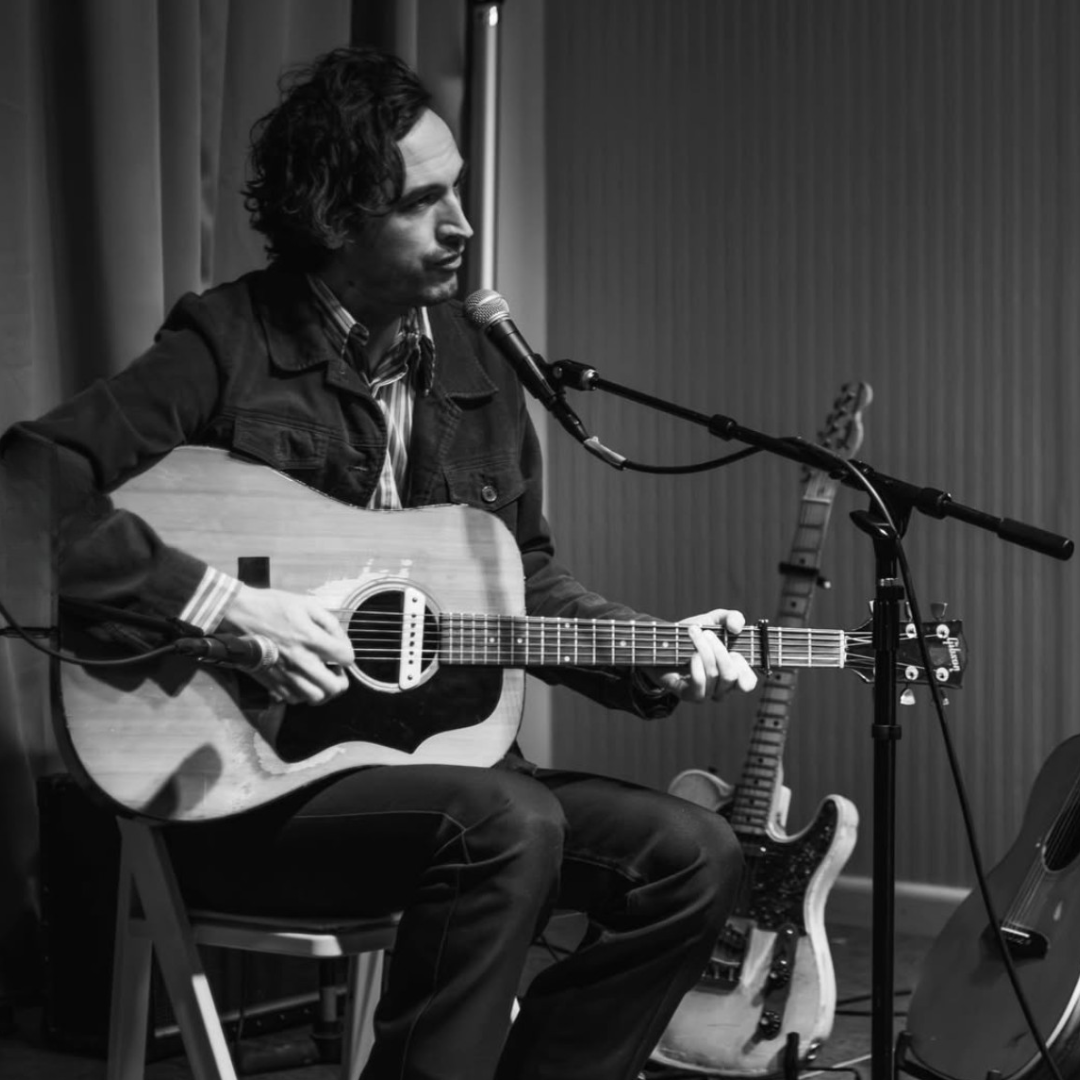
Photo: Laurel Coyle!
Set for release in mid-August, what does the rest of your summer look like? Is there anything else you would like to further share with the readers?
I’m just getting some shows together, excited to support the record. I’m playing September 11th in Phoenix at Cibo, September 12th in LA at Reverie Books, September 13th in Ojai with Matt Kivel and Scott Hirsch, September 16th in Omaha with Simon Joyner, and September 18th in Iowa City. There are some more in the works for later in the fall, so I’m coordinating all that while writing a little bit over summer, too. One fun part of putting out music is getting to clean the slate and start fresh on new ideas. I’m trying to embrace that part of the process at the moment.