
The Neo Boys Interview
While NYC had foundational female giants like Lydia Lunch and Patti Smith, Detroit had Cradle, and the UK had the Marine Girls. Something was beginning to take sonic shape in the Pacific Northwest toward the end of the 1970s, forever changing the creative climate not only of the genre but also its iconic impact on women everywhere trying to leave their melodic mark on the world. Rising from the anarchic ashes of Formica & The Bitches, members Jennifer Labianco (later replaced by Meg Hentges), Pat Baum, and sisters K.T. and Kim Kincaid eagerly established what would quickly become the Neo Boys, helping to define an entire generation. Nearly half a century after their cosmic conception, the group is experiencing a radical renaissance with the definitive release of their first single and EP “Crumbling Myths” on Mississippi Records.
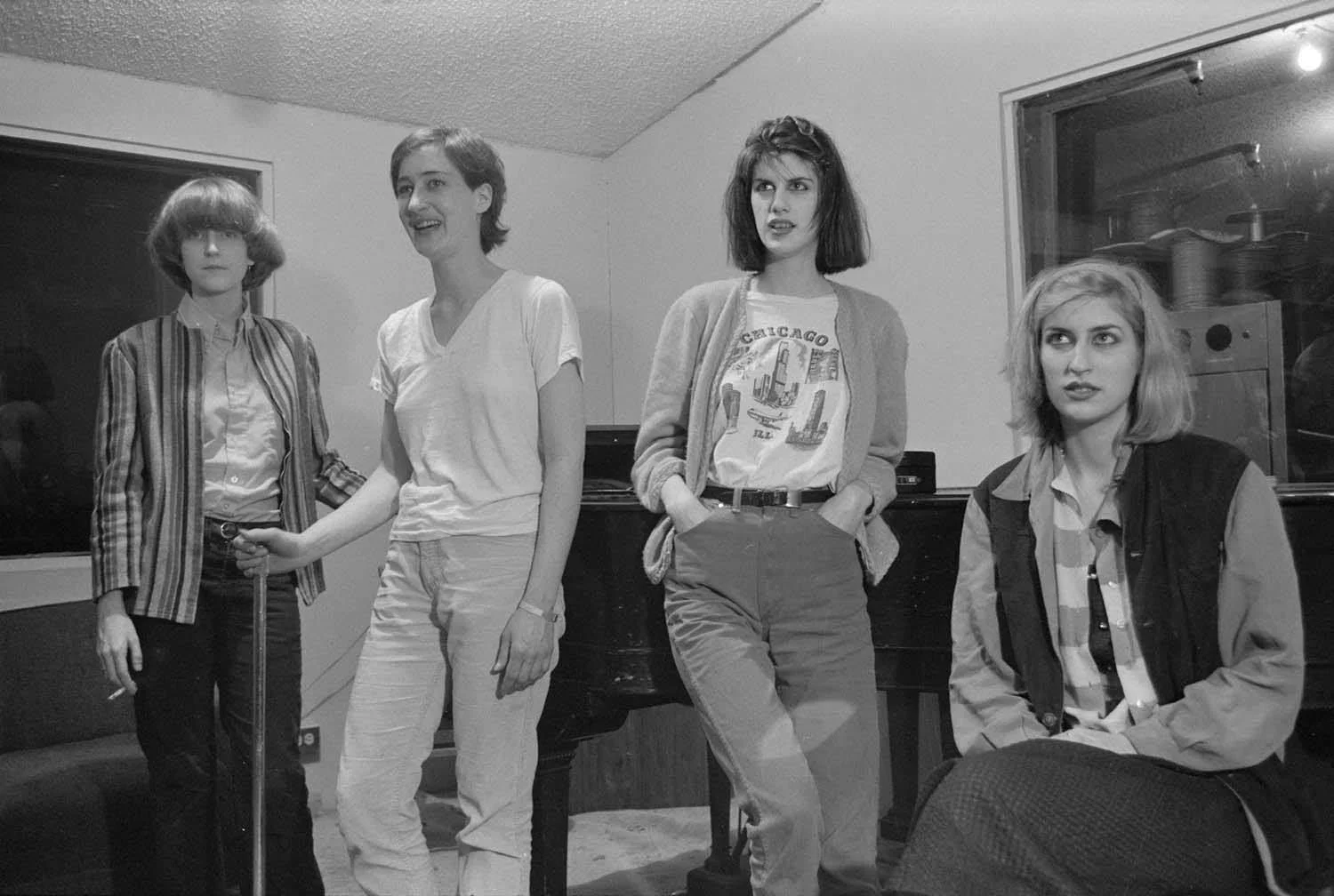
Photo: Nick Hill
How did this project of interest first come about, and what were some of those initial emotions like when learning there were folks out there who were not only fans of Neo Boys but wanted to bring this work to the surface for listeners both new and old, almost half a century later?
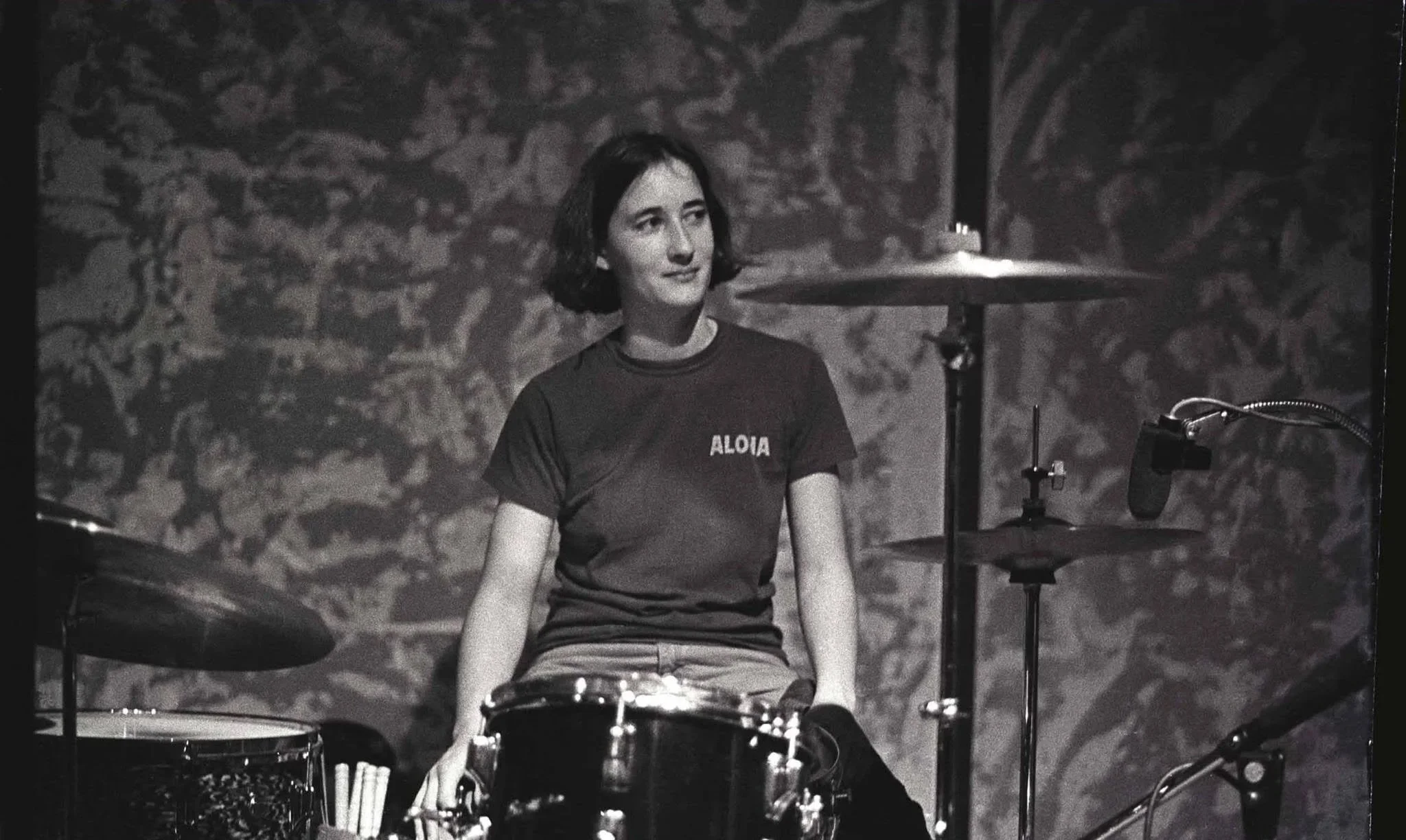
Photo: Maggie Hirsch
Pat: The project first came about when I reached out to Eric Isaacson (Mississippi Records) in March 2026 to see if he had any of the Neo Boys’ anthology, “Sooner or Later,” left in his store. It was a project released by K Records 13 years ago, and the LPs were co-distributed by Mississippi Records. I was releasing my Portland Punk Rock Lyrics book in July 2026, and I wanted to have LPs available at the event by the bands featured in the book. He said he didn’t have any more, but had been thinking about reissuing the Neo Boys’ “Crumbling Myths EP” and the first single. He wanted to combine them on one LP with the original CM’s cover. I said I’d reach out to the band and see what they thought. Everyone responded quite enthusiastically, and the project was born. Personally, I am always excited about a Neo Boys reissue cause I don’t think we were able to promote or distribute “Crumbling Myths” properly when it was released in 1982. The reissue would consist of 1500 pressed LP’s with a 12” x 12” accompanying booklet designed by Icky (Alec Dunn). Erin Yanke interviewed the band and transcribed it for inclusion in the booklet. There were probably 200-plus back-and-forth emails regarding the project. Kt collaborated with Icky on the design and layout, and everyone chimed in about who designed which poster and other pertinent details. The result is a stunning document that features almost every poster from every show the Neo Boys played, with three interviews by Erin Yanke. Sometime along the way, it was decided we should use the Randy Moe-designed cover from the first single for the LP cover. I’d forgotten that small detail sometime during production, and when I saw the record for the first time I just about had a heart attack, as it looks like a giant first single. The record sounds really fantastic and arrived just in time for the July 18th release at Blackwater Music. The afterparty, as it was called, included performances by Noxeema (Erin Yanke’s band) and a 7-song set by the Neo Boys cover band, Running in the Shadows, with me, Pat Baum, on drums. The records will be distributed worldwide by Mississippi Records, with digital downloads available at Bandcamp and other choice platforms. According to Eric, more than half of the records were presold to distributors. It was so cool to see those who purchased records at the release party proudly displaying their copy; we signed a few here and there.
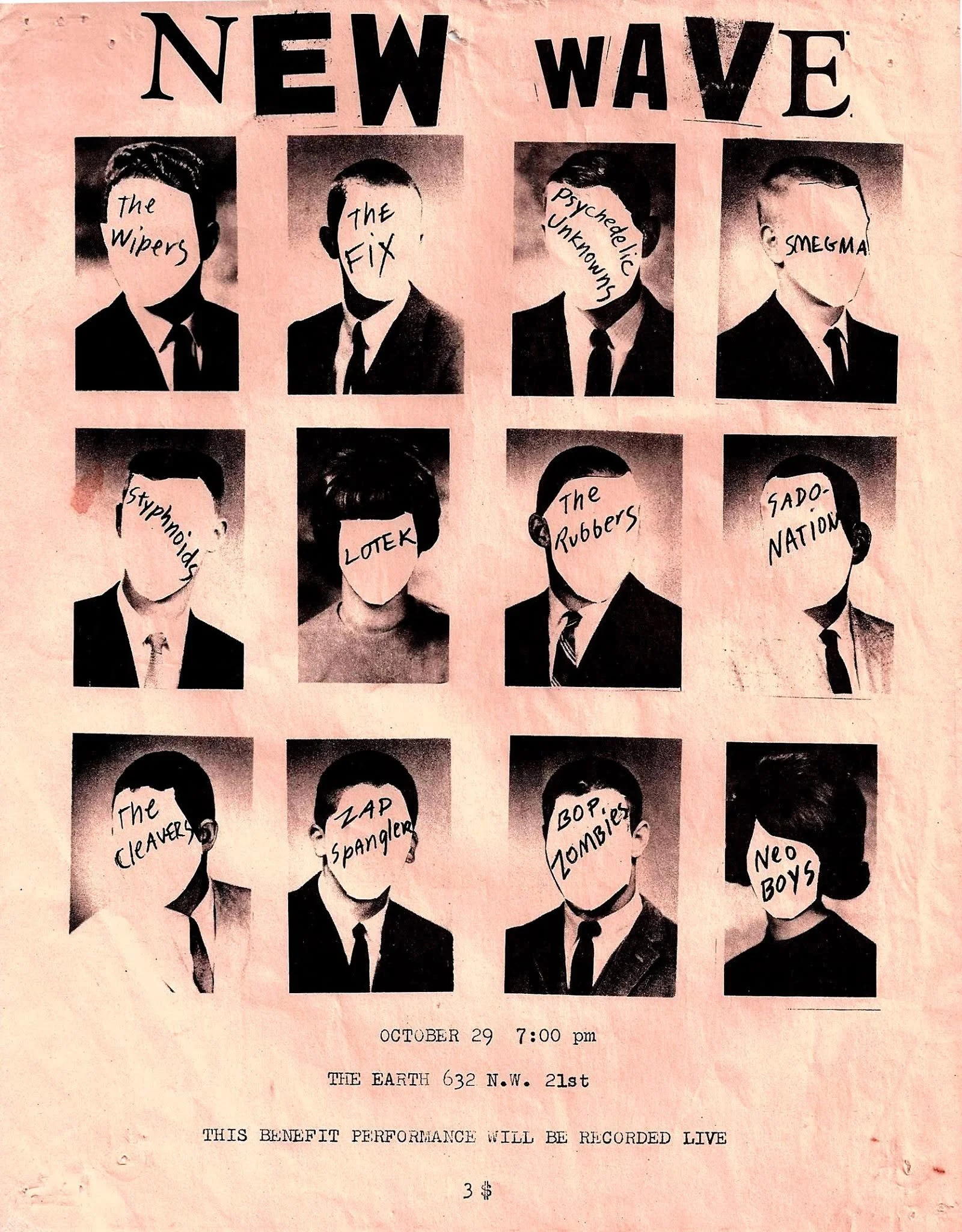
Poster: Janice Morlan
Take us all the way back to the beginning, when everyone first connected with the rest of the band and its future members, Pat Baum, Meg Hentges, Jennifer Lobianco, and Carol Stienel. What was that initial chemistry like between everyone, and what ultimately inspired the band’s intense identity?
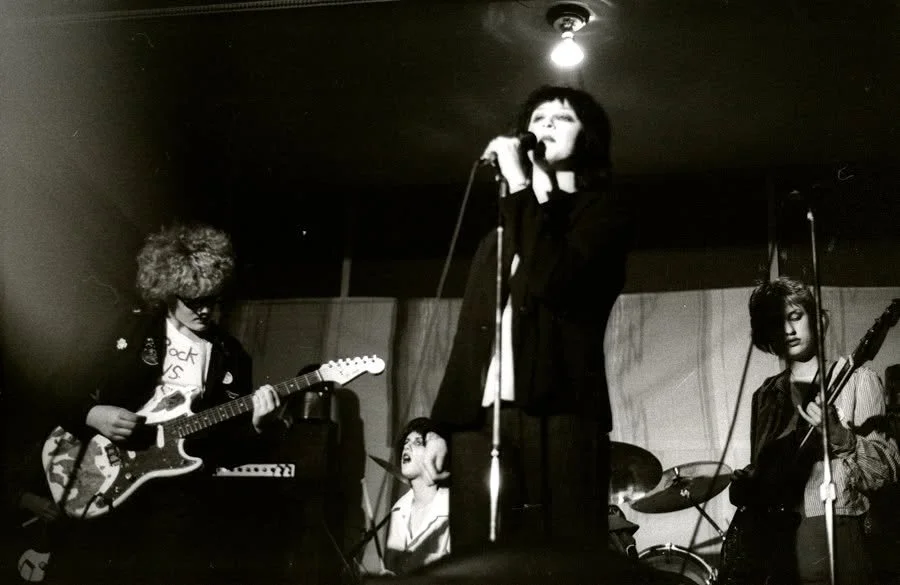
Kt: Well, ALL of us were heavily influenced by music from an early age. Pat played bongos and pot lids with sticks, Meg's grandfather was a fiddle player who encouraged her to play music, and she chose guitar; Jennifer got her first guitar at eleven. I had a wind-up Monkees’ guitar, and Kim had a hairbrush for a mic; together we would pretend to be in a band, lip-syncing to records found around the house. I don't remember a time when music wasn't a part of life. Kim and I were practicing with some childhood girlfriends in a band called Formica and the Bitches, and one day Jennifer came up to us and asked if she could join. We had seen her around and thought she was really cool. She put out a local magazine for a while, and we had all read it. We were surprised but flattered that this older woman we admired wanted to hang out with us teenagers. So we said yeah, okay. The band only lasted a short time. Andrea and Formica left for London, and Jennifer stayed with Kim and me, with the understanding that Kim wanted to sing rather than play drums as she had in "the bitches." So we were looking for a drummer, and we wanted a girl. I think we met Pat through a mutual friend, mostly like at a concert or at the short-lived all-ages venue we had for a couple of shows. I can't remember who asked who about joining, but I know there was no hesitation; she became our drummer immediately. And she was always there. There was never Neo Boys without Pat. And thank goodness because Pat was not only a good drummer who became an excellent one, she pretty much found every rehearsal space we ever had. As far as chemistry goes, we were all very determined to get better on our instruments, to write songs, and to be taken seriously. It felt like we were all on a mission together. We practiced every day, made decisions democratically, and we pooled our resources. We never fought about anything within the band that I can recall. However, outside the band, our aspirations did not always click with Jennifer. Maybe the generational divide played into it in the end. I don't know. But after a year together, she quit. Shortly afterwards, our friend who played guitar in "the bitches" with us had returned from London. She was dating Carol at the time and suggested we play together. There weren't many women playing guitar at the time, and we wanted to remain girls only. So we said, yeah, ok. I think she played with us for 9 months or maybe a year.
But she wasn't a good fit, and I'll leave it at that. Then I think we went about 6 months without a guitarist, which seemed like an eternity back then. But Kim, Pat, and I still practiced every day. We briefly tried to work with a girl we had met at a show who was learning to play guitar. We wanted to give her a chance, but it was very frustrating. It felt like we were moving backwards. Luckily, Meg had moved to town from Missouri and had given her number to the drummer of Sado Nation, whom she had met in an art class. He gave it to us, and we arranged to meet at our rehearsal space. From the moment she walked in and said, "Hi y'all," I knew she was the one we'd been waiting for. She was unpretentious, funny, and kind. And when she played with her bright sound and imaginative style, I was thrilled. There was no more clunky guitar from Carol. There was never a doubt in my mind that I wanted Meg to play with us. I think we asked her the next day. I remember feeling panicked that she might find another band first. Thank goodness she said yeah, okay. It seemed like a whole new world opened up after that. With Jennifer, there was so much effort placed on learning how to play, and with Carol, there was a lot of frustration. But with Meg, it was actually fun. She added dimension to the songs by inventing unique guitar parts rather than just following along to my bass. Pat and I had always had our rhythm world together, but now we had a guitar player that was part of the dance too. Our songs became fuller both lyrically and musically. She taught me a lot. And all of us became lifelong friends. People have told me before that they thought we were intense. That's always surprising to me, and it was never by design. We were being ourselves, doing what we wanted. We didn't put on a show. We wanted to be taken at face value because this was both our strengths and vulnerabilities. Take it or leave it. And Kim's words were never anthemic or preaching; instead, they were deeply personal observations of the world around her. Maybe honesty is intense for some people.
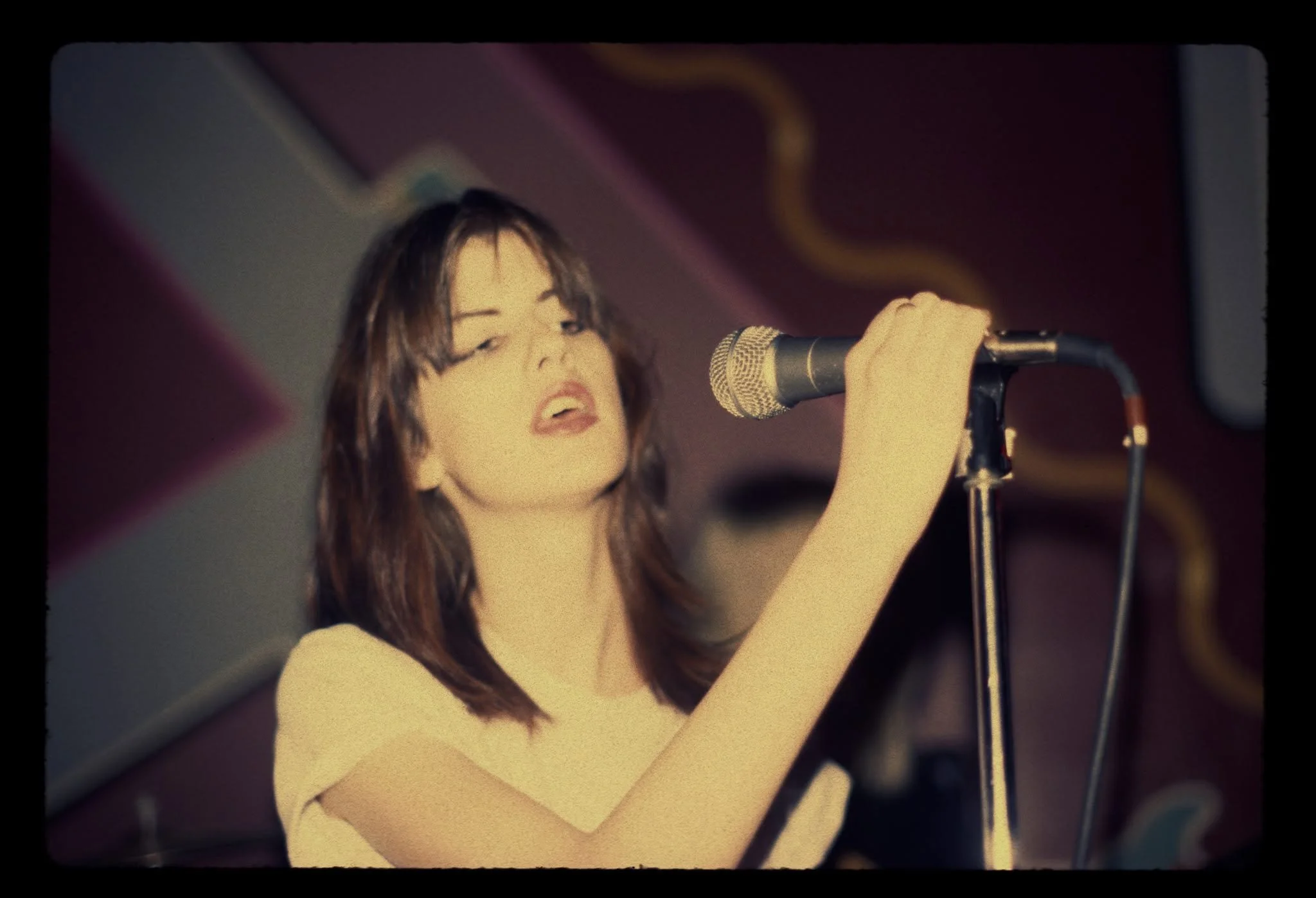
Photo: Maggie Hirsch
As an all-female group facing certain hardships throughout the 1970s, 1980s, and, well, any decade for that matter, what elements or specific subjects were most important to you guys to express and explore with your music?
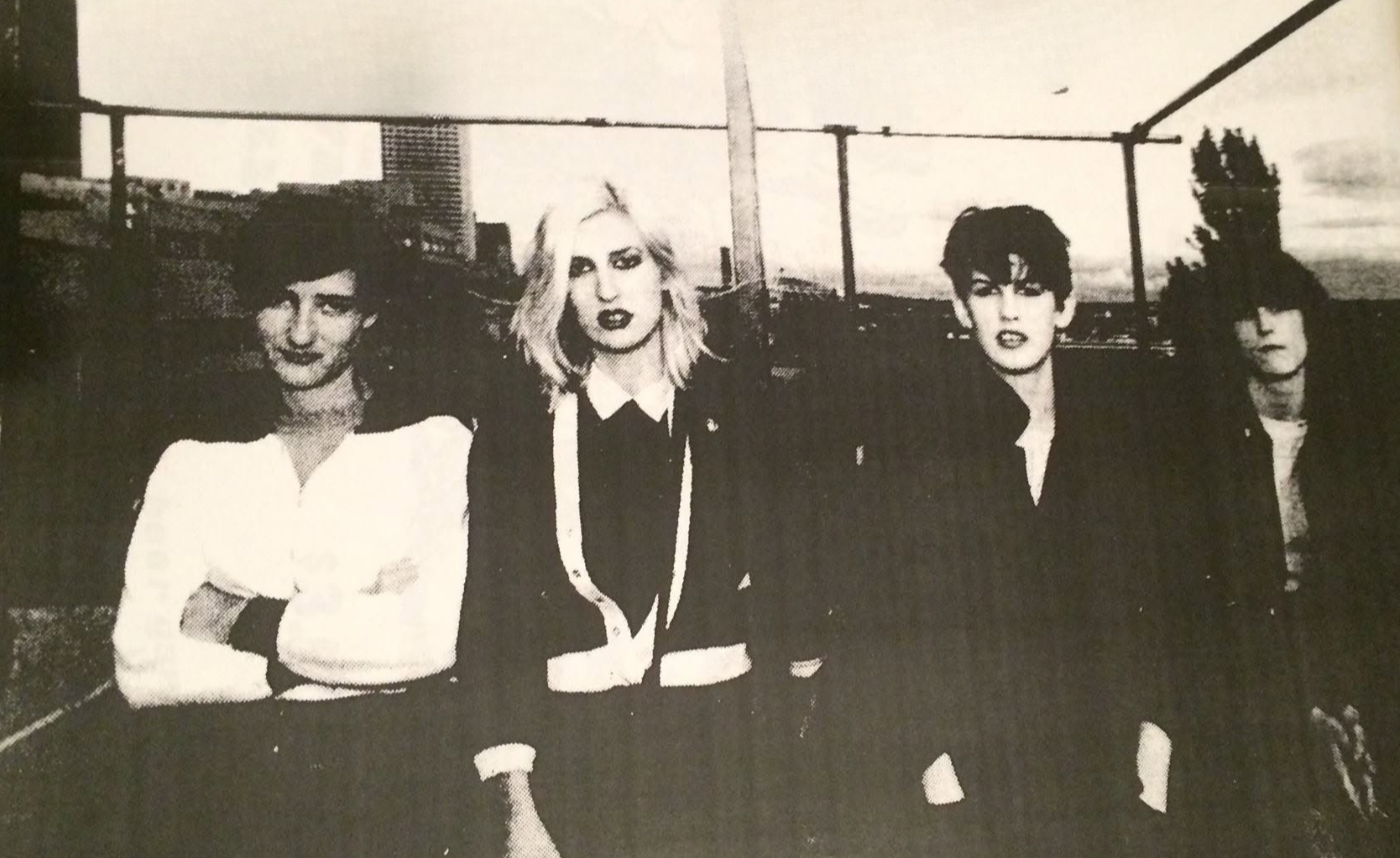
Photo: Kristine Larson
Kim: The hardships we experienced as a band were basically the same as other young musicians' & artists' struggles trying to carve out a niche within the margins of Punk Rock in PDX. Youth, weirdos, and misfits with no credibility within the status quo faced the same challenges. The difficulties of finding employment, having a place to play music, renting housing or rehearsal space, and not being able to afford instruments & equipment- we all had shared experiences during these times. I never felt these circumstances stemmed from being an all-female band. I personally never felt the confines of a gender role amongst my peers within the scene. I think this strengthened us as a band through exploring our subject matter without limitations. There was no agenda or preconceptions of what should/could/would be. It may seem underwhelming, but we focused on our craft by playing daily together, learning our instruments & writing songs. Even when we did not have a guitar player, Kt, Pat, and I would still rehearse. For a time, my guardian forbade me from playing with the band, but it didn’t stop us from rehearsing together or performing. With support and encouragement from the band, I was propelled to continue writing. The lyrics were written in this internal and external perception of a teenager’s freedom of self-expression.
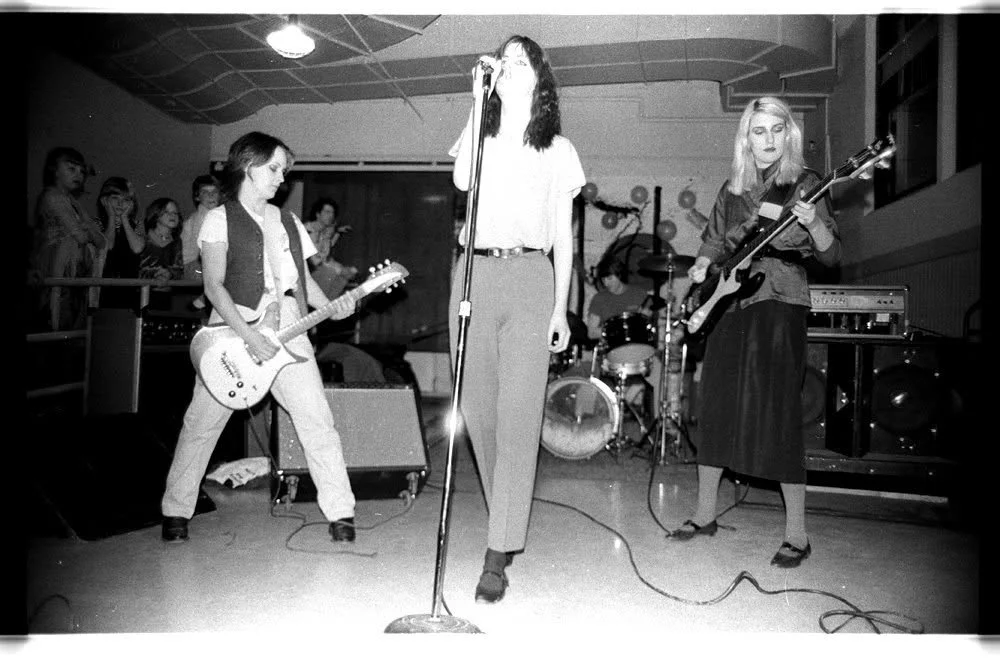
Photo: Janice Morlan
Hailing from Portland, Oregon, the same city that also gave birth to the likes of The Holy Modal Rounders, The Wipers, and Zipper/Dead Moon, to name a few, what was the local scene like during the band’s near half-decade run?
Kim: The local scene was extremely small compared to other West Coast scenes such as Seattle and San Francisco. Touring bands that came through the PNW often skipped Portland and went on to Seattle and Vancouver, B.C. The Portland Punk scene was predominantly underage. It never felt exclusive, rather the opposite. Outsiders of all sorts on the fringe: avant-garde artists, experimental musicians bending the boundaries, supportive curious onlookers, queer culture, and street culture. It was an eclectic sort. Shows were generally a large shared bill of bands with really no headliners except for maybe the Wipers. Venues were few and far between, so practically anyone in a band who wanted to play a bill usually did; bands had short sets, and often equipment was shared by multiple bands. We organized and operated pretty democratically. The scene was generated by the scene. Hitting up colleges, art galleries, local halls to rent, or someone’s house who didn’t mind it getting trashed to play a show for an audience to hear. We promoted shows by smearing the city’s telephone/light posts with posters done by bands and artists. Bands produced and promoted their own records. By request, Renaissance Records and Mildred’s Palace would spin 45s of artists we anxiously awaited to hear from across the pond, and beyond. We acquired clothes and wares from "the bins," Salvation Army, and St. Vinnies; people huddled together in rented, cold, damp, and dreary houses, and somehow we all managed to eke out a living. The Portland punk scene was significant for the people involved, during a time when Portland was economically depressed, hate crimes of gay bashing took place at Laurelhurst Park, counterculture of the Rajneesh movement was prominent on the streets of downtown Portland, as well as Scientology, and Hare Krishnas. Disco reigned in the nightclubs. All the while, a small assembly of punk kids was making an underground rumble in the city of PDX.
I understand you guys opened for Nico and also played one of your very first shows with Television. What were those two particular nights like for the band, both professionally and personally, and what transpired during those particular performances?
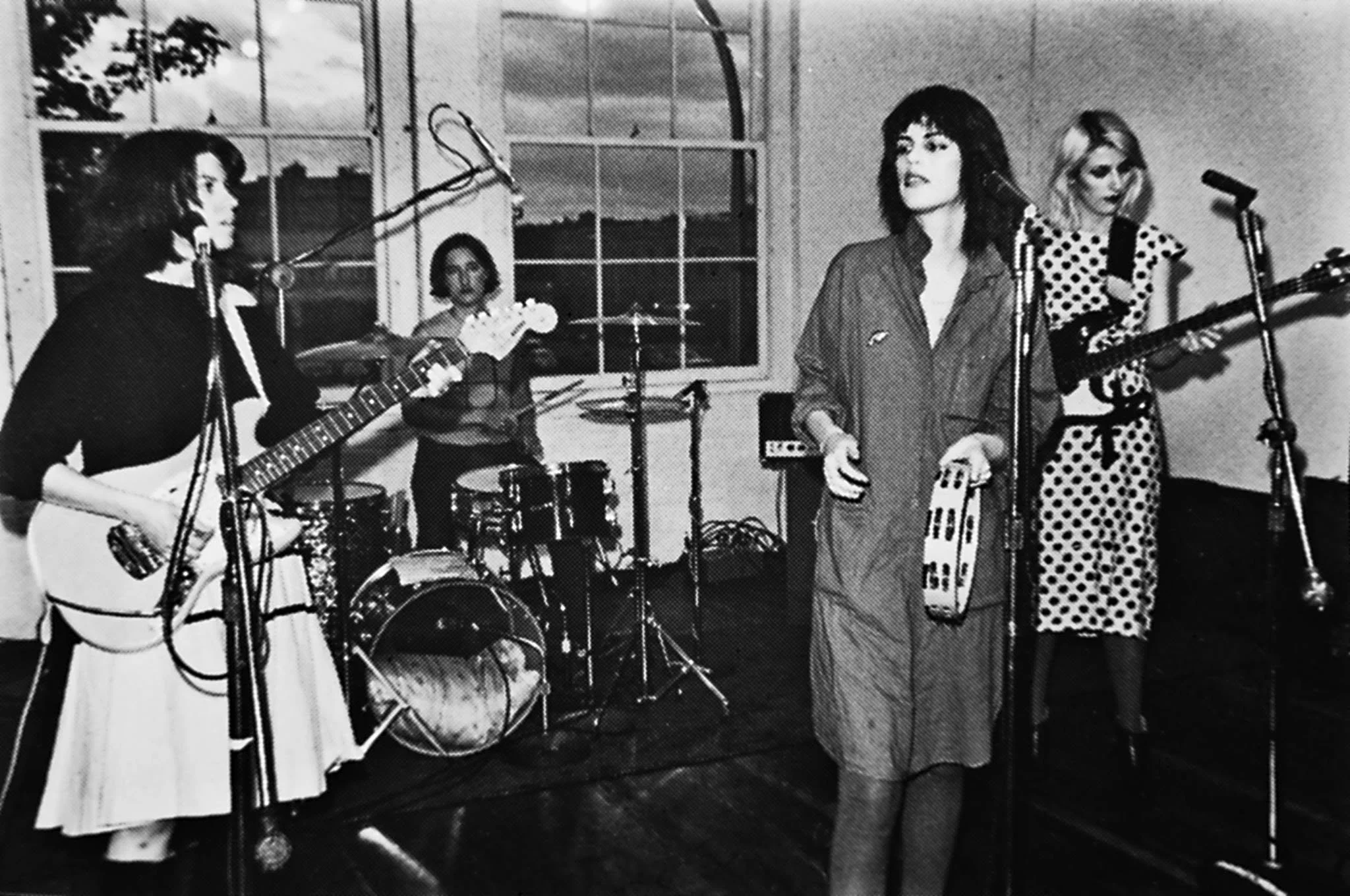
Kt: The Television show wasn't our first, but it was one of our earliest. We all really liked the band. “Marquee Moon” was one of my favorite albums at the time. Kim and I had pooled our allowances together to get that album from the only record store in town that carried a couple of copies. I still think that record is fabulous. Anyway, we were all excited. The only problem was we were told we needed a 30-minute set and we didn't have that much material yet. Of course we lied and said we did so we could play. Our solution was to play the song “Sooner or Later” for about 15 minutes as our last song. Those were the only words, and it only had a single riff. Kim sounded rather fed up by the end. How many ways can you sing three words? I think the audience wondered if it would ever end. But PLAYING with Television was the only way for some of us to SEE Television because we were underage and it was in a bar. And they were great! It was wonderful to hear those beloved songs live. Then after the show, we packed all our equipment into Pat's old Belaire car, piled into it with Richard Lloyd and Fred Smith, I think, and gave them a ride to their dive motel up the street where we hung out for a while. There was never a sense of being starstruck by Television. While I admired their music very much, and they were older and from a bigger city, it felt like we belonged in the same world somehow. Nico, on the other hand… Well, the woman is an icon! At least to us, she was with her songwriting, presence, and voice. As a girl, in many ways, Nico was the older woman to look up to. So we were over the moon but also very nervous to play in front of her. Turns out there was no need to be. She didn't hear us. She remained in her dressing room. Not sure if it was a disappointment or a relief. I remember being thrilled to see her perform, especially on her harmonium and hear that unmistakable voice of hers. Unfortunately, the crowd was surprisingly small, with a heckler who kept yelling at her in German. Even though she remained quite composed, I remember feeling sad for her and pissed off - this is Nico, dammit, show some respect. When I think back on it, it was a weird night.
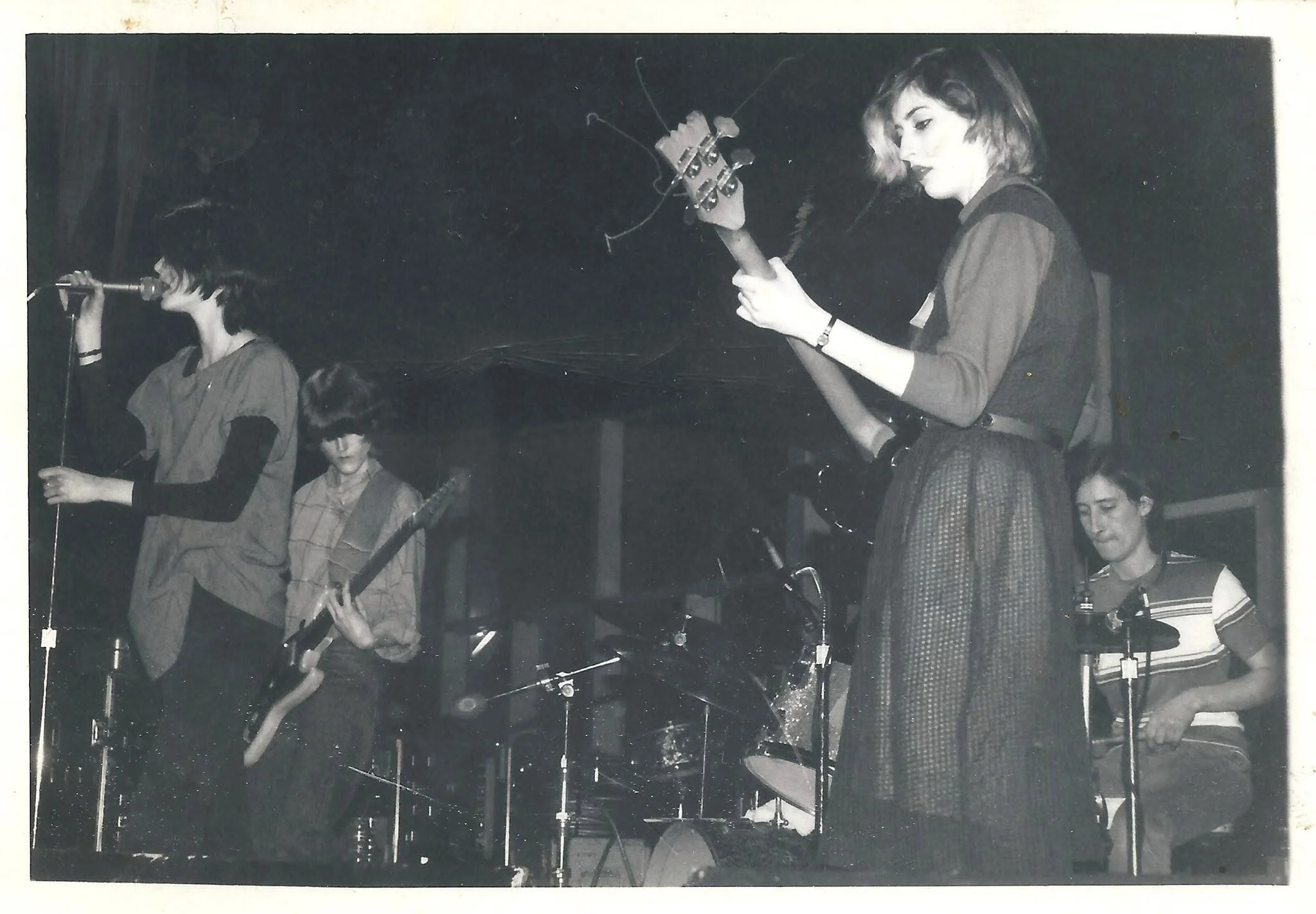
I’m curious about the overall process and approach to the band’s 1980 debut single as well as the 1982 EP “Crumbling Myths.”
Kt: At the time, the only recording studios in town were way too costly for any of us kids to use, plus they were part of an established music scene that didn't value bands like us anyway. So when Greg Sage asked us if we wanted to record a single for the label he was trying to get going, Trap Records, we were game. Greg and all the Wipers had been really supportive of us, and we trusted he would do a good job and respect what we were doing. Where to record was a bit of a challenge, and the first attempt in the backroom of a record store didn't work out. But when Pat's parents went out of town for the weekend, we were able to use their house. The band set up in the living room, and Greg, with a borrowed Crown reel-to-reel 4-track that was so top-heavy it had to be tied to something to keep it from falling over, set up in the dining room. We all just played live together, but no vocals were recorded. A bit later, we were able to use our brother's apartment while he was in Russia and recorded the vocals in the bathroom. Four songs were taped, but only three would fit onto the single. I remember Greg, and I liked the song that didn't make it better than one of the songs that did. Kim reminded me recently that The Wipers used to cover it at shows. But we were always a democratic band, and his vote didn't count. I have no idea where that song went.
Meg: We recorded Crumbling Myths at Wave Studio in Vancouver, Washington. Tom Robinson was the engineer and a friend from the local scene. We played live in the studio and only did a few overdubs. We worked around the bookings Tom already had. It was January and cold; we got snowed in and had to stay at the studio. I remember lying underneath a piano in the live room while a guy in the control room was recording a John Denver song. I was trying to sleep, but "some days are diamonds..." played over and over and over again, and I was feeling disturbed by how dirty my socks had become. One afternoon Pat and I were rewinding a tape on the two-track machine. Pat was telling me a story from the past about how she was rewinding a tape, and the tape machine reels started spinning faster and faster until one reel spun off the machine and embedded in a door. As soon as she stopped talking, we both heard it at the same moment: the tape machine motor pitching up as the reels started spinning faster. We dove to the floor at the same second the tape reel flew off the machine and slammed against the wall. To get to record in a real studio was a big deal to us. I think we were all a little nervous. In the early eighties, musicians didn't have access to instruments and recording equipment like we do today.
What was most important for the band to achieve during very trying times of injustice, censorship, and racism, to name a few? Sounds familiar, would you say? What would the Neo Boys say and do about our current times, and what would the music be if you guys were to make another record and take it out on the road? Set for release later this month, what are you most excited for fans, both new and old, to experience with this newly remastered material? Is there anything else you would like to further share with the readers?
Pat: As Kim and Kt have said all along, what we were doing in the early days was not yet called punk. As a band, we tried to be true to ourselves and our beliefs, which reflected in our music and our participation in the scene (as it was called back then). We were very lucky that a spontaneous, non-judgmental group of people found each other, and managed to learn our instruments, find rehearsal spaces, and eventually put on (low-cost) all-ages shows so the bands had somewhere to play. We encouraged the participation of the many talented Portland (and surrounding areas) youth, as they were our audience and word of mouth was the best way to promote our music back then. There was always something to do: learn an instrument and practice, form a band, design and xerox posters, put them up, promote the shows on radio and in print, load equipment in and out, work the door, do sound, record audio and video, find the means to put out and distribute cassettes and records, and if you were lucky, tour the NW. Almost everyone in our scene was in a band, but there were many other things to keep the scene alive and active. Nothing specific was required to participate; you just had to show up. Our politics were not written down anywhere, but if you look at the definition of anarchism, we emulated the values of independent individual and collective action without the need for government or authority. The collective action was what made our scene strong and effective. We did it without really knowing that we were anarchists. It’s hard for me to imagine what the Neo Boys material would be like in 2026 (50 years later). I don’t think we would be writing angry songs about the current state of the US and the world. I cannot speak for Kim, KT, and Meg, but I believe we would project a message of hope for humanity. Not to give up and bow down to authority.
Meg: Neo Boys songs almost always started with a bass line that KT would create. Pat would drum to it, I would try to come up with a complementary part on guitar, and finally Kim would write the lyrics and melody. The “Sooner or Later” release was lovely, but I felt it was bass-shy. The core of our songs was always the bass guitar; I was happy to hear these new remasters sound fantastic and that the low end in the mix was ultimately restored. The included book is beautiful. We are excited by, and proud of, this Mississippi Records release. Thanks for your interest.
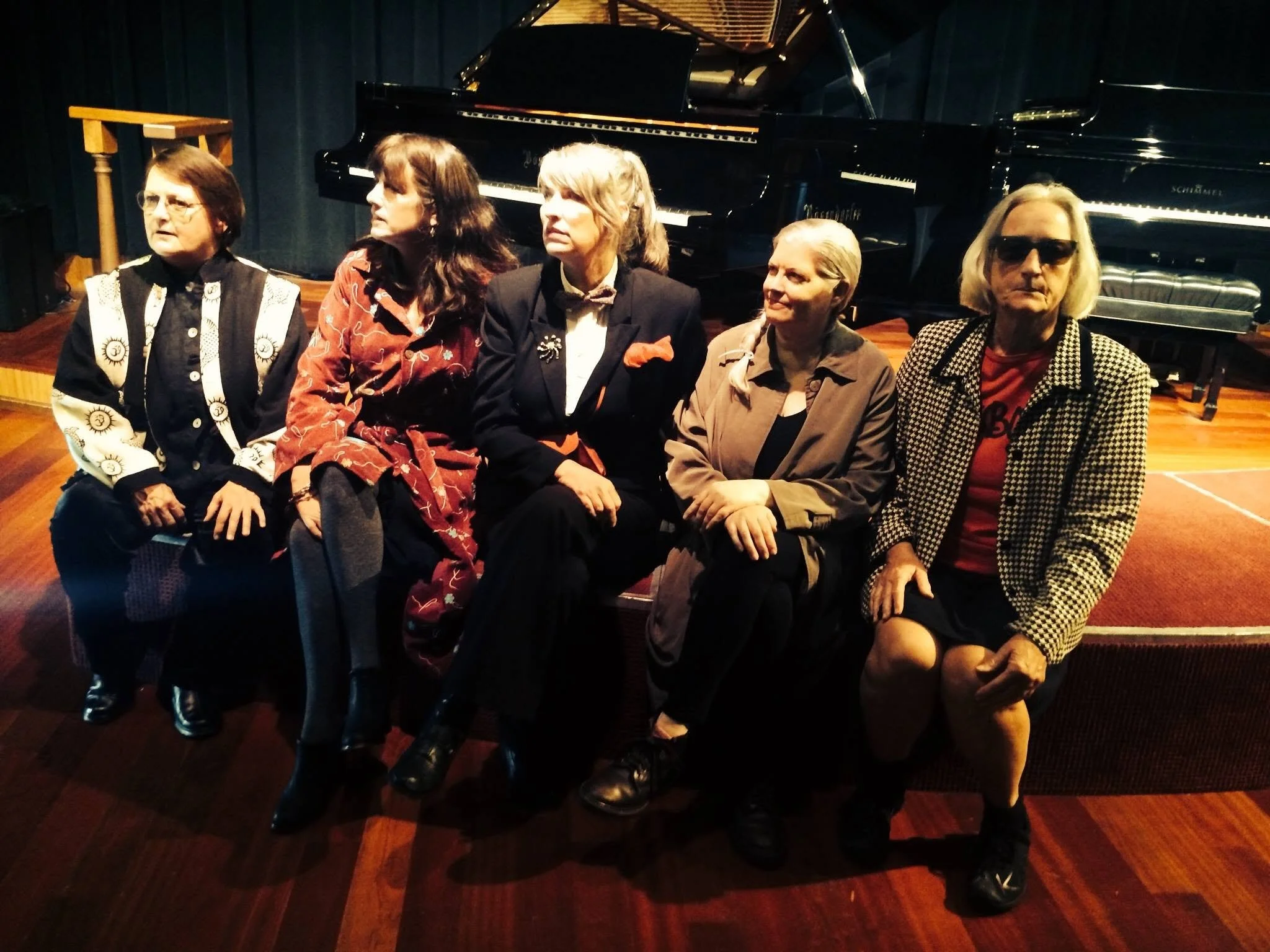
Photo: Brent Angelo