The Adam Amram Interview
To say Adam Amram was raised in a musical family would be an understatement. The New York-based songwriter and multi-instrumentalist grew up with his siblings under the creative care and spiritual structure of their father, David Amram, whose critically captivating career has spanned well over half a century, having worked with the likes of Charles Mingus, Leonard Bernstein, Pete Seeger, and Jack Kerouac, to name a few. For the last twenty years, Amram has been eagerly investing in his resume, which has explored all sides of the music industry, from building venues and community to releasing his own music. Since 2021, Amram has released three solo records, with “Tribulations” his latest effort, truly capturing the romantic realms of the city’s endless exploration into the poetic psyche and lyrical landscape of a time that's since passed.
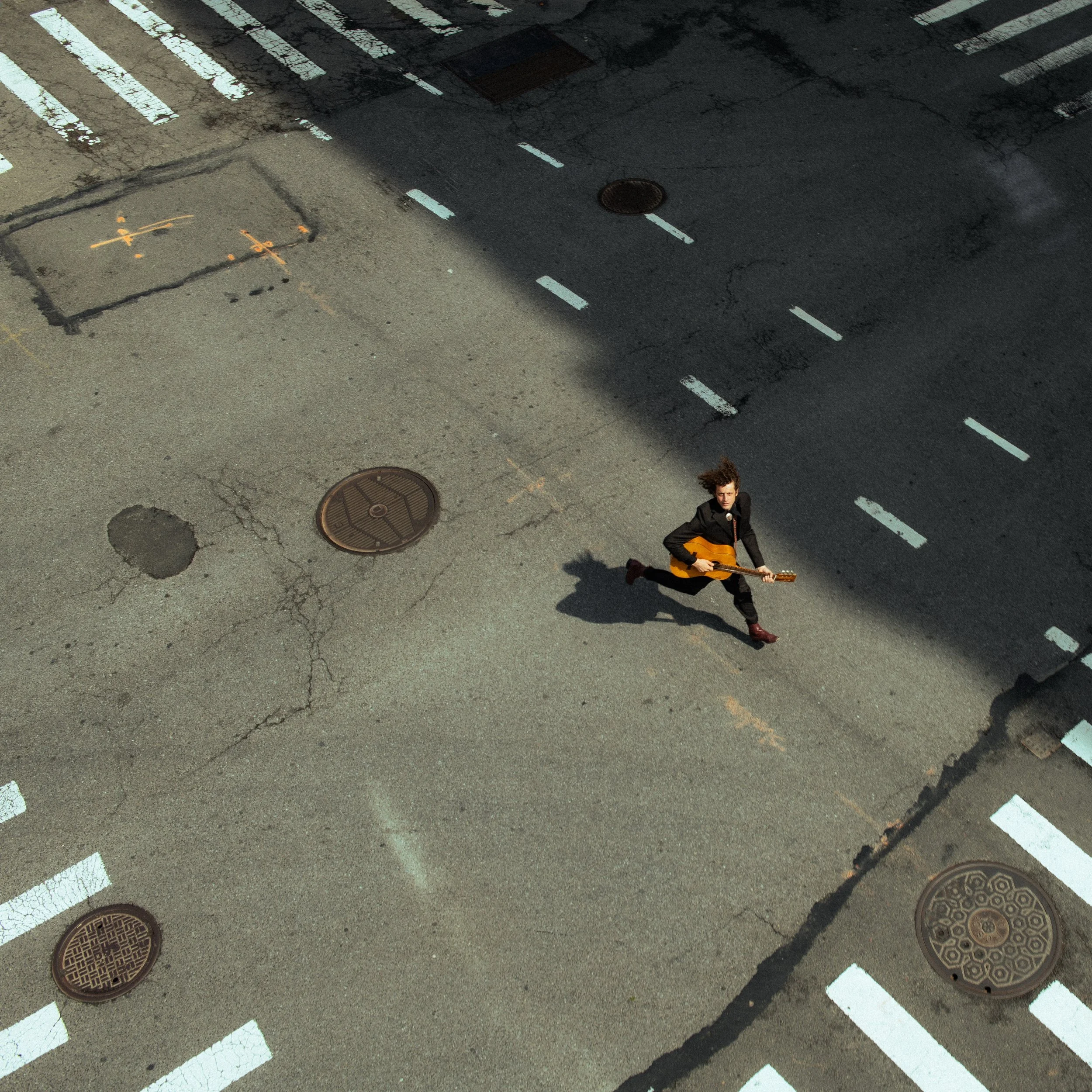
Photo: Alec Castillo
I have to say, when I first began researching for this interview, I learned that your father, David Amram, is something of a legend! Take us all the way back to your formative years growing up with your siblings, who are also artists themselves. It's a safe assumption you guys were all destined to work in one creative climate or another.
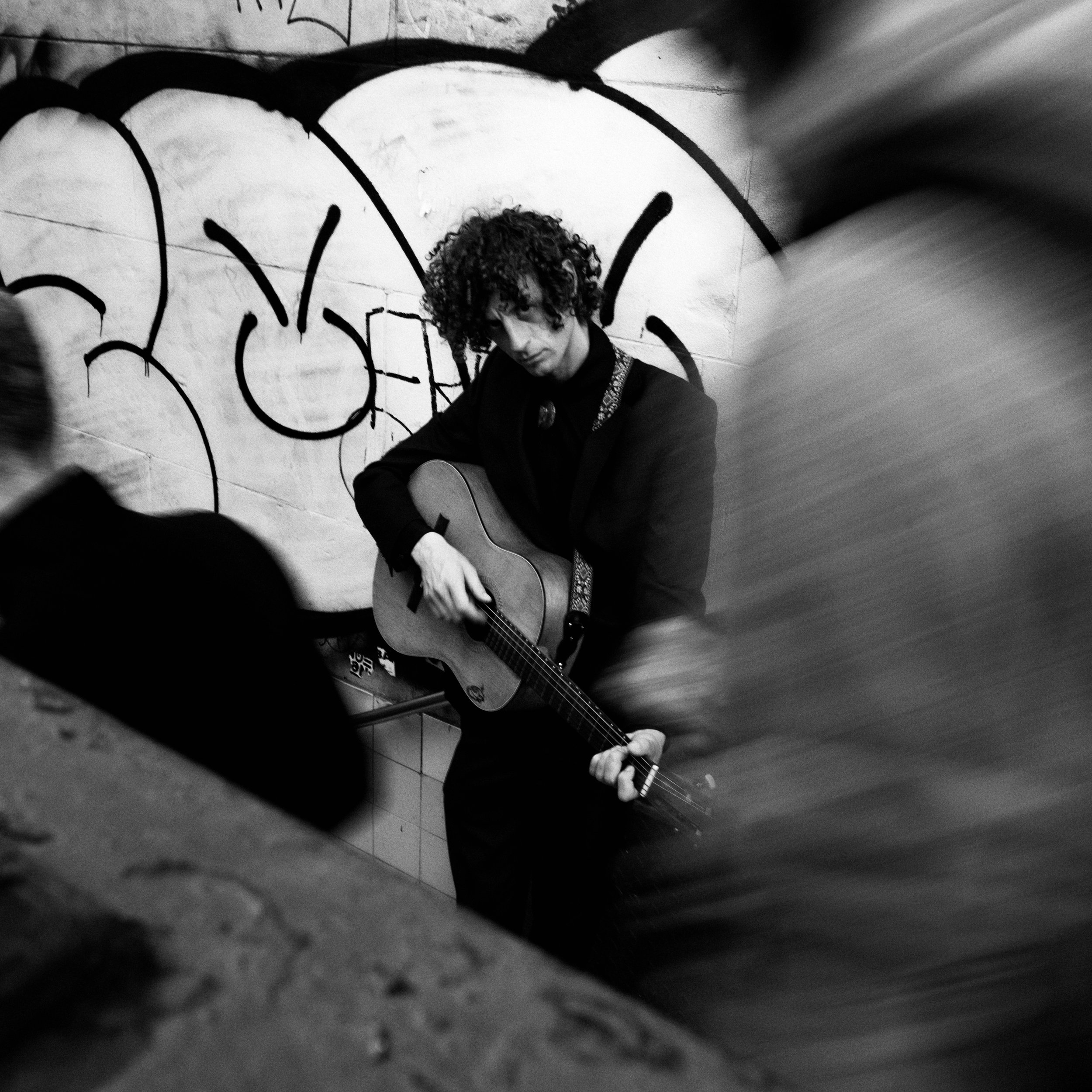
Photo: Alec Castillo
Music came in all forms and was everywhere growing up. My father, David Amram, came from a background in classical composition and jazz, and was always deeply interested in folk and world music, and in the idea that music is a universal language. That curiosity took him in many directions, from early collaborations in the Beat-era New York scene with writers like Jack Kerouac, to performing and recording with a wide range of jazz musicians, to working with folk and country artists such as Willie Nelson and Bob Dylan, and becoming deeply involved in the folk and civil rights communities. Pete Seeger was a close friend of my father and lived nearby, so he was often part of the musical and community gatherings we grew up around. He and my father were constantly involved in benefit concerts for environmental, social, and cultural causes. So growing up, there was Afro-Cuban music, jazz, folk, classical, country, punk, and everything in between. But it wasn't coming from a record player. It was different musicians in the house playing together, hearing it backstage, or being around live performances and community events. My two sisters, Alana and Adira Amram, and I were onstage with my father from the time we were kids, playing folk songs and participating in a simple way that reflected that idea of community and collaboration. My sister Alana was also heavily involved in the late '90s punk scene, which became a big influence on me. I followed her to all-ages shows, and she was making homemade zines, which opened up a completely different world. What my father instilled in us wasn't the music business, but music as a lifelong, spiritual, and communal journey that connects people across cultures when approached with respect. It was never presented as a career, just part of life.
Photo: Alec Castillo
Singer-songwriter, multi-instrumentalist, among other things, tell me about growing up in New York and the undeniably unique impact this environment has had on you as an artist and individual. I imagine you find it a romantic and truly transcendent place. What specific elements would you say inspire you most?
The vibrations. They come from everywhere. There's a J train outside my window right now, rolling by as I write this. There's constant noise, constant movement, and people from every direction and every walk of life. That energy has always been a huge part of what inspires me every time I walk outside. New York is the most incredible city, but it's also a double-edged blade. If you're riding somewhere in the middle, it can feel incredible, but it can cut you if you go to the edges. You can be surrounded by thousands of people and still feel completely alone. There's a strange duality to that. I think that contradiction has always found its way into my music. Beauty and struggle are happening at the same time: community and isolation. Signal to noise.
“What my father instilled in us wasn’t the music business, but music as a lifelong, spiritual, and communal journey that connects people across cultures when approached with respect. It was never presented as a career, just part of life.”
I’m familiar with the cosmic country outfit ZZZWalk, which recently led me to your solo work. Walk me through the writing evolution of your previous albums “Lights On Broadway” and last year’s “To The End”, and how you’ve come to be the songwriter you are now. I understand your most recent effort, “Tribulations”, which was recently released on Nudie Records back in July, was born from the beads of sweat from last year’s heat wave and the endless insanity we’ve all been enduring during this administration. When you first began approaching this body of work, what were some of the more intimate ingredients that went into making this album come together?
Before I started writing songs, I was a drummer for many years in different bands. I joined Psychic Ills around 2016 with Jon "Catfish" DeLorme, who invited me to play drums in ZZZWalk. His songwriting and lyrics were a huge influence on me and planted the idea that I might be able to write songs myself. When the pandemic hit in 2020, everything stopped, including my carpentry work. Around the same time, our Psychic Ills bandmate Tres Warren passed away. In that strange period of isolation, I finally started writing. My first record was completely homemade, essentially stream-of-consciousness and full of mistakes. I never imagined anyone would hear it. By the time of the first single, BadLands, I began bringing musicians into the studio, which was a dream for me. I continued that approach with “To The End” and now “Tribulations”, allowing the songs to grow while the musicians played together. There was a feeling that reminded me of 2020. With the return of the same administration, there was a renewed sense of confusion, division, and uncertainty about the future. I feel like controlled chaos is used as a weapon to keep people divided. That atmosphere inevitably found its way into Tribulations, but through a personal lens rather than as a literal political record.
Photo: Alec Castillo
While enduring some of the crazy conditions of life here lately, while balancing your own curiosities, was there an overall vision ultimately driving things forward? Tell me about some of the background to tunes like “In Our Mind,” “On The Corner,” “Photo,” and the album’s title track ender. As summer comes to an end, what does the remainder of the year look like for you? Is there anything else you would like to further share with the readers?
One night at the Woody Guthrie Folk Festival, I was talking with Butch Hancock in the parking lot. He told me that Townes Van Zandt once said he never started a song with a literal idea. Whatever emotion he felt when he picked up the guitar, he tried to express that feeling. Something about the simplicity of that really connected with me. I try to approach songs similarly, letting the emotion come first and allowing the lyrics to follow it. I'll be back behind the drums this fall, traveling with one of my closest friends, Cactus Lee, for two U.S. runs in September and October. I'm also hoping to get the Family Band out on the road more, while keeping some time close to home with my family. More than anything, I'm extremely thankful to the musicians I play with. All of my music is recorded live, with the band together in the same room and extremely limited overdubs. We go into the studio without prior rehearsals, and the musicians help arrange the songs on the spot. The songs start with me, but they evolve naturally through each musician's own interpretation. Thank you to the incredible people who made this record possible: Jon "Catfish" DeLorme (pedal steel), Russell Hymowitz (bass, vocals). Madelyn "Madge" Strutz (drums, vocals), Shaun Couture (guitar), Jack Dawson (piano, Fender Rhodes, Hammond organ), David Amram (flute), Alana Amram (vocals), and Hunter Davidsohn (producer, engineer, percussion, vocals).