The Steven Hall Interview
Born and raised in Milngavie, a small suburb of Glasgow in Scotland, and eventually relocating to the States, where he would soon find himself completely immersed both intimately and intellectually in the creative culture of NYC’s complex core of artists, writers, musicians, and visionaries, Steven Hall (Nirosta Steel) has been spiritually sharpening his words and tonal tools for over four decades. Halls worked alongside Allen Ginsberg and some of the revolutionary romantics of the past, but his close collaborations were with American cellist, composer, producer, singer, and musician Arthur Russell. A friendship that has transcended the years through the good times and the bad, the veteran multi-disciplinary artist has announced a melodic manifestation titled “My Skyscraper” that features a collection spanning four decades. His music is a meditation on life, death, romance, and the open-ended questions of existence. One of the last of his generation to reach out into the weird winds in search of atmospheric answers to the questions, his findings to be radically remarkable and complicated, to say the least.
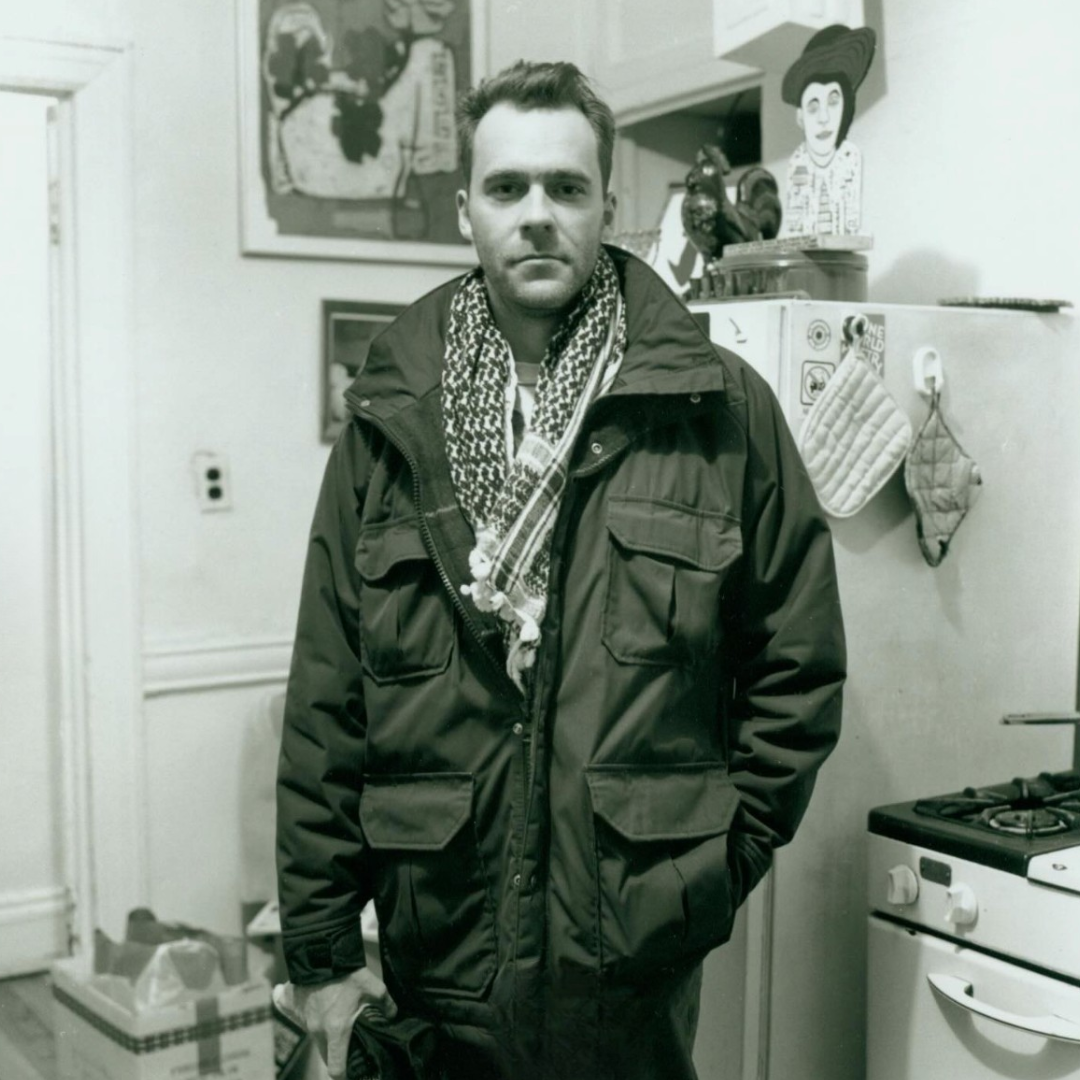
Photo: Allen Ginsberg
Tell me about growing up in Glasgow, Scotland, before eventually relocating to the States as a teen. I know some time has passed since, but what was your particular connection to music and art in “Caledonia” like before moving to the? How have these formative experiences shaped you as a person and artist?
I grew up in Milngavie, a sleepy small suburb of Glasgow in Scotland. My early life was blessed with both a great music education, in school and church, and a great local library. I sang solos in school and church choirs, which were quite modern, musically speaking. I ended up joining their youth outreach group, performing folk music on the beach in the seaside holiday town of North Berwick. This is where I started trying out different modes of harmony and teaching myself the guitar at home, listening to Donovan, The Beatles, Joni Mitchell, Moondog, and Frank Sinatra. He was from my father's vinyl collection, which also included Samba, Bossa Nova, jazz trombonist Jack Teagarden, and a sleepy vocalist/South Pacific soundtrack. I was excited and fascinated by the radical happenings in the NYC art world, and found out about it in my local library's rather hip collection!
Coming up in New York when you did, how did you initially meet the late, great Arthur Russel, and what were your first impressions of him? With the obvious nature of the city’s critically creative core, what specific elements brought you guys together? I understand that after Russell’s devastating passing, you started several projects in his melodic memory, such as Bright & Early, Arthur’s Landing, Buddhist Army, Recent Memory, and Turbo Sporty. Tell me about some of these projects and how they’ve helped you to cope with the loss over the last three decades.
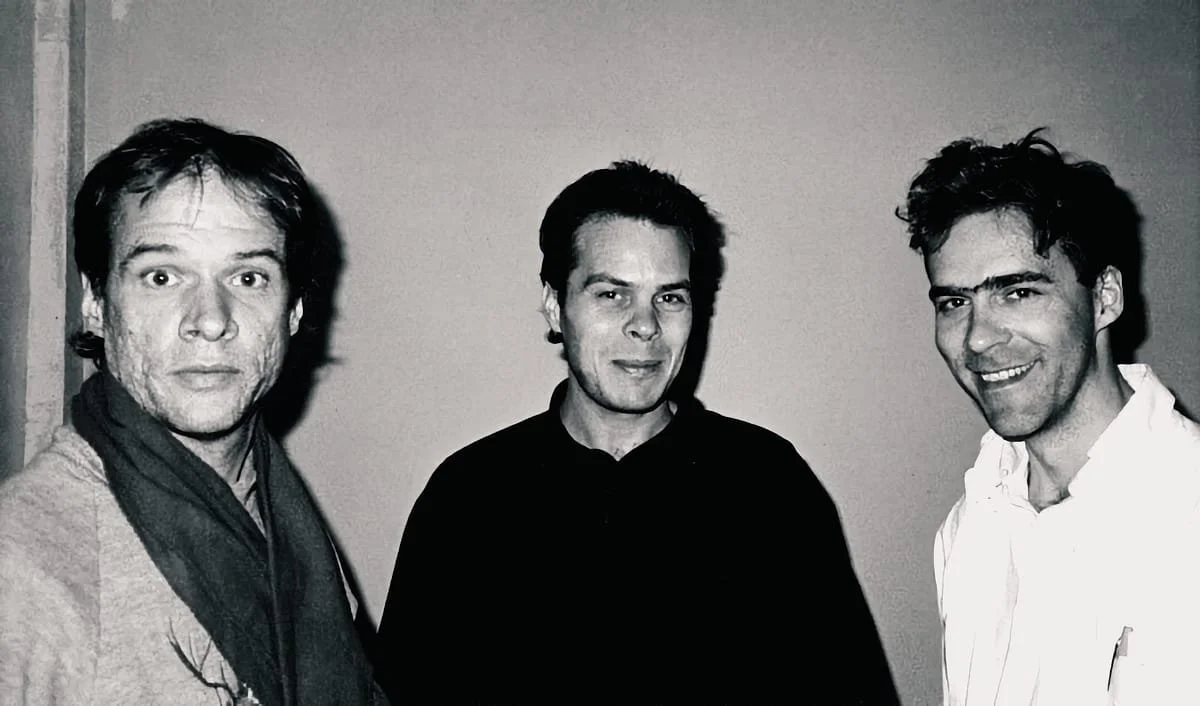
Arthur Russell, Tom Lee, and Steven Hall early 1980s
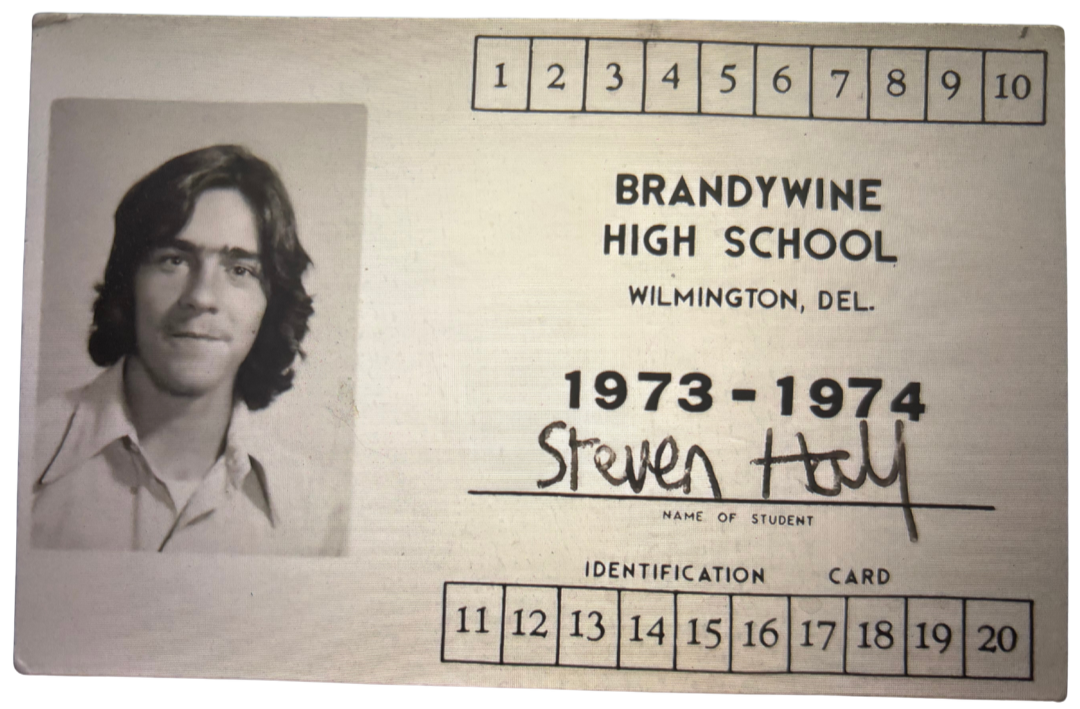
Everything happened because The Poets Building at 437 East 12th Street was a nexus of radical creative activity, which was total. If you were on the scene, your complete lifestyle revolved around what was happening with your immediate peers/rivals, so just by going upstairs in the Poet's Building, you could encounter Allen Ginsberg plus the celebs he attracted. Bob Dylan stopped by one evening to hear Allen sing with my harmonies, and later told me I had a nice voice! Others like Richard Hell of Television, Warhol superstar Rene Ricard, whom I had dated previously, poets John Godfrey, Bob Rosenthal, Shelly Kraut, Greg Masters, and Larry Fagin. Larry was the reason I ended up in the middle of this happening scene. I moved to the US in 1972 at 15, enrolling in a local high school in Wilmington, Delaware, which was close to Philly and had a vibrant music scene at the time. I saw Hall and Oates, Joni Mitchell, my musical goddess, Tony Williams Lifetime, the best drummer I ever witnessed, and NYC. Larry Fagin came to my high school to teach poetry workshops, and we immediately hit it off. He later invited me to visit him in NYC, where I was dying to be part of the excitement, and consequent danger from heroin culture, and later the crack devastation. That was every day there! I was visiting Allen one day at The Poet’s Building when we encountered Arthur on the stairway, where he was living with his partner, Tom Lee, on the top floor. I was doing music with and dating Allen at Naropa University. In those days, the romantic scene was very open and casual, and often friends who were working together were also sleeping together, producing fabulous incestuous manifestations of that voodoo frisson!
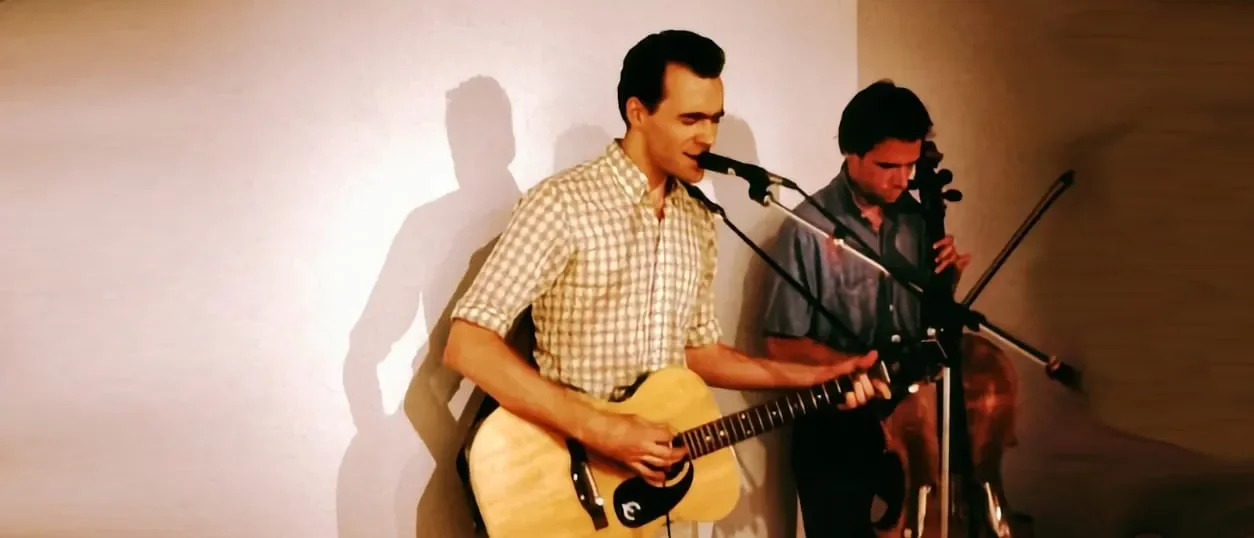
Steven Hall performing w/ Arthur Russell
Arthur invited me to his place and immediately came on to me in a very sweet yet aggressive way, and I politely declined his advances. Unfazed, he moved on to music and sang “Don't Forget About Me”. It was the most beautiful love song I had ever heard, so I decided that when he finished the song, he would be my teacher. My nickname then was Turbo Sporty, but when I went to legally change my name, the remnants of my Scottish accent made"Turbo" sound like "terrible," so I abandoned it. Bright and Early was originally called PALO ALTO, then PALO. This was Russell's and my collaboration, distinct from being one of a team working on Arthur's music and projects. After Arthur's passing, I did various projects like Arthur's Landing, which happened organically with friends of his getting together at Ernie Brook's basement rehearsal studio in Long Island City to celebrate Arthur by playing his songs. When we started playing clubs, there was already a response because of the love for Arthur. We had a ready-made audience. Buddhist Army was a vinyl label I started to release Arthur's Landing material. Then I added my own music. Recent Memory was a side project with Joyce Kirby, who was my singing partner in Arthur's Landing. We recorded acoustic versions of some of Arthur's songs, and I think those recordings are my best work because of the gentle vibe we shared and the accuracy represented in the music. I’ve never had a sense of loss because I’ve continued to perform and record Arthur's songs daily. That has continued for several decades, with the ongoing discovery and appreciation of his talent becoming a celebration shared with his countless fans. A delicious "I told you so!"
“In those days, the romantic scene was very open and casual, and often friends who were working together were also sleeping together, producing fabulous incestuous manifestations of that voodoo frisson! We encountered Arthur on the stairway, where he was living with his partner, Tom Lee, on the top floor at the time.”
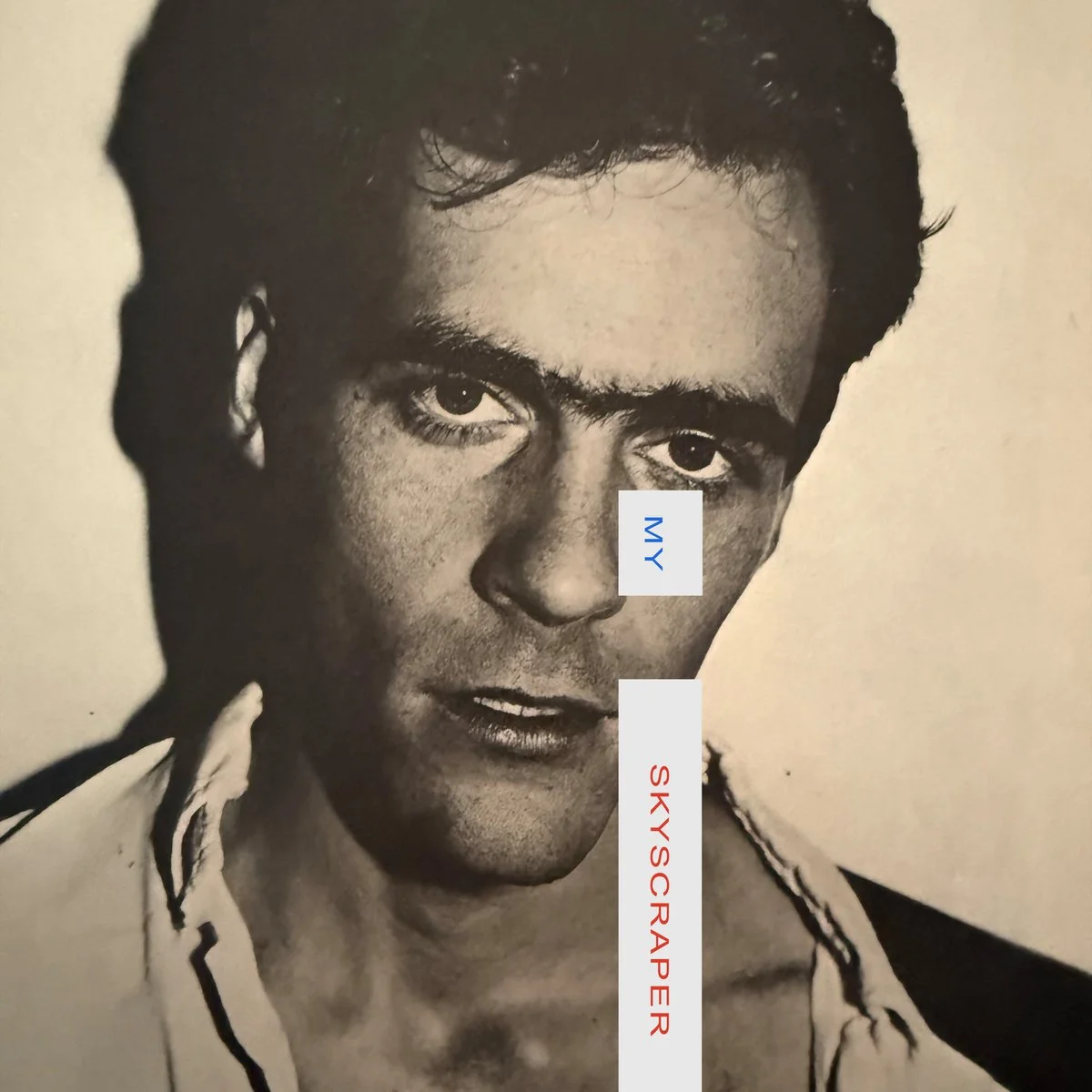
When did you initially begin venturing into your own poetic practice? I understand your latest effort, “My Skyscraper”, which I’m ecstatic to own on vinyl since its release on Monday, is a curated collection of live recordings, revolutionarily reworked pieces, radical rave risks, and atmospheric approaches to a craft that spans over 40 years. Tell me about this record and what this beautiful body of work means to you. How did the Nirosta Steel alias come about?
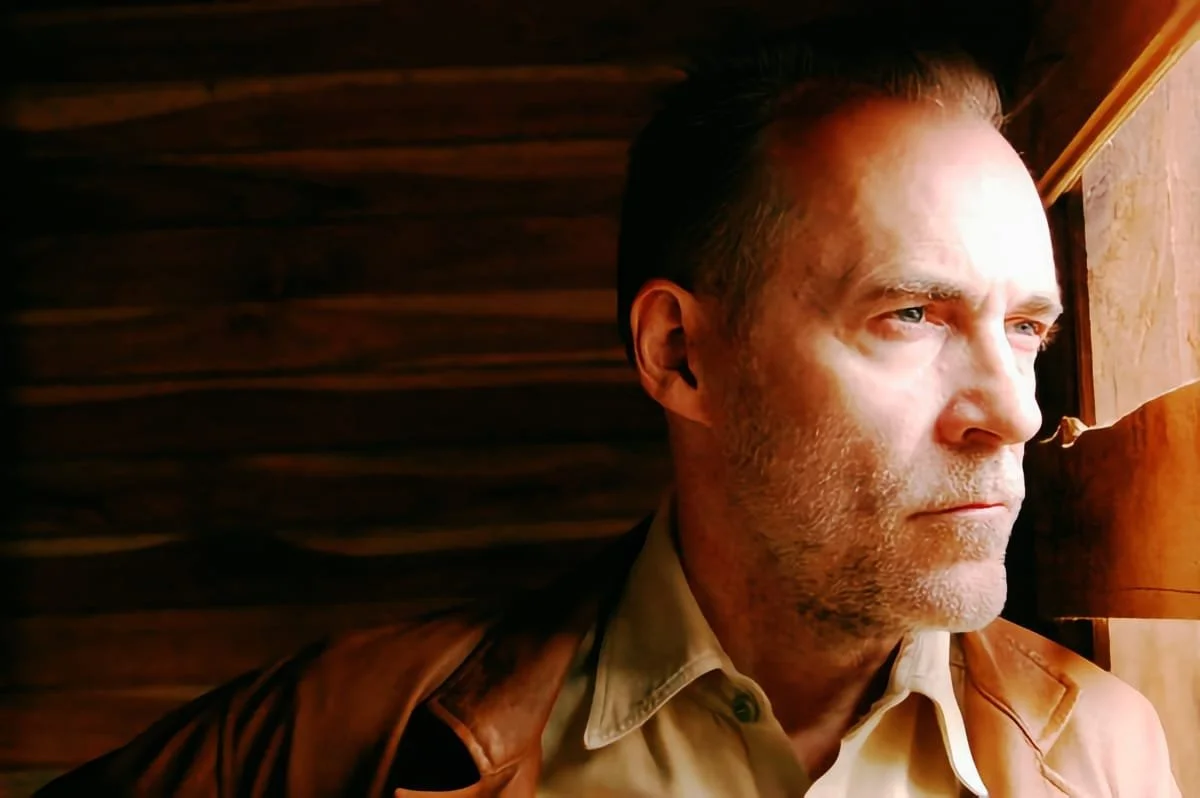
Photo: Surachai Saengsuwan
I was studying to be an architect at Columbia University. I initially went to college to study poetry with Kenneth Koch of the famous New York School, with John Ashbery, James Schuyler, and Frank O'Hara, after studying writing with Ginsberg, William Burroughs, Robert Creeley, and Anne Waldman at Naropa University. I later switched to the architecture and art history programs, where I studied with the famed architect Robert Stern. Although I didn't have time to study and do architectural drawing, my fellow students spent endless hours on it; I gave up the idea of being a practicing architect. I ended up applying those concepts in my approach to building walls of sound! The Chrysler Building is my favorite NYC building, and it's made of a special alloy with an anti-rust coating called Nirosta Steel. I had to pick an alias because there were already some famous Steven Halls! “My Skyscraper” is quite a vista, a sprawling survey of years of just doing exactly what I wanted to do. Traveling the world, being open to romantic soap opera, and what I wanted to hear. Songs that would get past your listening defenses and make you feel me whispering or moaning in your ear.
Listening back and reliving some of these abstract areas of your life and career, what has been the ultimate takeaway or overall experience of releasing this work into the world? What are you proud of with “My Skyscraper”, and what do you hope listeners glean from not only its melodic mark on culture but also the historical hype behind these transcendental tracks?
My takeaway is that I have been supremely lucky. Not only to have met and found long-term partners who created a safe space for self-exploration by their ability to deflect the concurrent selfishness needed to surrender to that glorious process, but also to be inspired by their daily cuteness. Fueling passion in special delivery. That plus the good fortune to encounter some amazing musicians, writers, dancers, artists, and even collaborating with some of them. By highlighting musical collaboration, especially when in the midst of a funky groove happening live, shaking the dancefloor, alternating with almost silent meditation alone at dawn, creating the music of the spheres.
https://linktr.ee/buddhistarmy?