
The Simon Joyner Interview
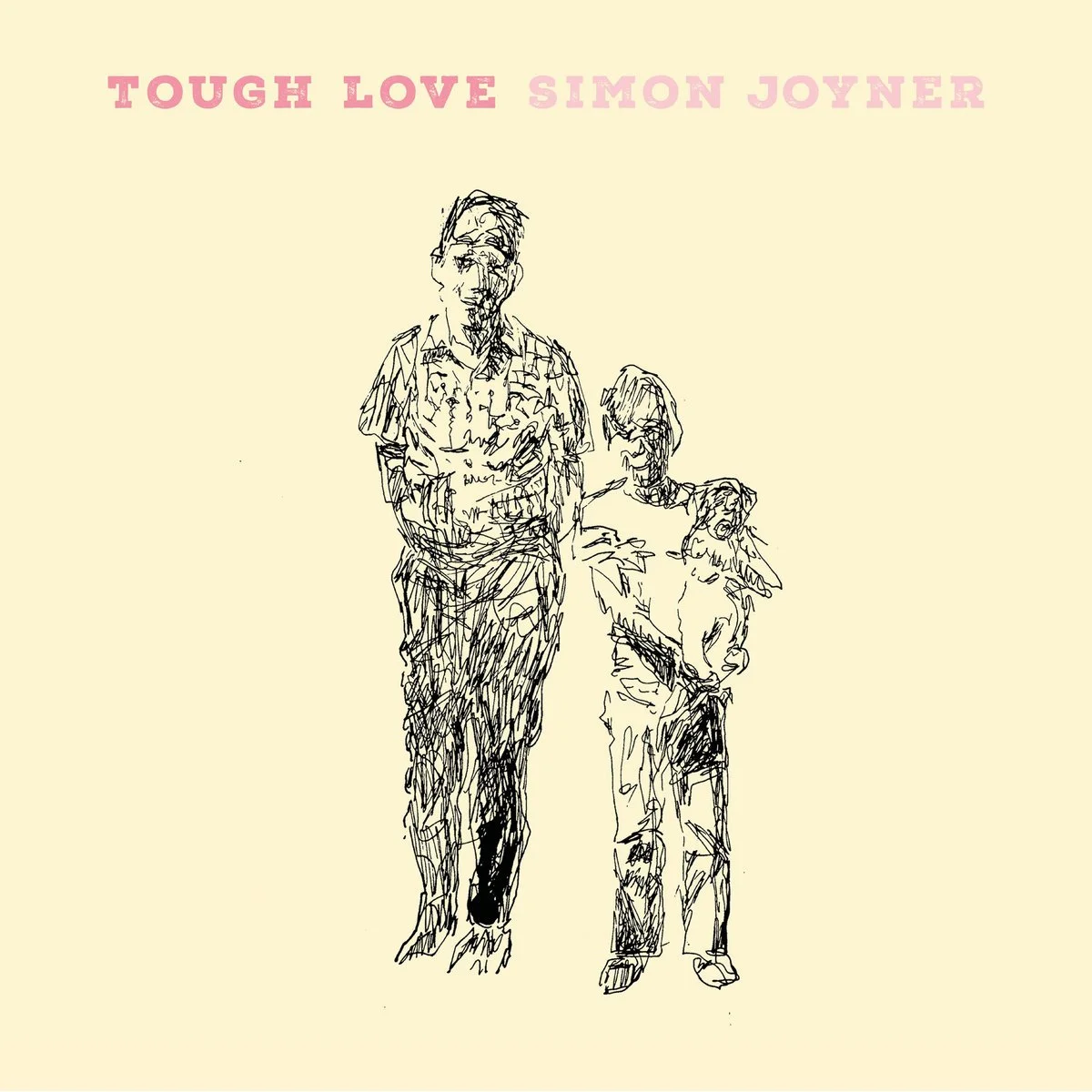
For over thirty years, the “Cornhusker State”-based singer-songwriter, label owner, and veteran of his craft, Simon Joseph Joyner, named after Paul Simon, has been perfecting his prolific practice and melodic meditation like no other songwriter of his generation. While pushing the boundaries as a songsmith both personally and spiritually, Joyner has built a beautiful body of work that truly transcends space and time. From his humble days watching the local community build a scene out of thin air, which by the way has indices that usually hover between 25 and 45 for PM2.5 and Ozone, to his intimate influence reaching the eager ears of folks like Conor Oberst, and Kevin Morby, to name a few, Joyner’s dedication and discipline to his work are sincerely mind-boggling as his most recent double LP “Tough Love” tenderly touches the hearts, minds, and souls of his life long listeners, both, new, and old.
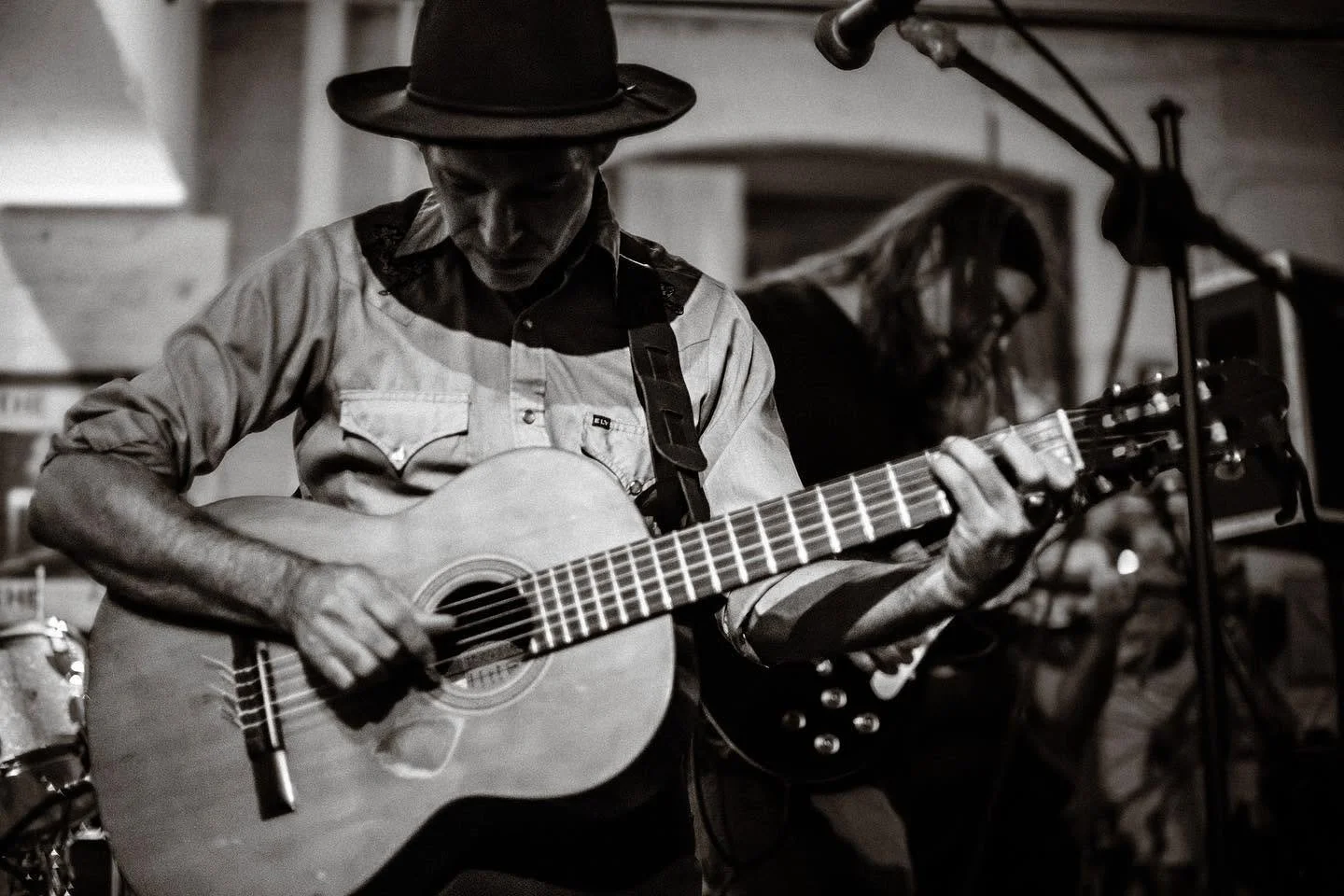
Take us all the way back to the very beginning, where you grew up in Nebraska. When did you first start playing the guitar and writing songs? Who particularly influenced you during your more formative years, and what was the local scene like in Omaha back in the day? I understand you participated in groups such as Ender during your genesis into becoming a songwriter.
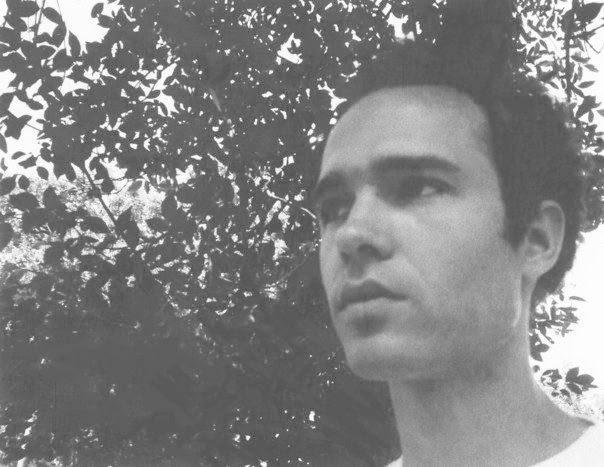
My father played guitar, and so we always had these family sing-alongs growing up. Instead of reading a story at bedtime, he'd play “Me & Bobby McGee,” or “Hey, That's No Way to Say Goodbye” while my brother and I listened from our bunkbeds. So, guitars and songs were always around. I don't remember exactly when I picked up a guitar for myself. Probably at 9 or 10 years old. I remember learning “House of the Rising Sun” first because my dad said it had all the chords I'd need to play pretty much any other song I would ever want to play. He wasn't wrong. I didn't play anything else until I could play that one without pausing my singing to change chords. As soon as I was able to play some songs from the 60s and 70s, I started trying to write my own. There isn’t too much worth mentioning until high school, though, and even then, pretty spotty efforts until I dropped out of college. The local Omaha scene in the early 90's was fairly improvised. There weren't any venues to speak of, mostly shows happening in whatever spaces could be found. Lots of basement shows. When I put out my album “The Cowardly Traveller Pays His Toll,” the release show was in the dining room of an Italian restaurant after hours, for example. But people were used to going to all these unusual spots to see music because we were deprived, you know? And hungry! There were occasionally DIY all-ages venues that would pop up and get shut down by the city, but having experienced that time and again, bands just played parties and weird one-off spots. You had to really want it, I guess, to be doing it then. After the success of bands like the Faint, Bright Eyes, and the Saddle Creek label, there was a lot of attention on Omaha, and suddenly, several venues started opening up around town. Now we're lousy with venues but fewer interesting bands, it seems. But these things come and go in waves in everybody's town. As far as that band Ender that I was in, it was a side project I had going with a couple of friends, more of a recording project, not a band that played out. The songwriting was more abstract and improvised. The whole idea for that band was stream-of-consciousness lyrics that you would write in one sitting and bring to the basement, hit record, and make up the music on the spot with two electric guitars and a drummer. The methods are inspired by the Dead C in that regard. We'd record so many songs that we could throw out the garbage and still have enough inspired stuff for a tape. I love those tapes. I was playing in Ender while making my early records: “The Cowardly Traveller Pays His Toll,”“Heaven's Gate,” and “Songs for the New Year.” A short-lived but really fun band.
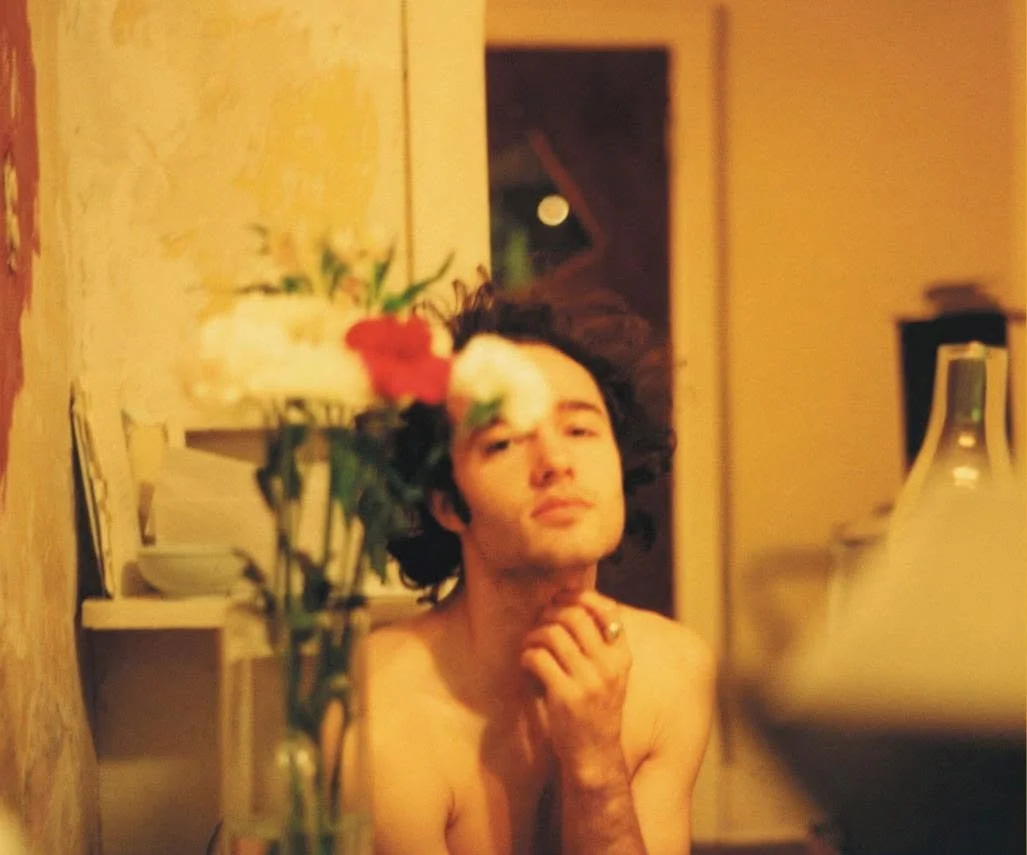
For over thirty years, you’ve singlehandedly released one of the most monumental and prolifically poetic bodies of work of your generation. Similar to the eager ethos of Dylan and Young, I’m curious to know what keeps you motivated, intimately inspired, and constantly striving to summon songs the way you have for all these years?
I'm just trying to capture things better than I have before. That motivates me, getting closer to the truth of something, you know? “It's life and life only”, as Dylan said. And that's an endless well. There’s really no excuse to run out of things to write about if you are alive and walking around with your eyes and ears open. For me, I understand more about myself the more I investigate other people. So, I actually feel like I'm getting better at living by exploring how others live. It's good for me, in other words. I know some people say they don't need therapy because they write songs. I'm not sure if that's true, but for me, the empathy and loyalty I feel for the people in my songs is always greater than what I have for myself or even for others in my life sometimes. And knowing that, and examining why that might be, is a way of recognizing that discrepancy so that I can bridge the gap by working on it to become a better person.
“There’s really no excuse to run out of things to write about if you are alive and walking around with your eyes and ears open. For me, I understand more about myself the more I investigate other people. So, I actually feel like I’m getting better at living by exploring how others live. It’s good for me, in other words. I know some people say they don’t need therapy because they write songs. I’m not sure if that’s true, but for me, the empathy and loyalty I feel for the people in my songs is always greater than what I have for myself or even for others in my life sometimes. And knowing that, and examining why that might be, is a way of recognizing that discrepancy so that I can bridge the gap by working on it to become a better person.”
Your most recent effort, “Tough Love,” is simply a masterpiece that meditates on endless love, tragedy, politics, and several other radiating topics throughout its lyrical landscape. I’m curious how you embraced the overall atmosphere and emotional environment of this material. Bridging that spiritual space between 2024’s “Coyote Butterfly” and the current climate, what was most critical to you to express, and artistically achieve with this body of work?
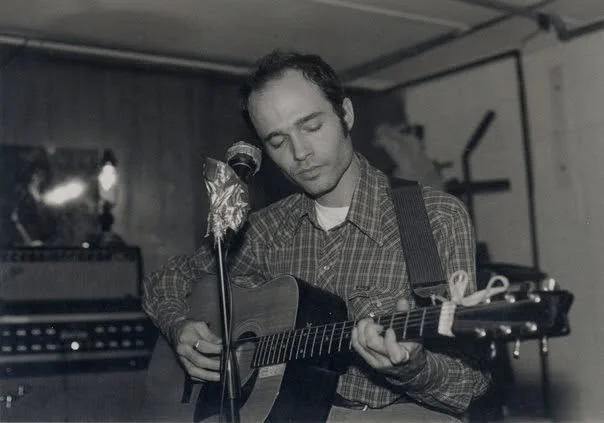
Well, thank you for those kind words. I wish I could say that there was a plan ahead of time, but the way I work is that I don't write anything for a year or so, and then when I do, whatever I've been experiencing since the last time I put pen to paper ends up in the songs in various ways. And that gets me thinking critically about things I was feeling before, so more than one song can come out of an event as my thinking on it develops, or as I put myself into other shoes in a scenario. And so the songs naturally relate and have cohesion because I'm drawing them from the same time period. Maybe it doesn't feel this way for others listening to my albums, but the songs on each album seem, at least to me, like they couldn't possibly be on any other album. There are all these relationships between the songs on a given album that I'm aware of, anyway, so for me each record is a fragmentary document of a specific period of time. In the time between “Songs From A Stolen Guitar” and “Coyote Butterfly,” my son, Owen, died. So, there were two years of all-consuming grief. When I started writing songs again, this loss was all I had to draw from; it was everything that had happened since the last time I wrote that I was capable of being aware of, and that's why that album is exclusively about Owen and my family in the thick of that grief. But, having moved outside the eye of that storm since writing “Coyote Butterfly,” I'm drawing on other experiences too. He's all over the album in various ways, or grief and how it motivates people/characters is all over the album, but it's not the only thing I'm writing about now that I'm drawing from this different space in time. There's room for other stories, I guess, but the experience of losing my son now guides everything else. How could it not? I am forced to consider what's important in new ways. Anyway, to answer your question, I don't consciously think about what's critical to get across this work or another, or even consider how this record might be different from the last. I know it will be its own little world by virtue of it being made in another time. So, I feel as I always have that as long as I'm faithful to the people in my songs and their experiences, and I'm honest and don't try to make them do things their lives wouldn't lead them to do, the songs have a chance to work. I'm just trying to write songs that work. And by "work," I do mean in both senses of the word. They should toil and provoke, and if they do that, they will also work in terms of succeeding.
Accompanied by the Dailey brothers and longtime collaborator Michael Krassner, how does one go about capturing something so delicate yet rocking in its rhythms and tonal timings, while simultaneously balancing those tough teachings and sensitive subjects? I’m curious to hear some of the background to tracks like “How To Talk To Your Man”, “Vagabond”, "Anniversary Song”, and the epic, 20-minute title track.
The chemistry of a band is nearly everything. I try to work with musicians who have a great ear and are devoted to the song, meaning they'd be willing to minimize or sacrifice their own part if necessary to do what the song needed. If you are serving the song and you are a sensitive musician, you add only what you think a song needs. This happens naturally with great musicians who enjoy playing together, so the trick is to get together the right group of people. Michael Krassner is like a casting director when it comes to putting a band together. By the time we are ready to think about recording, he's heard my demos so many times that he's already got musicians in mind, and he thinks these particular songs will resonate with them personally. He knows who might bring that extra something to the recordings by suggesting people based on the songs, not just availability, convenience, or anything like that. It's extraordinary how much work he puts into helping me put the right band together. The arrangements themselves come about somewhat collectively if you have the right people in the room. I don't micro-manage because I feel we all know where things need to go. I really don't like it when music tries to be a literal interpretation of the lyrics, for example, “Peter and the Wolf style,” you know? If you mention someone knocking on a front door and then the drummer throws a literal door knock into the song, that kind of thing would get nixed by me pretty quickly as corny. I'd rather keep things subtle. But it's fairly obvious from the songs that I wouldn't want something like that if you have the right musicians in the room. That being said, my sensitivity to literal interpretation also extends to anything that feels too on-the-nose musically, or when songwriters pour it on too thick, or are unable to drive home a point. So, there's occasionally a difference in approach that we have to work through to be on the same page. My advice to the band is to let the lyrics succeed or fail on their own merits and not try to drive home any lyrical messages with musical flourishes.
“I feel as I always have that as long as I’m faithful to the people in my songs and their experiences, and I’m honest and don’t try to make them do things their lives wouldn’t lead them to do, the songs have a chance to work. I’m just trying to write songs that work. And by “work,” I do mean in both senses of the word. They should toil and provoke, and if they do that, they will also work in terms of succeeding.”
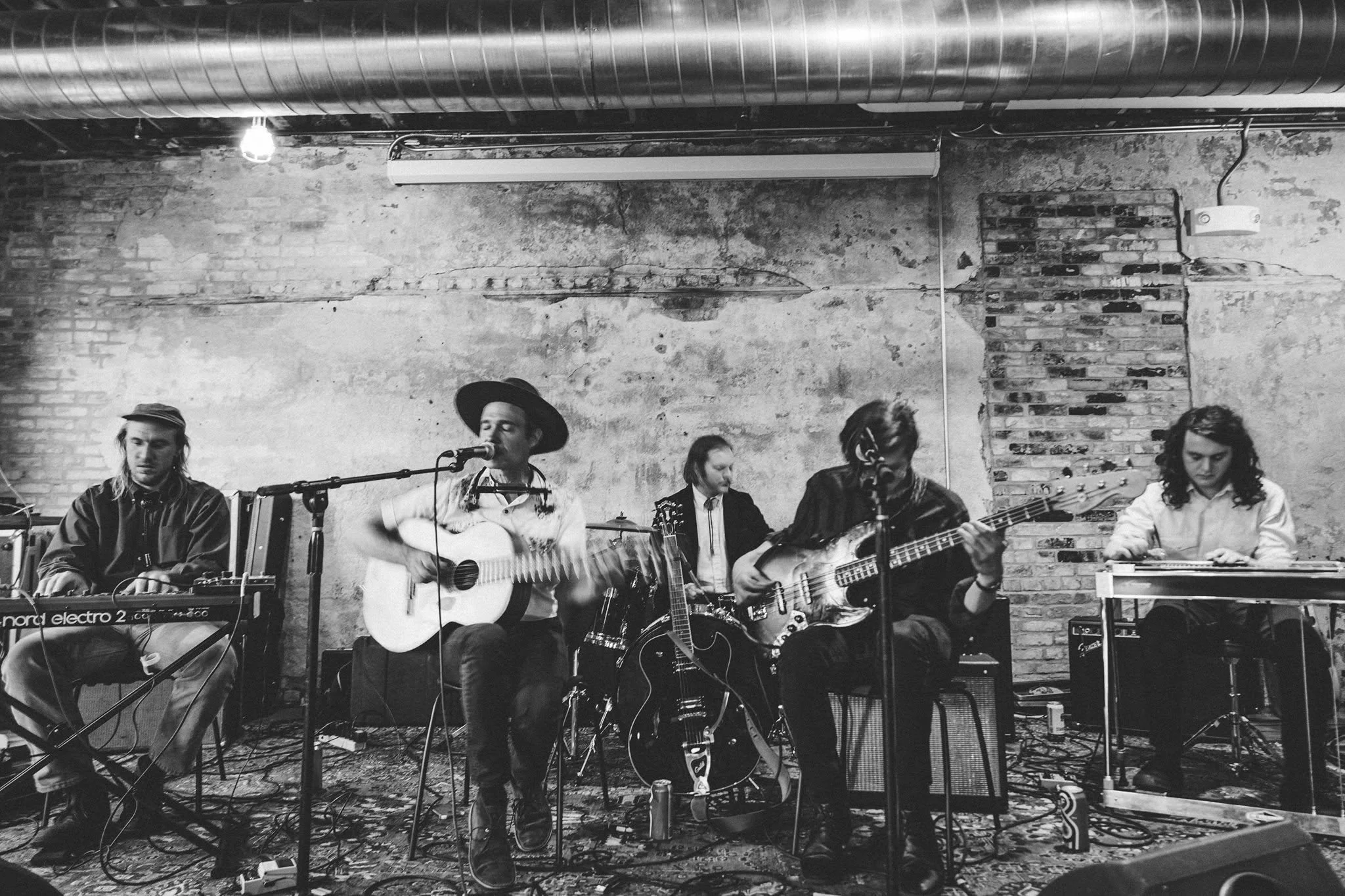
With this particular band on “Tough Love,” there were really no instances of that, though, that's just something that occasionally happens when recording, just because I'm sometimes so "less is more" that where I draw that line and where someone else does happens at a different place. Working with this band is a lot like the chemistry I have with longtime friends in my old Omaha band, the Ghosts. Musicians like Chris Deden, David Nance, Jim Schroeder, Kevin Donahue, Megan Siebe, Mike Friedman, and Noah Sterba. I'm always trying to find players with whom I feel at home, and this Tough Love band was like playing with my old crew right out of the gate. It was pretty special. Take a song like "Vagabond," for instance. No one really wanted to play on that song, so we decided it should just be a couple of guitars. It might have been Caleb, who may have been asked to try a viola on the choruses, but decided mid-take that it wouldn't work; it should just be Krassner on the slide guitar. With "Anniversary Song," I had an idea of the atmosphere I wanted, but no real direction other than that. One of my favorite artists is Richard Youngs, and he works with repetition in a really expansive and beautiful way. I find his music really inspirational. I always feel like such a blowhard, writing all these verses, working on these narratives, etc, then I listen to a song of his that repeats a phrase over and over and can rattle me emotionally in the process. It was something I wanted to try, and honestly, it was a real challenge to come up with four lines succinct enough to contain everything I wanted to say. And then, the music was improvised in a key that worked with the repeating guitar line. Like most of the album, it was just done live with a few cues ahead of time. The band sensed that the song was about love assuaging pain and played accordingly. There was very little direction needed throughout the three days we made the album
As summer begins to bloom, all the bright colors help to paint a more beautiful picture in a not-so-beautiful time in our country. How do you find peace in your heart and mind, both as an individual and a veteran songwriter?
I'm not sure there's really any peace, only various kinds of vigilance. I think the closest thing I can feel to "peace" is staying aware of what's important to me, as best I can manage. But, it's anything but peaceful to be alive, isn't it? There's always so much hanging in the balance, you know, as it should be. I don't even mean that as a bad thing. To your point about it being an ugly time in our country, making something beautiful or acknowledging beauty where you see it, even in those simple ways that summer and the natural world offer, is a way of protesting all this ugliness—to paraphrase Phil Ochs. Insisting on how you walk through the world and relate to people is a form of protest against the ugliness, too. Not succumbing, not escaping into blindness either. I guess as Guy Clark warned, "don't let the sunshine fool ya," but conversely, don't forget it's awfully hard to see in the dark. As a songwriter, the truth is beautiful even when it's ugly, I've found, because when people see themselves in a song, they tend to feel less alone. So, that makes it worth doing, and it gives me a great sense of satisfaction, if not peace.
https://simonjoyner.bandcamp.com/