The Jeremiah Chiu Interview
From the Windy City to the culturally cosmic City of Angels, community organizer, graphic designer, artist, synthesist, and educator Jeremiah Chiu has a career in the universe of sound that echoes the vibrations of the greats before him. Blending the melodies of the machine with the natural world and its organic oscillations, the multi-dimensional musician embraces the shapeshifting soundscapes of LA by moving from one genre to another, collaborating with various groups and projects, like Jeff Parker, Ben Lumsdaine, Marta Sofia Honer, and the highly praised quintet SML, along the way.
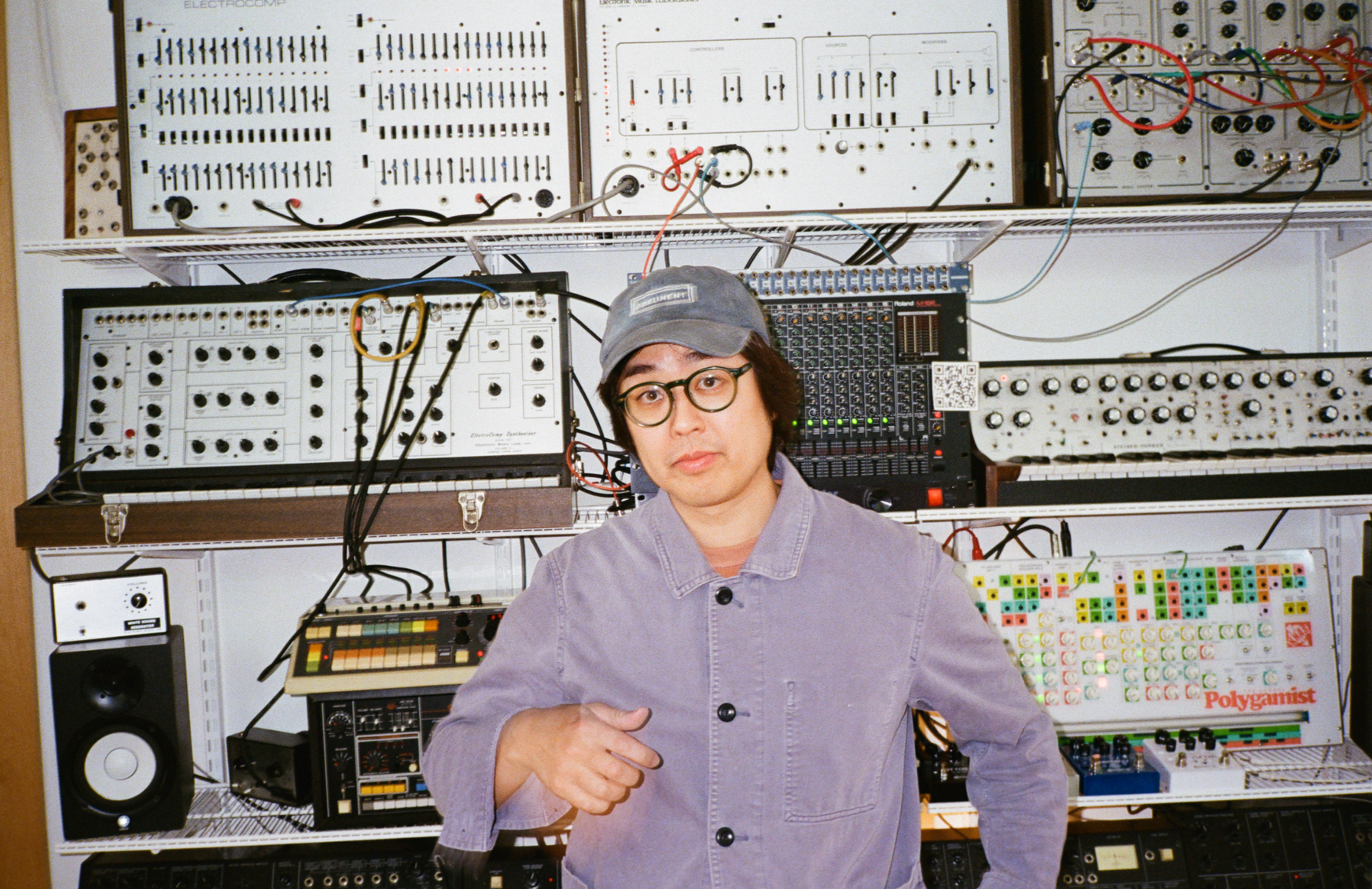
Photo by Scottie McNiece
First, and foremost, congratulations on the new SML album “How You Been!” As a multidimensional artist, how did you initially connect with music, more specifically synthesizers? An iconic instrument that brings along with it an impeccable world of creative culture and harmonious history, what do you find most fascinating about this particular world, and some of the groups like Kraftwerk, Silver Apples, Faust, and Harmonia, among several others, that it brought to the surface?
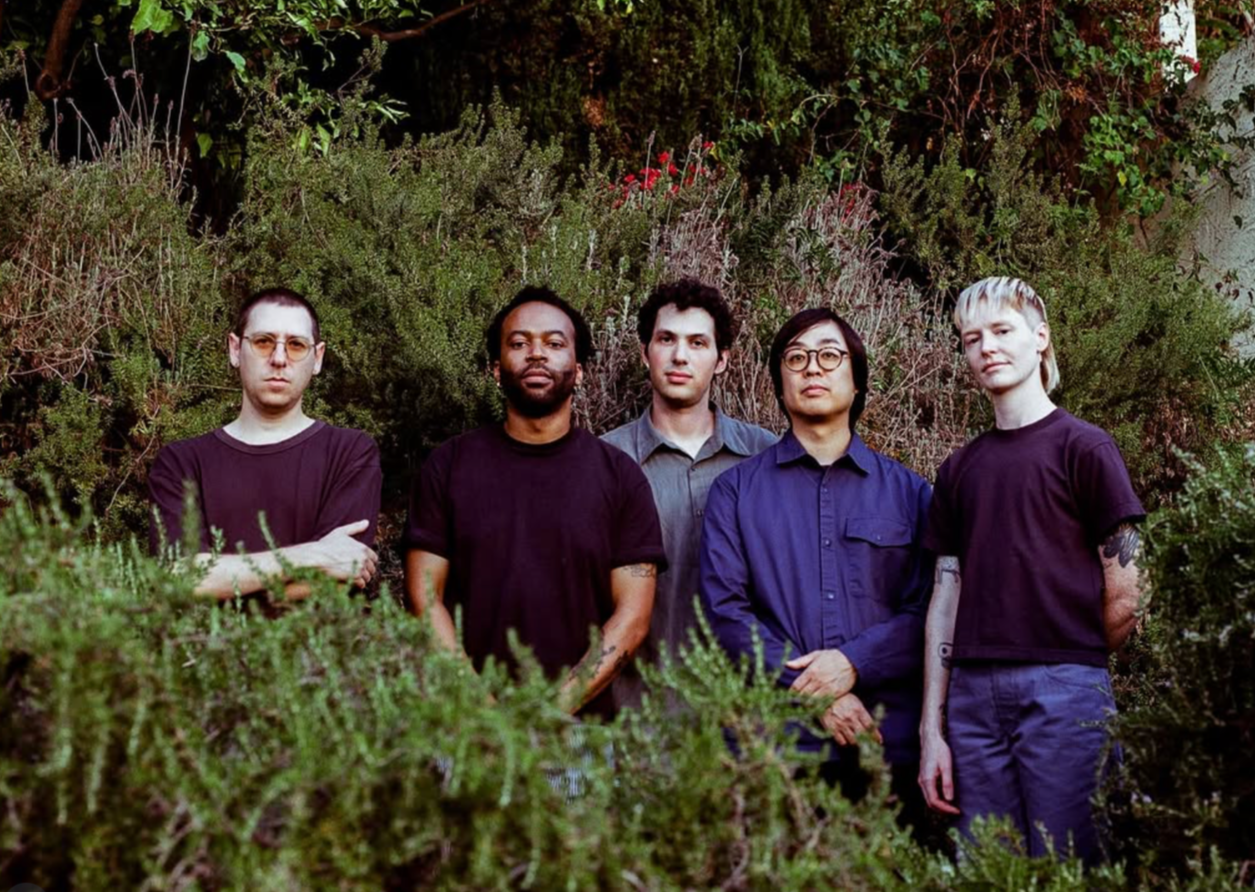
Photo: Charlie Weinmann
Growing up, I began playing piano and violin at a young age, maybe five or six. Synthesizers were not something I was aware of at all. My younger sister had a Casio keyboard that was in the dining room near the kitchen, and while my parents prepared dinner each evening, I would sit there and play with it. I realize now that it was formative for how I create music today. The Casio could record six parts of music—basically a six-track recorder using internal memory and sounds—that I would use to record a drum part, bass part, and other manner of sounds into short songs. Fast forward another decade or so, and I had swapped out piano and violin for guitars and synthesizers, playing in punk/emo bands that gradually evolved into synth bands. At that time, synthesizers didn’t have the same vintage collector frenzy as they do now. My friends and I were able to buy, sell, and trade all manner of vintage synthesizers for cheap. Having the opportunity to try out all of those vintage synths got me pretty obsessed. I learned MIDI and CV/Gate techniques, and it felt very similar to that early approach of recording parts of a song that could be performed live by myself. Of course, I also became obsessed with all things Kraftwerk, Harmonia, YMO, Depeche Mode, Drexciya, and Aphex Twin, and I’m still constantly listening to this. What I find fascinating about it is the overlap of musicians collaborating in different ways. To me, this is reminiscent of how the Jazz world operates, where players collaborate on each other’s works. It feels much less like standard operating procedure in electronic music or indie band worlds, where a band might be a finite operation with no rotating members.
I understand you released some material under Cosmic Son before SML’s conception. Tell me about your more formative years performing, recording, and playing around LA before the quintet formed. It is universally undeniable just how influential the city is for nearly all corners of music and art. How has the community of Los Angeles, in particular, influenced and inspired your overall approach and drive to explore your own sound as well as with others at any given moment?
I moved to LA in 2014 from Chicago, so most of my formative years of performing and recording took place there. When I moved to LA, it felt like a big shift in how I understood the music community. It still feels quite different here than in Chicago; some aspects are really positive, while others make me miss the scene in Chicago. The city, like any city, has an undeniable influence on how music is created and experienced—likely because the landscape and way people who live in each city are so different. I feel like the move to LA forced me to activate in a new way, where I had to re-establish myself. I also think it forced me to play many more shows in ways that I might not have in Chicago. A lot of the reason being if I can’t find what I’m looking for, maybe I have to make it happen. It was—it is—very motivating. I love both cities.
“What I find fascinating about it is the overlap of musicians collaborating in different ways. To me, this is reminiscent of how the Jazz world operates, where players collaborate on each other’s works. It feels much less like standard operating procedure in electronic music or indie band worlds, where a band might be a finite operation with no rotating members.”
I’ve really enjoyed some of the collaborative efforts you’ve released over the last couple of years with musicians such as Marta Sofia Honer and the late Ariel Kalma. How do these projects and creative connections ultimately compare to being in a more concrete collective that tours and fulfills more of the “band” responsibilities?
I’m remembering back to this past November, when I set out on a Euro/UK tour that was scheduled as a hybrid mix of several different types of shows: solo, duo, SML, all intertwined. It was amazing and the best kind of creative chaos. Interestingly, your perception of SML is that it’s a more concrete “band” that operates in a “standard” way. It actually feels no different than any of the other groups I play in. I perform solo, I have a duo project with Marta Sofia Honer, a trio with Jeff Parker and Ben Lumsdaine, and a quintet with SML. I also collaborate with several other artists in LA, like Booker Stardrum and Patrick Shiroishi. I think, in my ideal scenario, this continues to grow and cement itself more and more as a collective community of like-minded musicians and artists, all in dialogue with one another. The album is already an instant classic that will continue to grow in intensity and fascination.
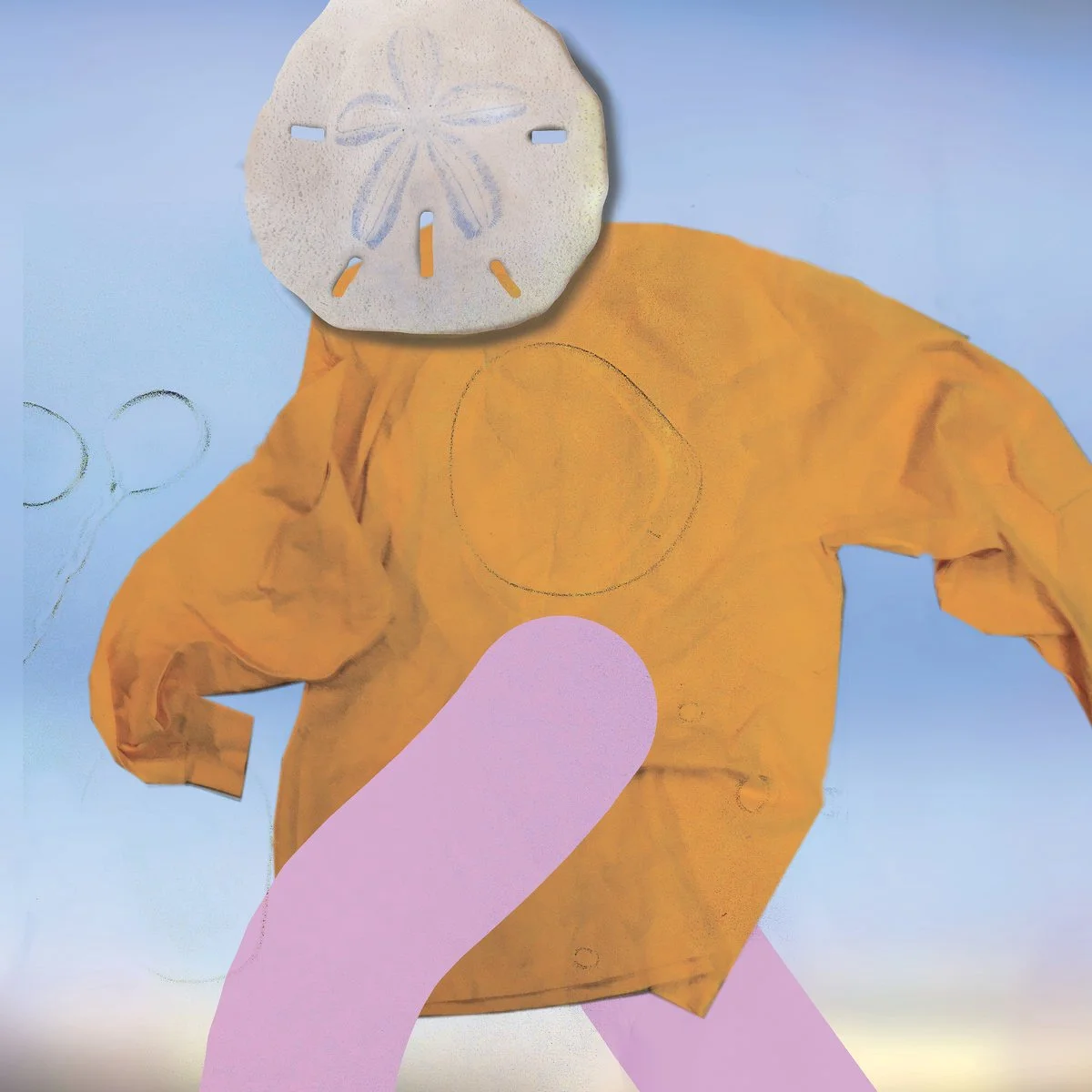
What was the overall process and approach to bringing this body of work to life, and how did you go about this material compared to the group’s self-titled debut, “Small Medium Large”? A literal supergroup, what elements, signals, interests, etc., would you say bring you guys together both on and off the stage? I know this album made it on quite a lot of folks' end of the year list, our’s included. What records blew you away this year? As we start a new year, what are you most excited about? The group has quite a few dates lined up. I’m really hoping to catch you guys at Big Ears in March. That’s in my neck of the woods!
Thanks! SML operates in its own unique way. We’ve never rehearsed or really even discussed what we’re going to play before a performance. We go up there and improvise together. It takes a lot of trust and focus, but it’s so rewarding because everyone really brings their full selves to each performance. It’s beautiful. This new record, “How You Been,” was recorded similarly to the first album, in that it was all live performances. However, this time around, we had several more performances in different cities as well as multi-track recordings. It opened up our process as everyone was able to get involved and work through several parts of the music in the way that resonated best for each person. It’s also a unique group in that we’re all producers and we’re all solo artists. So, you have this quintet of really flexible people who are open and excited to explore together. It feels really open, as there’s no “leader” of the group, everything feels like a collective decision, and the truth is, everyone is a sweetheart, haha. This upcoming year should net some more fun. We’re just happy to be playing, to have people supporting us, and to keep it going.
https://linktr.ee/jeremiahchiu