
Photo: WEB Entertainment
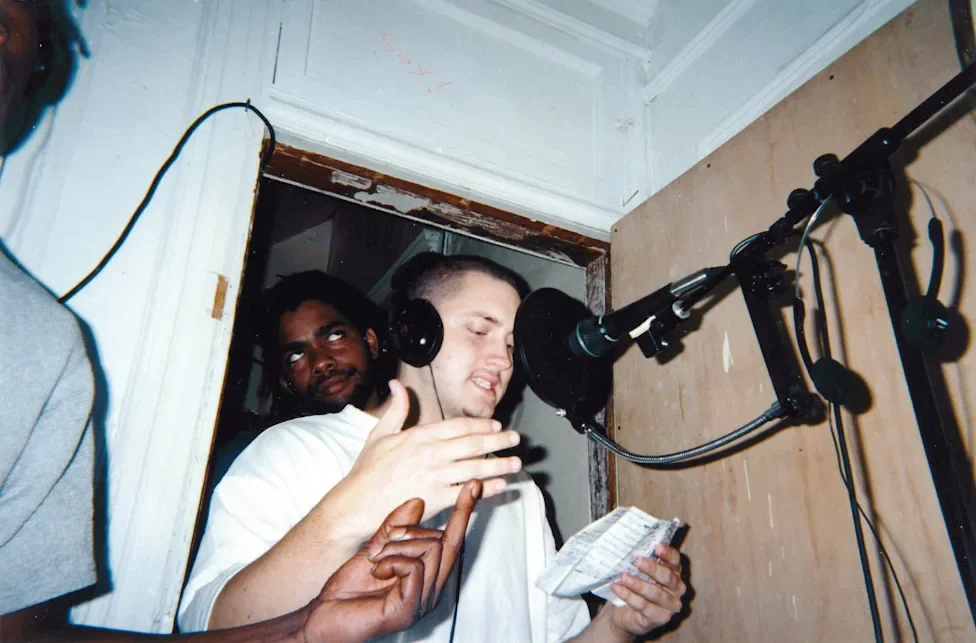
If you grew up in the mid-to-late 1990s and into the 2000s, you probably realize now, as a middle-aged millennial, how important and iconic your youth truly was. A world before social media, the constant chaos of tech billionaire bros breathing down our necks for some subconscious gesture of forced acceptance, and of course the never-ending terror of Trump around every corner; this period in American culture is sincerely missed by the ones who were there burning CDs for classmates to trade in the hallway before class started. “Did I remember to put that bootlegged demo version on that CD?” You're entitled to have your opinion on your own generation’s greatness, how it’s better than the current one, or previous decades, and while some arguments hold some weight of truth, others are lost in the past, looking for anything to release the anchor of responsibility, accountability, and, most importantly, taste from the docked vessel. Depending on which album came out when, and where you were in the prolific prime of your teenage years, Detroit-based American rapper, songwriter, record producer, and record executive Marshall Bruce Mathers III, known professionally as Eminem, is most likely embedded in your subconscious like a spiritual scar that never healed properly. The lyrical legend and master MC doesn’t need an introduction; at least we’re not going to waste precious calories banging on the keyboard to do so, but we’ll start this journey of juxtaposition and melodic madness by taking it all the way back to Ferndale, Michigan, in the summer of 1996. Recorded with Bass Brothers (Jeff and Mark Bass), who would later be renamed FBT Studios, Eminem’s cosmically conscious debut EP “Infinite” is not only an intimate introduction to the young artist’s prolific pursuit to become the best of the best, but a brilliantly blue-collar blueprint into the life of an insanely gifted individual.
Photo: WEB Entertainment
“Infinite was me trying to figure out how I wanted my rap style to be, how I wanted to sound on the mic and present myself. It was a growing stage. I felt like Infinite was like the demo that just got pressed up.”
After signing his first deal in 1992 with FBT Studios, as mentioned above, Mathers eventually found himself conjuring the metaphysical material for his debut with only one condition: it had to be “radio-friendly.” His words, not ours. In hopes of stretching further across the American landscape, and into the ears of fans, critics, and show promoters, “Infinite” is so quick and artistically attacks the senses like a swarm of biblical bees whose home has been invaded by some middle schooler who decided to kick their nest across the playground. In other words, it’s an early entry into his alchemical alphabet of profound phases and spiritual sequences of rhymes and rhythms. While Mathers’ personal life is well documented, he’s built a captivating career expressing elements of poverty, heartache, despair, crime, drug abuse, and his pursuit of greatness. So where does this album sit in his catalog? We’ll answer that for you: it doesn’t. The violent vocabulary and sophisticated self-analysis lie dormant in this body of work as his fundamental flow, and delivery touch on other topics and lyrical landscapes where Christian core meets creative competition with his creative community. With only a few thousand copies pressed to cassette and vinyl, the record has lived in the sonic shadow of Eminem’s alter ego, Slim Shady, which he eagerly established the following year, quickly resulting in the collection of this music to collect digital dust until fans unearthed the evidence of a life before the suffocation of success. It’s unknown how many copies actually sold; this project was as DIY and independent as you can.

Photo: WEB Entertainment
There was no mass budget, PR, etc., to spread a product like this across the United States and beyond. Something this sensitive relies on the unconditional support of underground markets that exchange and trade tapes, or by word of mouth, which, to this day, thirty years later, still goes to show just how fast information can travel. Featuring guest vocals from Mathers’ childhood friend and creative collaborator Proof, who was murdered in the spring of 2006, Mr. Porter, Eye-Kyu, Moe Men-E, Three and Thyme, as well as the New York–based singer Angela Workman, “Infinite” explores the essence of the 23/24 year old artist’s intense intellect and poetic praise of his community’s creative core. With tracks like “Open Mic,” ”313,” and the EP’s transcendental title track spiraling through the skulls of listeners, can you imagine bumping this tape in your mom’s Ford Taurus on your way to pick up your friends before a house party? Times have changed, but the music remains intact in all its glory and revolutionary rage. For the first time in thirty years since its initial release on vinyl in 1996 on WEB Entertainment, LA-based label Org Music has opened the feverish floodgates of Eminem’s atmospheric archives with an exclusive release of the album featuring new mixes and additional production by Jake Bass and Mike “Slim” Wilder on vinyl, cassette, and CD on February 26, 2027.