Young musicians from all walks of life began experimenting with psychedelic substances in the prime of their youth by bending space and time with nothing but a solid circle of friends and the endless energy of a Saturday night. They were eagerly expanding their creative consciousness with several different substances of the time, from the original LSD 25 strain to peyote, hash, and magic mushrooms; the sky was the limit, and the lysergic landscape of the mid-to-late 1960s was changing faster than anyone knew what to do with it. The gap from 1965 to 1969 is mind-boggling and should never be underestimated or overlooked as one of the most important details regarding the counterculture movement. The Grateful Dead hosted the famous “Acid Tests” in the San Francisco Bay Area and other locations in Northern and Southern California, and so were many other bands pushing biblical boundaries with their minds and music, and so was Europe. I suppose you could say there’s always been a cultural discourse between the Rolling Stones' attitude and the Beatles’ atmospheric achievements, and who truly broke through the cosmic ceiling of creative captivation and iconic influence. Harrison and Ravi Shankar took spirituality and psychedelia to a new level outside the Beatles, but the Stones took a different approach to how enlightenment could be achieved. Having connected with the late great Brion Gysin, who began collaborating with the cosmic collective of Jbala Sufi musicians, the Master Musicians of Jajouka in the early 1950s, along with American writer Paul Bowles, who lived in Tangier for over half a century until his death in November of 1999, Lewis Brian Hopkin Jones, known professionally as Brian Jones, one of the founding members of The Rolling Stones, began working closely with the melodically mysterious group after recording on a portable Uher recorder one of their most important performances in the summer of 1968 in the village of Jajouka in Morocco known as “Aid el Kbir." This was an annual week-long Rites of Pan Festival that involved dressing a young boy as "Bou Jeloud, the Goat God" in the “skin of a freshly slaughtered goat," which involved the child running to "spread panic through the darkened village."
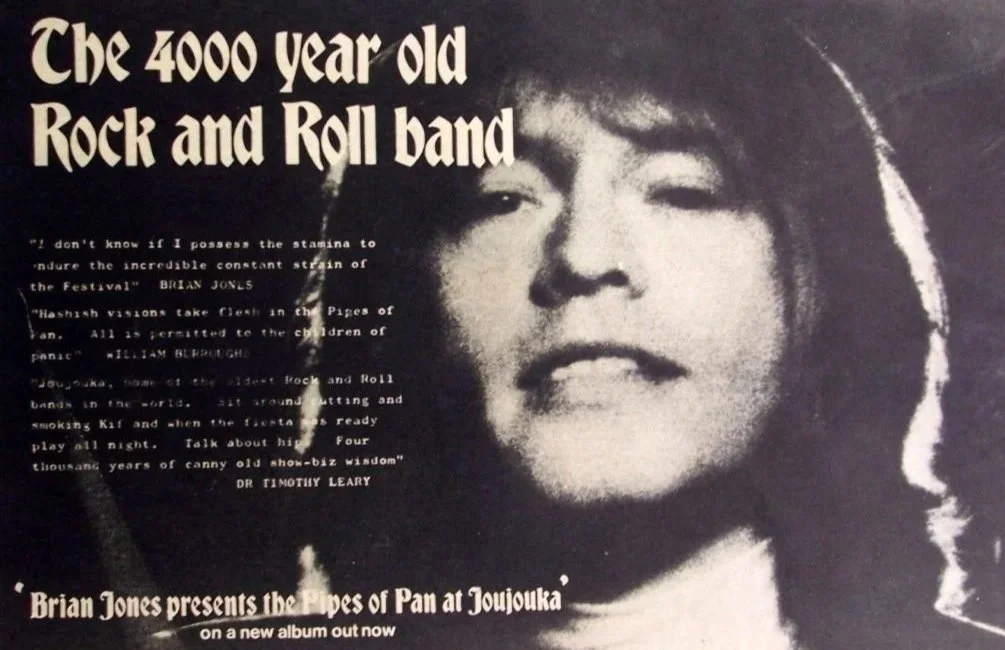
“The world’s only 4,000-year-old rock band.”
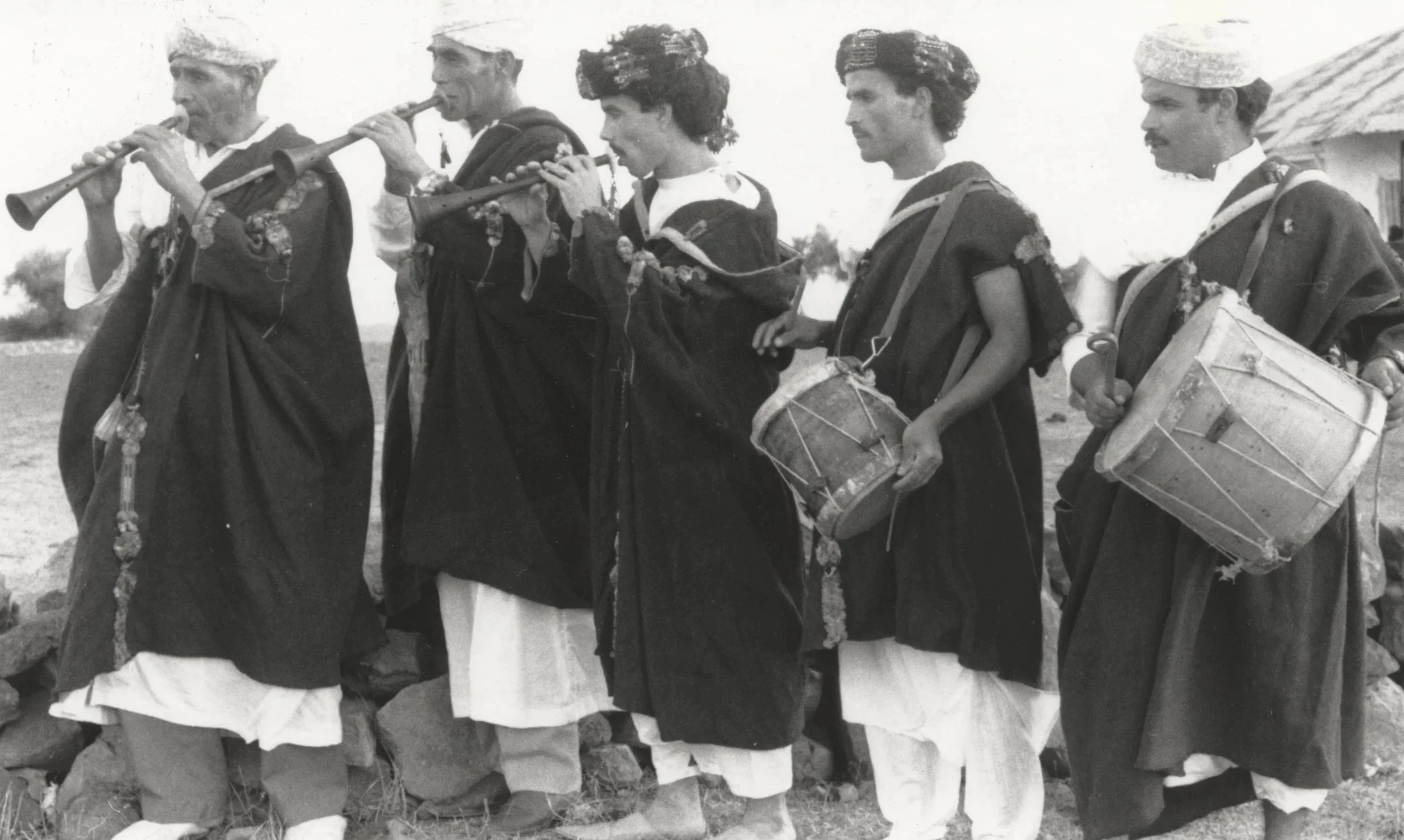
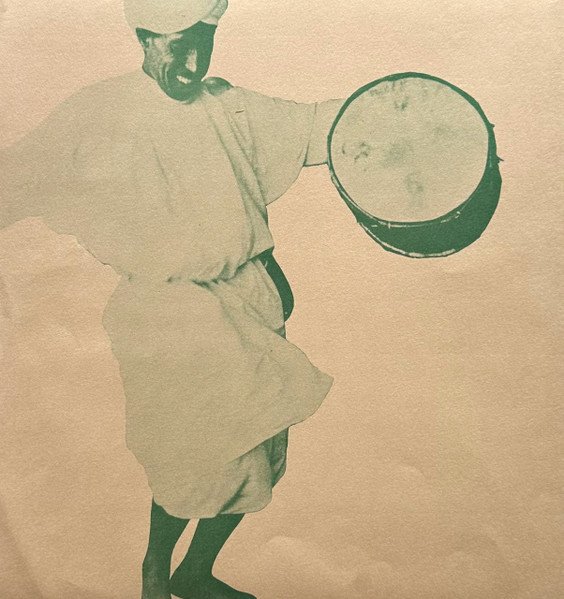
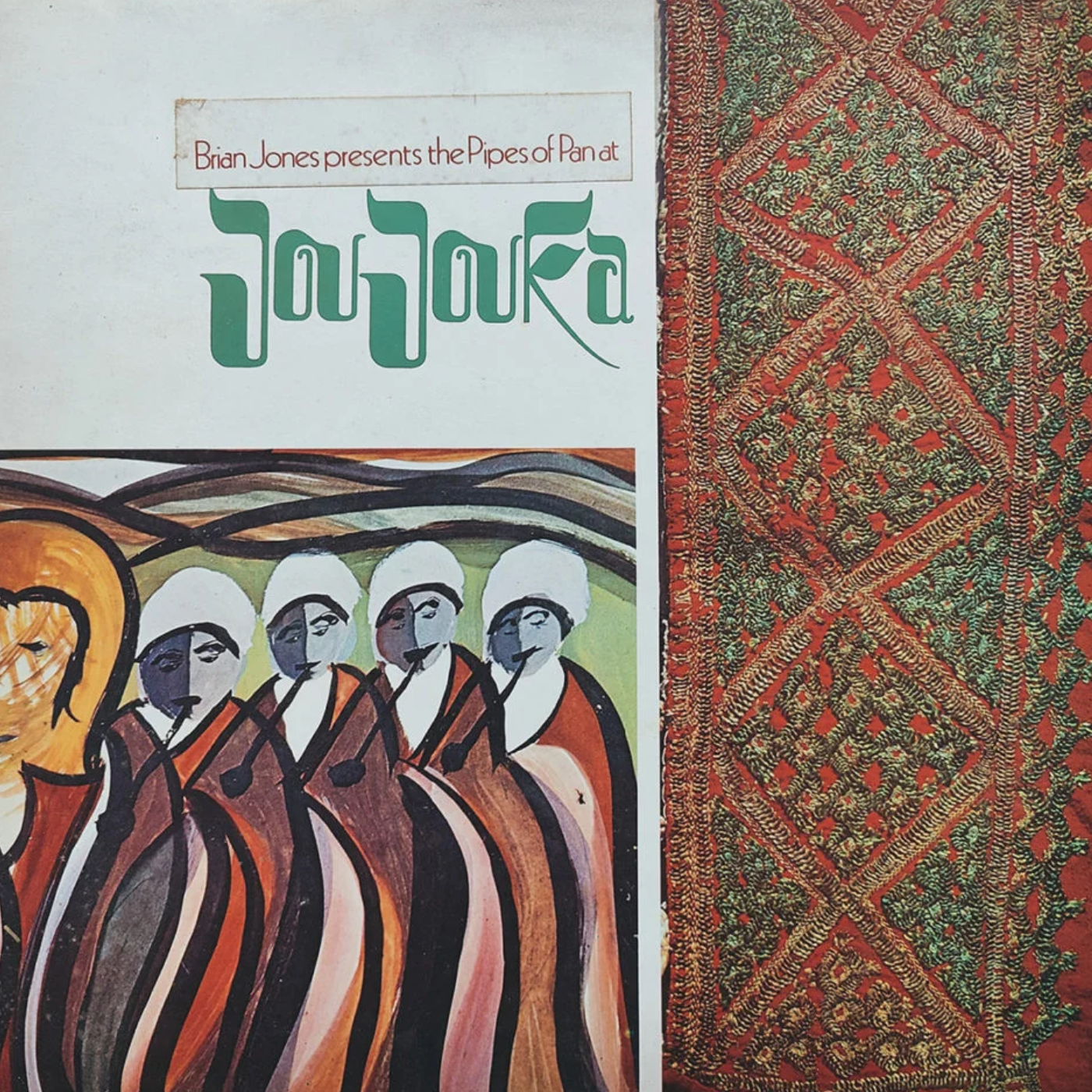
I think the word, or words, you’re looking for are punk or heavy metal. Of course, this predates those terms, not by a long shot, but in consideration of the coming years, it’s strange to imagine this tall, lanky Englishman in the middle of the Moroccan desert capturing field recordings of this ritualistic and rhythmic group of ancient artists who occupied a completely different time and place from our “modern” world. This isn’t to say they were extraterrestrials, quite the contrary. But you and I both know the scene must have been a literal “trip” to see, feel, and hear. The bonfires crackle as silvery smoke streams upward to the heavens, while meat cooks over fragile flames that light up the village and its visceral vibrations. Traveling to the village with Moroccan painter Mohamed Hamri, Gysin, along with his recording engineer George Chkiantz, and girlfriend at the time Suki Potier, carefully captured the group before eventually returning to London, where the late Stones member worked on the two-track recordings, adding stereo phasing, echo, and other various effects, and metaphysical methods. “Brian Jones presents the Pipes of Pan at Joujouka” is a compelling collage of feverish festivities, and intense indulgences into the “Third Mind” that Burroughs and Gysin worked so hard to establish in the weird world of art and alchemy. Combining the recordings into one long stream of consciousness that runs for some ninety minutes, the album includes three different types of music: receptive vocal chants, a full village orchestra, and a distinguished drone played by flutists and several drummers. Released on the band’s own imprint, Rolling Stone Records, it’s crazy to think Jones didn’t live long enough to see the release of the album in the fall of 1971, as he had passed away the following summer, the same month, to be exact. It’s all spooky and spiritually stunning, and while a plethora of instruments and transcendental tones cycle through the ancient air before fading into the listener’s eardrum, where the merciless magic plays its most important role in the human experience, this alchemical artifact is as legendary as the lore around it.